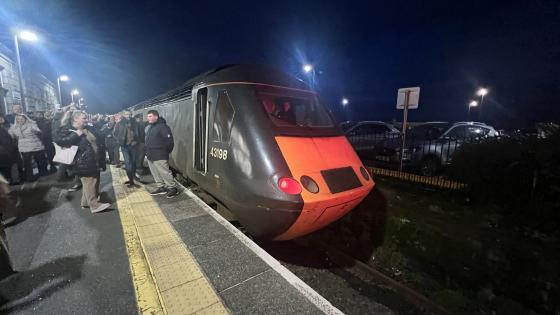
UPDATE: Great Western Railway (GWR) has officially bid farewell to its iconic 2+4 ‘Castle’ HSTs today, December 11, with a nostalgic special run from Plymouth to Penzance and back. This significant event marks the end of an era for GWR, as the final HST journey was made by the locomotives Nos 43198/093 and others, bringing back memories for rail enthusiasts and travelers alike.
The unique journey, which only made a brief stop at Par, featured four operational HSTs: Nos 43042/187, 43156/189, 43186/004, and 43198/093. In a last-minute change, one set substituted for a failed Class 150 service on the Par-Newquay branch, showcasing the enduring reliability of these trains even on their final day.
The last HST from Penzance to Plymouth arrived at 17:32, where it joined Nos 43042/187 and 43186/004 in a special line-up at the station. This gathering was initially planned as the final farewell for GWR HSTs at Plymouth; however, the day concluded with Nos 43156/189 operating a service to Newquay, marking the very last revenue-earning HST arrival in Plymouth at 23:40, 26 minutes late.
Although GWR has transitioned to Intercity Express Trains (IETs) for long-distance services, the HSTs were retained for regional operations in the South West. However, effective December 14, they will be replaced by ex-TfW Rail Class 175s, further solidifying the end of an era for these beloved locomotives.
The emotional impact of this farewell is palpable among railway enthusiasts and the local community, as the HSTs have been a staple of the region’s rail services for decades. GWR’s decision to retire these trains is a significant moment in railway history, drawing attention from fans and passengers alike.
For those wishing to celebrate this farewell, GWR plans to document the final operations in an upcoming issue of Modern Railways, providing a detailed account of this historic day.
Stay tuned for more updates on this developing story as the community reflects on the legacy of the HSTs and prepares for the new chapter in regional rail travel.