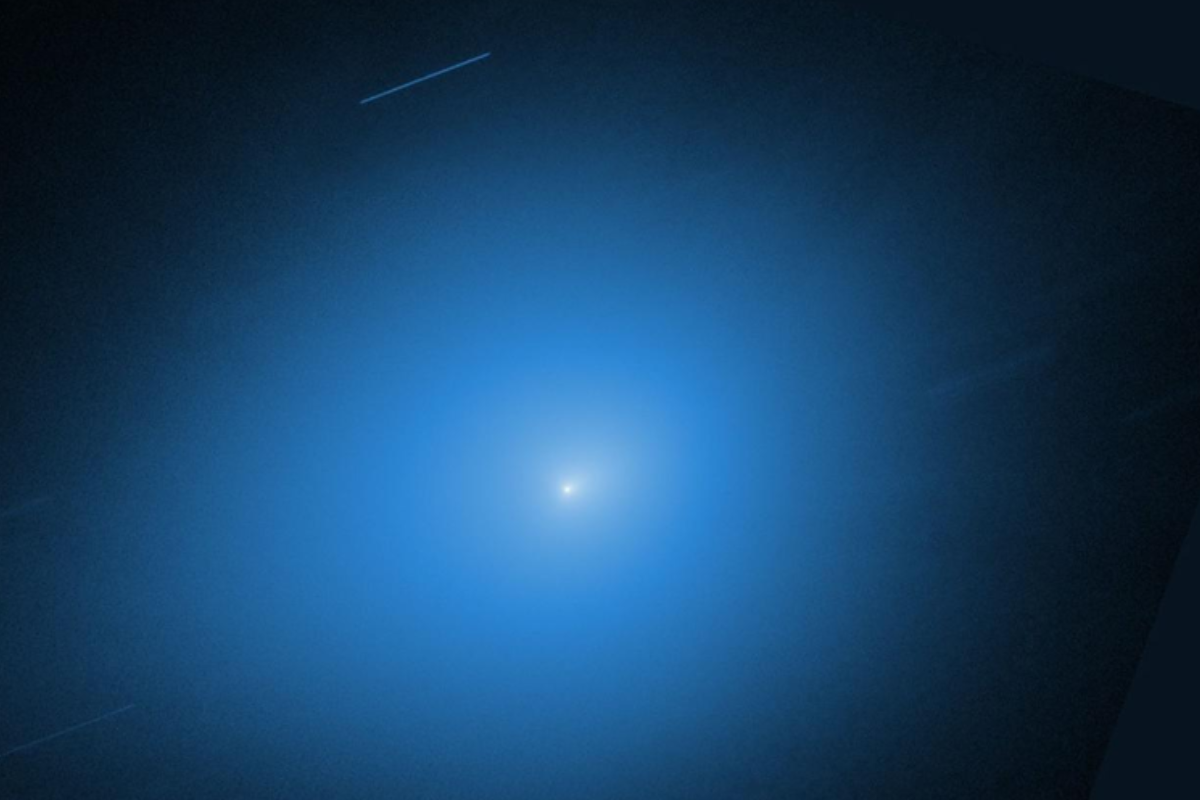
A significant astronomical event is set to occur on December 19, 2023, as the interstellar comet 3I/ATLAS approaches Earth. This ancient cosmic traveler, originating from outside our solar system, is making its closest approach to our planet, offering astronomers a unique opportunity to study its composition and gain insights into planetary formation.
3I/ATLAS is only the third large interstellar object identified, following the discovery of 1I/’Oumuamua in 2017 and 2I/Borisov in 2019. These objects have hyperbolic orbits, indicating they are not bound by the gravitational pull of our solar system. They provide vital clues about the processes occurring in other star systems, as they contain data that is unaltered by interactions within our own solar system.
As it approaches, 3I/ATLAS is expected to reveal its chemical makeup, particularly the characteristics of its ices. Powerful telescopes, including the James Webb Space Telescope, are being utilized to observe the comet closely. This close encounter will allow scientists to gather critical information about how planetary systems form, potentially differing from the processes observed in our solar system.
Understanding the Significance of 3I/ATLAS
The journey of 3I/ATLAS has been ongoing for billions of years, likely involving a dramatic ejection from its home star system after a gravitational interaction with a giant exoplanet. As it nears Earth, astronomers anticipate gaining insights into the conditions in which it formed. Observations of its composition can indicate where it originated, providing a comparative framework for analyzing the formation of comets in other systems.
The comet’s approach is particularly exciting because it will be the closest to Earth it will ever be. This event represents a rare opportunity for both professional and amateur astronomers. The closer the comet gets, the easier it will be to detect its features, especially the chemical composition of its icy components.
Scientific studies have shown that our solar system has expelled a considerable amount of material, including interstellar comets, into the Milky Way. Computer simulations suggest that during the solar system’s formation, giant planets like Jupiter and Saturn migrated, flinging debris into the Kuiper Belt and Oort Cloud. This historical context underlines the likelihood that other star systems have similarly shed material into the galaxy.
A Unique Viewing Opportunity
The significance of 3I/ATLAS extends beyond scientific inquiry; it also provides an engaging spectacle for the public. Astronomers encourage anyone with a telescope or binoculars to observe this comet as it approaches. With its fleeting presence, the event invites the curiosity of both seasoned stargazers and newcomers alike.
As December 19 approaches, scientists continue to monitor 3I/ATLAS, gathering data that may reshape our understanding of comet formation. The early observations indicate an enrichment in carbon dioxide, suggesting it may have formed in a colder region of its progenitor system compared to typical solar system comets, which predominantly contain water ice.
In conclusion, the rare visitation of 3I/ATLAS offers a unique glimpse into the cosmos. It serves as a reminder of the dynamic nature of our universe and the ongoing exploration of celestial phenomena. On December 19, 2023, as this interstellar wanderer passes through our solar system, it is a moment not to be missed. Astronomers and enthusiasts alike should prepare to look skyward and witness a truly exceptional event that may not occur again for millennia.