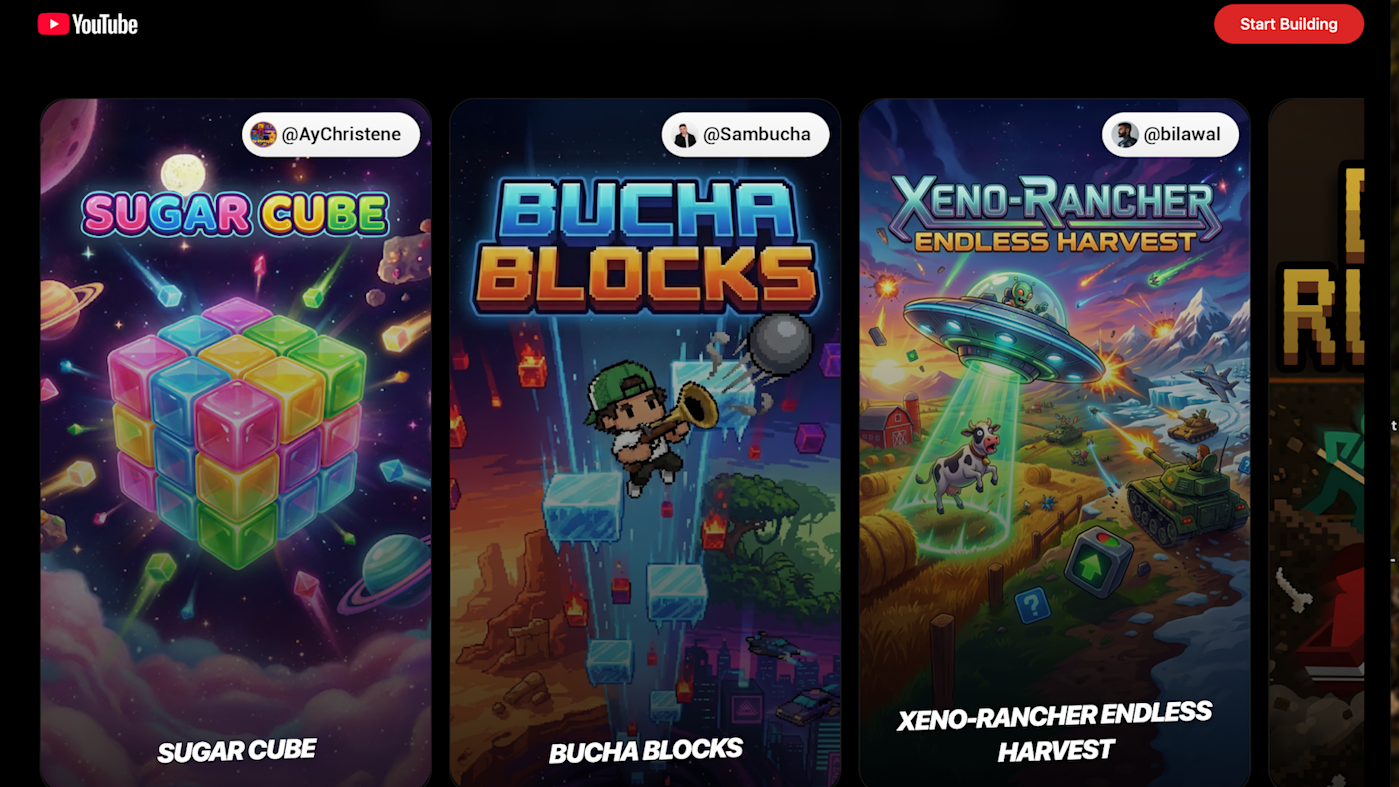
YouTube has introduced a new feature that allows creators to develop playable games using the Gemini 3 tool. The platform’s latest initiative, named Playables Builder, is currently in open beta and enables select creators to craft bite-sized games without requiring any coding skills.
In recent years, YouTube has explored incorporating small-scale games into its desktop and mobile platforms, starting tests in 2023. The introduction of multiplayer capabilities to Playables last year further highlights the platform’s commitment to expanding interactive content. With artificial intelligence increasingly integrated into Google’s services, this latest development aligns with the company’s ongoing strategy to enhance user engagement through innovative technologies.
The concept behind Playables Builder is reminiscent of Google Labs’ recent projects, such as Disco and GenTabs, which provide an AI-driven layer for web browsing. Users can input natural language queries and receive interactive widgets that respond accordingly. While some observers appreciate the practical applications of AI in streamlining data aggregation for search, the process of creating an engaging game is considerably more complex.
Developing a successful game requires not only a solid idea but also significant finesse, iteration, and skill. While tools like Playables Builder allow individuals without technical backgrounds to create games, many industry professionals emphasize the depth of knowledge and experience needed to produce enjoyable gaming experiences. Relying solely on AI to generate content may overlook the nuanced creativity that characterizes well-crafted games.
The launch of Playables Builder raises questions about the role of AI in creative processes. While AI chatbots may assist in generating game concepts, the essence of what makes a game enjoyable often stems from the unique insights and experiences of human developers. As the gaming landscape continues to evolve, the integration of AI tools could prove beneficial, but they should complement, rather than replace, traditional game development practices.
YouTube’s latest venture highlights a growing trend in the intersection of technology and entertainment. As creators explore new avenues for engagement, the potential for AI-driven tools to transform the gaming experience remains a topic of discussion within the industry. The balance between innovation and the artistry of game design will likely shape the future of this dynamic field.