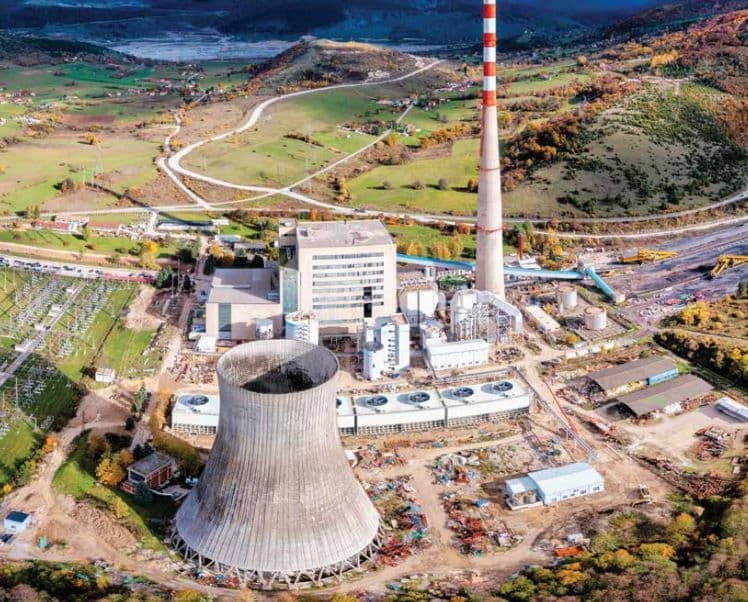
UPDATE: Elektroprivreda Crne Gore (EPCG) has just confirmed that the Termoelektrana Pljevlja was put into test operation on December 1, 2023, amidst allegations from Dritan Abazović, leader of the Civic Movement (GP) URA, claiming the plant’s operation was illegal.
The company responded urgently to Abazović’s accusations, asserting that the claims were politically motivated and factually incorrect. In a statement, EPCG emphasized that the plant is equipped with new systems designed to reduce emissions, following an investment of €80 million to meet European environmental standards.
EPCG stated, “The operation of the plant is in compliance with all legal requirements,” and highlighted that the decision to initiate test operations was backed by professional oversight and inspection approvals. The company reassured the public that these measures are essential for ensuring the safe and gradual activation of complex technical systems.
Why This Matters NOW: The controversy comes at a time when air quality in Pljevlja is under scrutiny, with rising public concern over pollution levels. Abazović’s statements have sparked debate over environmental safety and regulatory oversight. EPCG insists that the air quality issues in Pljevlja are a longstanding problem, exacerbated by various local sources and not solely attributable to the power plant.
EPCG further criticized Abazović’s remarks as an attempt to politicize environmental issues, stating that “the allegations do not reflect the ongoing efforts to manage resources responsibly.” The company is committed to transparency and is open to collaboration with regulatory bodies, while firmly rejecting any notion of negligence regarding environmental regulations.
In a bid to address the pollution concerns, EPCG is offering a 50% discount on electricity for households in Pljevlja during the winter months, and a 75% discount for users on Skerlićeva Street. These measures are part of a broader initiative aimed at reducing emissions and improving local air quality.
EPCG has reaffirmed its readiness to cooperate with all relevant authorities while maintaining that it will not engage in political disputes. The company calls for a focus on factual discussions rather than alarmist narratives that could undermine public trust.
As the situation develops, stakeholders are urged to monitor EPCG’s progress and regulatory compliance closely. The next steps for the power plant will involve a phased approach to activating emission reduction technologies, aiming for a full ecological impact within the agreed-upon timelines.
What’s Next: The ongoing dialogue around the power plant’s operations will likely continue as the winter progresses. Authorities are expected to conduct further inspections, and public scrutiny will remain high regarding both environmental impacts and political accountability in Montenegro.
EPCG’s commitment to responsible energy management and regulatory compliance will be pivotal in shaping the future of energy production in the region.