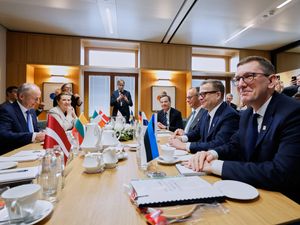
UPDATE: Belgium has just announced it will not support a significant loan for Ukraine unless it receives strong guarantees against retaliation from Russia. This urgent demand comes as EU leaders gather in Brussels today to discuss the potential use of frozen Russian assets to fund Ukraine’s military and financial needs.
At the high-stakes summit, the 27-nation bloc is considering a plan to release up to 90 billion euros from frozen assets, which currently total approximately 193 billion euros held in Euroclear, the Brussels-based financial clearing house. Belgian Prime Minister Bart De Wever emphasized that without an “ironclad” assurance of protection, Belgium cannot back the loan.
“We need a parachute for this jump,” De Wever told Belgian parliament members just before the summit commenced, underscoring his apprehensions about Russian retaliation. The Central Bank of Russia recently initiated legal action against Euroclear, intensifying fears across Europe of possible repercussions.
As European officials warn of Russia’s ongoing sabotage efforts, the stakes have never been higher. De Wever insists that Belgium remains a committed ally of Ukraine, but he is urging EU partners to broaden the scope of the loan by pooling frozen assets from other member states. The urgency is palpable; Ukraine is nearing financial collapse and requires substantial funding by spring 2024 to avoid bankruptcy.
European Commission President Ursula von der Leyen has made it clear: “We will not leave the European Council without a solution for the funding of Ukraine for the next two years.” The EU’s plan to support Ukraine hinges on agreement among member states, with pressure building as the meeting unfolds.
EU Council President Antonio Costa has vowed to keep negotiations alive, even if it takes days. Meanwhile, Polish Prime Minister Donald Tusk stated, “Now we have a simple choice. Either money today or blood tomorrow.” His comments reflect the dire situation in Ukraine and the urgent need for decisive action from European leaders.
However, not all member states are on board. Countries like Hungary and Slovakia have expressed opposition to the reparations loan plan. Hungarian Prime Minister Viktor Orban, a known ally of Russian President Vladimir Putin, described the loan initiative as “a dead end,” cautioning that financial support equates to escalation of conflict.
As discussions progress, EU diplomats have been working tirelessly to reconcile differing views among the 27 member nations. If Belgium and other undecided countries, including Bulgaria, Italy, and Malta, choose to block the plan, it could face significant setbacks.
German Chancellor Friedrich Merz remains hopeful that Belgium’s concerns can be addressed, stating, “We must use the Russian assets.” The urgency of the situation cannot be overstated, as the EU aims to meet Ukraine’s estimated financial needs of 137 billion euros over the next two years.
As this story develops, all eyes are on Brussels. Leaders are facing a critical moment, and the decisions made today will have lasting implications for Ukraine and the EU’s collective security strategy. Stay tuned for updates on this unfolding situation.