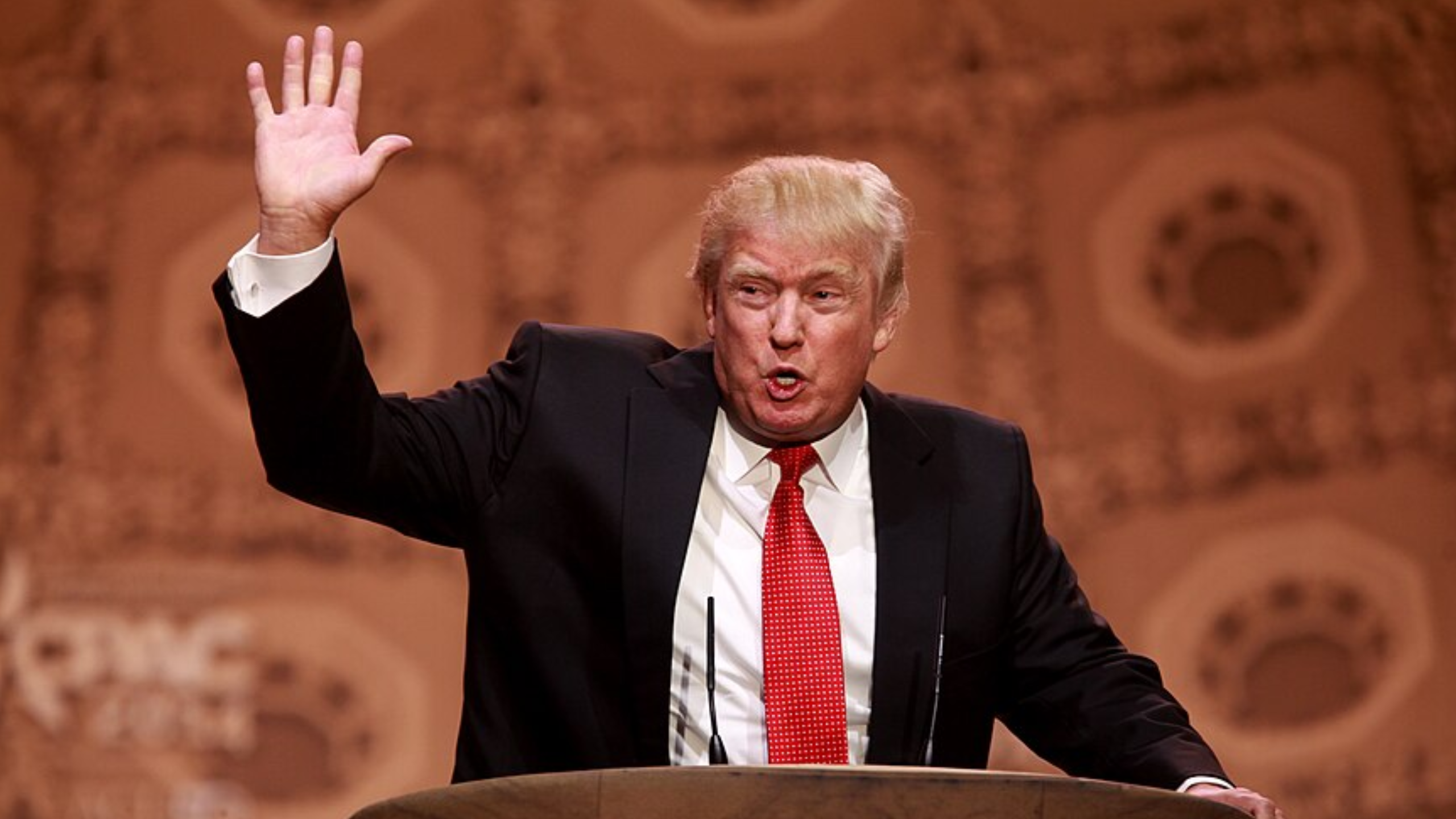
Donald Trump has ignited controversy regarding his religious identity after supporters began circulating claims that he is the “first Jewish president” of the United States. This assertion appears to have originated from social media speculation rather than any official statement from Trump or his campaign. The confusion surrounding Trump’s religious affiliation has perplexed scholars, religious leaders, and legal experts.
The narrative suggesting Trump’s newfound Jewish identity gained traction on platforms such as TikTok and Instagram. Videos and posts indicate that some supporters within the MAGA movement have shifted their earlier belief that Trump was Catholic, instead promoting the idea that he identifies as Jewish. Notably, right-wing commentator Mark Levin stated in a video, “Donald Trump is our first Jewish President,” a claim that quickly proliferated across various social media channels. These assertions often refer to Trump’s political support among certain Jewish voters or mention the conversion of his daughter, Ivanka Trump, to Judaism in 2009. However, these factors do not confer Jewish identity upon Trump according to religious or legal definitions.
Independent analysts and fact-checkers have pointed out that the characterization of Trump as the “first Jewish president” is absent from official campaign materials or verified interviews with him. Legal scholars emphasize that religious identity for political candidates relies on personal disclosure. Without a clear statement from Trump identifying as Jewish, the claims circulating online remain unverified. This situation underscores the complex interplay of religion, identity politics, and misinformation in the lead-up to the 2025 U.S. election cycle.
Trump’s religious identity has historically been described in varying terms. During the 2016 and 2020 campaigns, he identified as a Presbyterian, and more recently, he has referred to himself as a “non-denominational Christian.” Public records, including debates and campaign speeches, confirm that Trump has never claimed a Jewish faith. Legal filings for his presidential campaigns do not require candidates to disclose their religious affiliation, but his biographies and official campaign website consistently refer to him within a Christian context.
Although Trump has made ambiguous statements regarding his faith, no credible evidence supports the claim that he identifies as Jewish. A Reddit thread cited by users mentions a statement where Trump reportedly said, “I’m not Protestant, and I’m not Catholic,” but the context remains disputed and lacks corroborating evidence. Fact-checkers stress that religious identity cannot be assigned by commentators or third parties.
The emerging narrative has alarmed religious leaders and scholars, who warn that conflating political figures with religious labels undermines both faith and civic discourse. For instance, Trump’s earlier sharing of AI-generated images depicting him as a pope in early 2025 sparked backlash from Catholics who viewed the images as disrespectful. Critics on social media have labelled such posts as “disrespectful and insulting” to Catholic tradition, while some MAGA supporters expressed that the imagery crossed a line even for their movement.
Christian theologians are raising concerns about the broader implications of politicized religion. One pastor noted that equating political loyalty with religious identity can create significant divisions within faith communities. Scholars studying the intersection of religion and politics argue that Trump’s appeal among certain evangelical and conservative Catholic voters does not equate to genuine religious authenticity; instead, it reflects political strategy.
Jewish leaders have also emphasized that Jewish identity is traditionally defined by matrilineal descent or formal conversion. No significant Jewish organization has recognized Trump as Jewish, nor has he ever made such a claim. The narrative surrounding Trump as the “first Jewish president” fits into a larger framework of political misinformation and identity politics that has come to characterize recent election cycles.
Digital misinformation researchers highlight that sensational narratives, particularly those tied to religion, tend to spread rapidly due to their emotional resonance, regardless of factual accuracy. Fact-checking organizations advise readers to seek direct quotes from primary sources and official statements instead of relying on social media summaries or viral clips.
Certain pro-Trump social media accounts, which label themselves as “Independent,” have circulated clips without sourcing them to verifiable interviews, further contributing to the confusion. Experts note that political actors often exploit ambiguities in public personas for tactical advantage. In this case, reframing Trump’s identity may be designed to appeal to specific voter blocs or provoke opponents.
Religious identity is a deeply personal aspect of political life. When leveraged for political gain or social media attention, it can erode trust in public discourse and exacerbate societal divisions. The claim that Donald Trump is the “first Jewish president” remains a social media phenomenon lacking grounding in Trump’s own statements or official records.