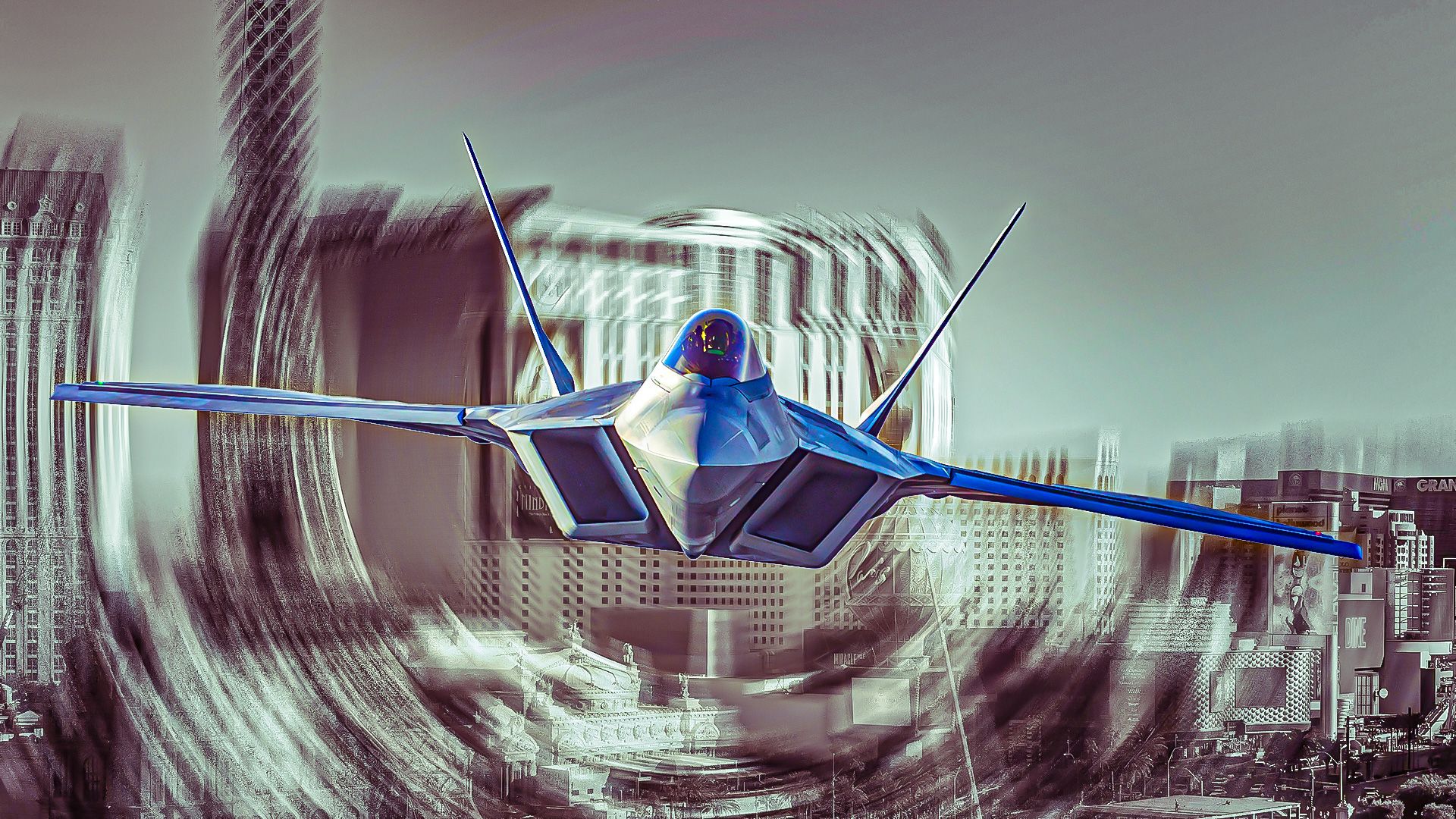
UPDATE: The latest data confirms that the US Air Force currently has just 183 F-22 Raptors operational, a significant reduction from the 187 originally delivered. This urgent development raises questions about the future of America’s premier air dominance fighter amidst rising global tensions.
The F-22 Raptor, first introduced in 2005, has long been heralded as the world’s most advanced stealth fighter. However, with ongoing upgrades to the F-35 Lightning II, the Raptor’s dominance faces new challenges. The urgency of this situation is underscored by China’s rapid military advancements, including the deployment of its fifth-generation Chengdu J-20 fighter jets.
Authorities report that out of the 195 F-22s built by Lockheed Martin, only 150 are combat-capable, and about 32 serve as training variants that cannot engage in combat without costly upgrades. This drastic reduction in available aircraft reflects the Air Force’s struggle to maintain a competitive edge in an evolving battlefield.
The F-22 program, which began in the early 1980s, originally aimed for a fleet of 750 aircraft. However, production delays and budget cuts led to a final delivery of only 187. The last deliveries occurred in 2011, and the Air Force’s operational fleet has dwindled due to accidents and maintenance issues, with at least five Raptors lost to mishaps since their introduction.
In a recent report, FlightGlobal noted that the Air Force has 178 operational F-22s. However, many of these are earlier models with limited capabilities. Current estimates suggest that only about 150 F-22s are ready for combat, a figure that raises alarm as tensions with China escalate.
As the US military grapples with these operational challenges, plans for the F-22’s future are underway. Upgrades are being implemented to extend the lifespan of the fleet, including new infrared systems and stealth enhancements. Reports in March 2025 highlighted that the F-22 lacked a Helmet Mounted Display, a critical feature found in newer fighter jets, emphasizing the urgency for modernization.
With the potential deployment of a sixth-generation fighter, the F-47, still years away, the Air Force is focusing on maintaining the F-22 as a cornerstone of its air dominance strategy into the 2040s. This reliance on an aging fleet raises critical questions about the US’s aerial capabilities as global threats evolve.
In conclusion, the dwindling numbers of operational F-22 Raptors highlight a pressing need for strategic planning and investment. As geopolitical tensions rise, the US Air Force must ensure that its air dominance capabilities remain robust and effective. The future of the F-22 remains uncertain, but its role as America’s premier air superiority fighter is more crucial than ever.
Stay tuned for updates as this situation develops and the implications for national security become clearer.