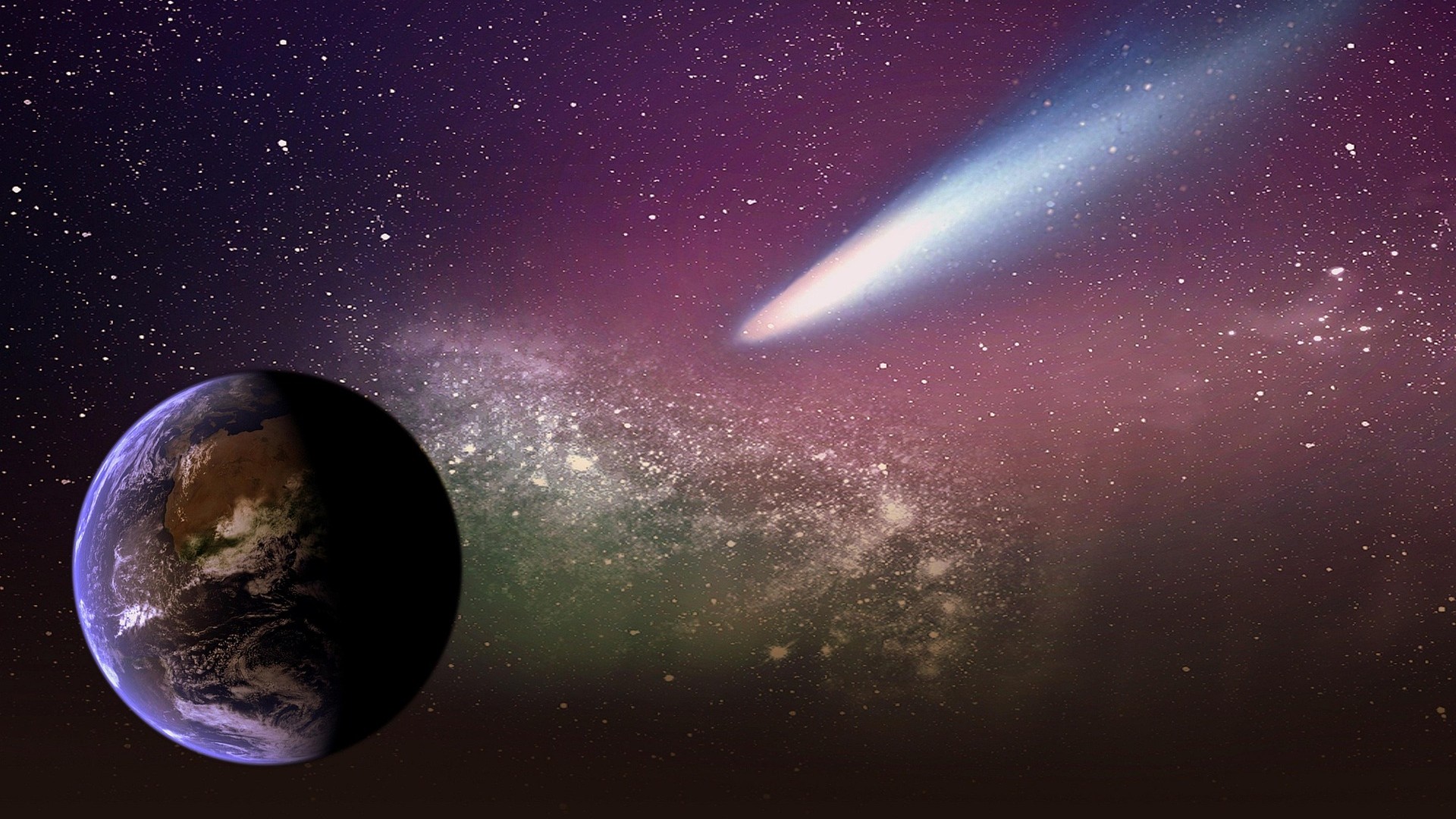
Astronomers are gaining insights into the enigmatic interstellar object known as 3I/ATLAS, which has generated significant debate among scientists regarding its origins and nature. After its recent closest approach to Earth on March 2024, when it came within a distance of 170 million miles, researchers are analyzing its peculiar characteristics, including an unusually high nickel content.
Initially, some scientists speculated that 3I/ATLAS might be an extraterrestrial probe, a theory popularized by Avi Loeb, a Harvard astrophysicist known for challenging established scientific beliefs. Loeb had suggested that the object could represent advanced technology observing Earth. However, following the object’s close encounter, he acknowledged the lack of evidence for artificial behavior. Speaking on *Elizabeth Vargas Reports*, he stated, “So far, so good,” and noted that 3I/ATLAS did not exhibit any unusual activity during its approach.
Despite the lack of definitive evidence supporting the idea of alien technology, 3I/ATLAS continues to intrigue astronomers due to its unique features. One of its most perplexing traits is a jet of material pointing directly toward the sun, a characteristic that does not align with standard cometary models. Loeb emphasized that these aspects warrant further investigation, as many questions remain unanswered.
Understanding the Object’s Age and Composition
The discussion surrounding 3I/ATLAS has also attracted the attention of theoretical physicist Michio Kaku, who posits that the object’s extraordinary age may hold the key to understanding its unusual composition. Kaku estimates that 3I/ATLAS is around 7 billion years old, significantly older than most comets, which typically range from 3 to 4 billion years. This remarkable age suggests that the object has traversed various interstellar environments, accumulating diverse elemental compositions over its extensive journey.
Kaku explained that the high nickel content and other unusual elements found in 3I/ATLAS likely stem from this long history. “Over 7 billion years, it has had plenty of time to accumulate different gases, different elements, and different kinds of environments,” he said. This explanation may clarify why the object’s chemical makeup appears so distinct compared to other comets that have been observed.
As researchers continue to analyze the data, it becomes increasingly clear that the window for studying 3I/ATLAS is closing. The object is expected to fade from view over the upcoming months, leaving behind a trail of questions and challenges to our understanding of the cosmos. While the notion of it being an alien spacecraft may be receding, the scientific fascination with this ancient traveler remains robust.
The journey of 3I/ATLAS not only serves as a reminder of the mysteries that the universe still holds but also highlights the need for ongoing exploration and inquiry. Whether regarded as a relic from the early universe or a unique cosmic anomaly, its passage through our solar system underscores the vast unknowns that continue to captivate the scientific community.