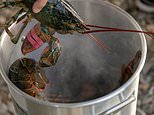
UPDATE: The Labour Party has just announced a groundbreaking ban on boiling lobsters and crabs alive as part of a new animal welfare strategy. Effective immediately, this prohibition aims to address concerns about the treatment of these crustaceans, which are now recognized as sentient beings capable of experiencing pain.
The announcement, made by Environment Secretary Emma Reynolds today, signals a significant shift in how the UK handles animal welfare. The strategy also extends to other decapods like shrimp and prawn, alongside cephalopods such as squid and octopus. This move has sparked outrage among shellfishers and restaurateurs, who argue that the ban will increase costs and could lead to the collapse of the live shellfish trade.
The new regulations come after a 2022 law confirmed the sentience of crustaceans. Reynolds emphasized that the UK is committed to being “a nation of animal lovers,” pledging to deliver the “most ambitious animal welfare strategy in a generation.” The government plans to issue further guidance on humane methods of dispatch, including electrical stunning and freezing.
Critics of the ban, like David Jarrad, chief executive of the Shellfish Association of Great Britain, warn that the increased costs of stunning equipment—approximately £3,500—will deter restaurants from purchasing live seafood. “If customers want to buy a live crab or lobster, they won’t pay for it if it’s already dead,” Jarrad stated. He expressed concern that without investment in humane stunning equipment, the UK might see an influx of imported frozen seafood, harming local businesses.
Animal rights advocates are celebrating the ban, citing the excruciating pain that live crustaceans endure when boiled. Dr. Ben Sturgeon, chief executive of Crustacean Compassion, highlighted the importance of recognizing the sentience of these animals. “This is torture for crabs and lobsters and is completely avoidable,” he remarked, advocating for humane alternatives that ensure swift and painless deaths.
The ban is part of a broader strategy that also includes the prohibition of trail hunting and stricter regulations against cruel breeding practices, such as puppy farming. As the Labour government rolls out this ambitious plan, the impact on the seafood industry and animal welfare practices will be closely monitored.
With this significant development, the Labour Party is not only addressing animal welfare concerns but also setting the stage for a potential overhaul of seafood practices in the UK. Observers are eager to see how this will reshape consumer behavior and industry standards moving forward.
This urgent update underscores the growing recognition of animal sentience in legislation, marking a pivotal moment for animal rights in the UK. Share your thoughts on this developing story and its implications for the future of animal welfare and seafood industry practices.