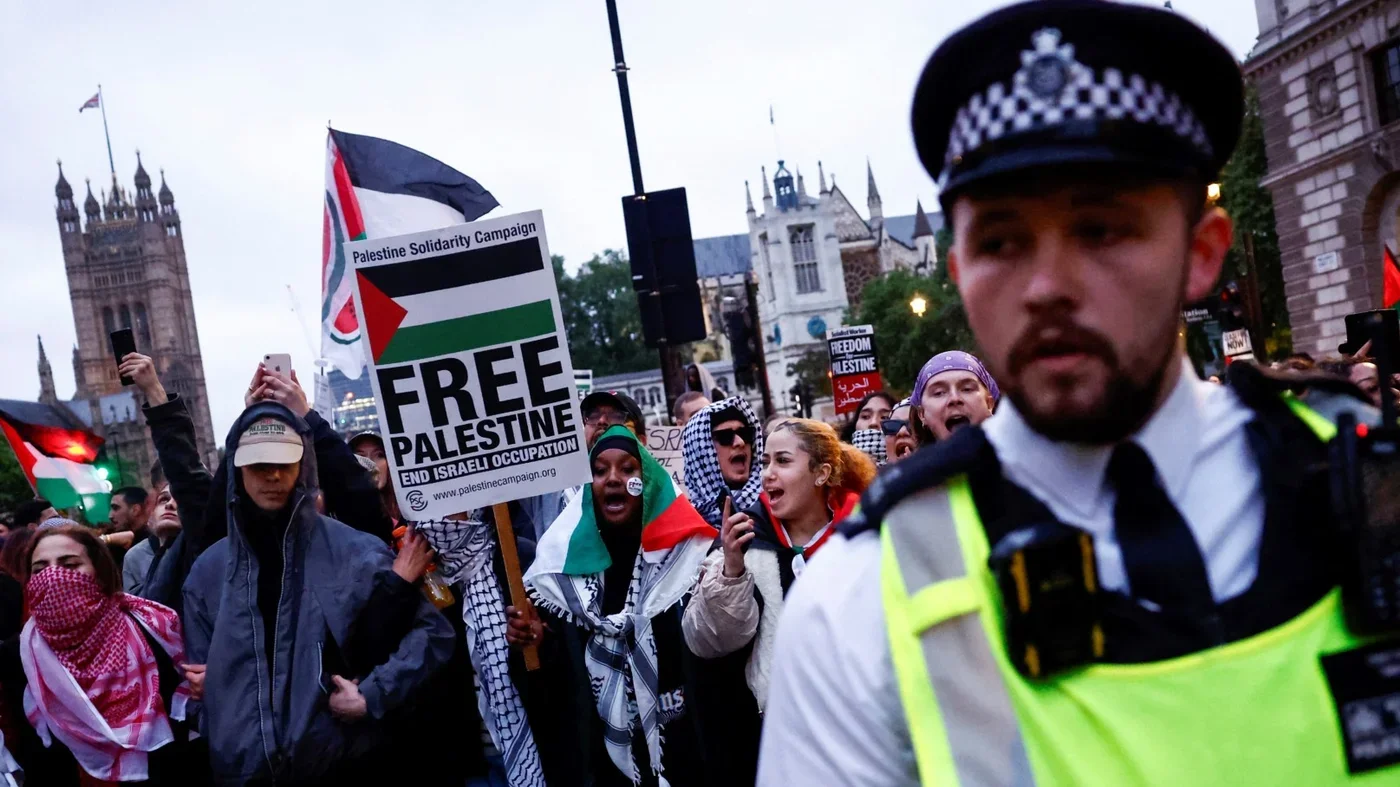
UPDATE: In a shocking move, UK police have just announced the criminalization of the chant “intifada” during protests, igniting widespread outrage and allegations of suppressing political expression. This decision, made public on October 12, 2023, has immediate implications for activists and protestors across the nation.
The directive to penalize anyone chanting “intifada” not only shifts the boundaries of public order policing but also blurs crucial lines between political expression and violent incitement. Just days after the announcement, two individuals were arrested in London for vocally expressing this slogan, raising serious questions about freedom of speech and government bias in the UK.
Critics argue that this crackdown is a blatant attempt to silence anti-genocide activism rather than a genuine effort to manage public safety. Evidence from Australia reveals that the recent Bondi attack was linked to the Islamic State group, not a Palestinian-organized protest. However, UK officials and media have attempted to tie the Bondi incident to Palestinian slogans, lacking substantial evidence and instead amplifying rhetoric against those advocating for Palestinian rights.
Current UK laws, including the Crime and Disorder Act 1998, already establish clear thresholds for when speech becomes criminal, focusing on harm, intent, and context. Yet, police actions appear to align closely with the demands of pro-Israeli lobbyists eager to equate the term “intifada” with violence. The Arabic word, meaning “shake off” or “rise up,” has been used historically as a rallying cry against oppression, yet authorities now label it as potentially dangerous.
This move echoes tactics seen in Hong Kong, where authorities criminalized protests under the guise of public order. In 2019, protesters faced charges for using the phrase “Liberate Hong Kong, revolution of our times,” as the government framed “revolution” as sedition. The situation in London mirrors this alarming trend, where policing tactics threaten to suppress dissent and blur the lines between legitimate protest and terrorism.
The implications of banning the “intifada” chant are profound. Not only does it chill peaceful activism, but it also risks the further radicalization of disillusioned individuals who may feel their voices are being silenced. This double standard in policing raises critical questions about the UK government’s commitment to impartiality, as it appears to protect rhetoric that fuels ethnic division while targeting expressions of solidarity with the Palestinian people.
Next steps: Activists and legal experts are calling for police chiefs to clarify how their new approach aligns with existing legal frameworks. They urge ministers to refrain from turning political discourse into a security matter influenced by powerful lobby groups. The call for justice and peace is a fundamental human right, and any attempt to criminalize vague political speech must be scrutinized rigorously.
As this situation develops, it is crucial for citizens and lawmakers alike to engage in a dialogue about the implications of policing language and expression. The future of democracy hinges on our ability to tolerate uncomfortable speech, and the selective enforcement of laws threatens to undermine these principles.
Public sentiment is shifting rapidly, with many standing in solidarity with those arrested for their expressions of dissent. The urgency of this matter cannot be overstated, as the repercussions extend beyond the immediate arrests to the broader landscape of political activism in the UK. The battle for freedom of expression and the right to protest continues, and the world is watching.