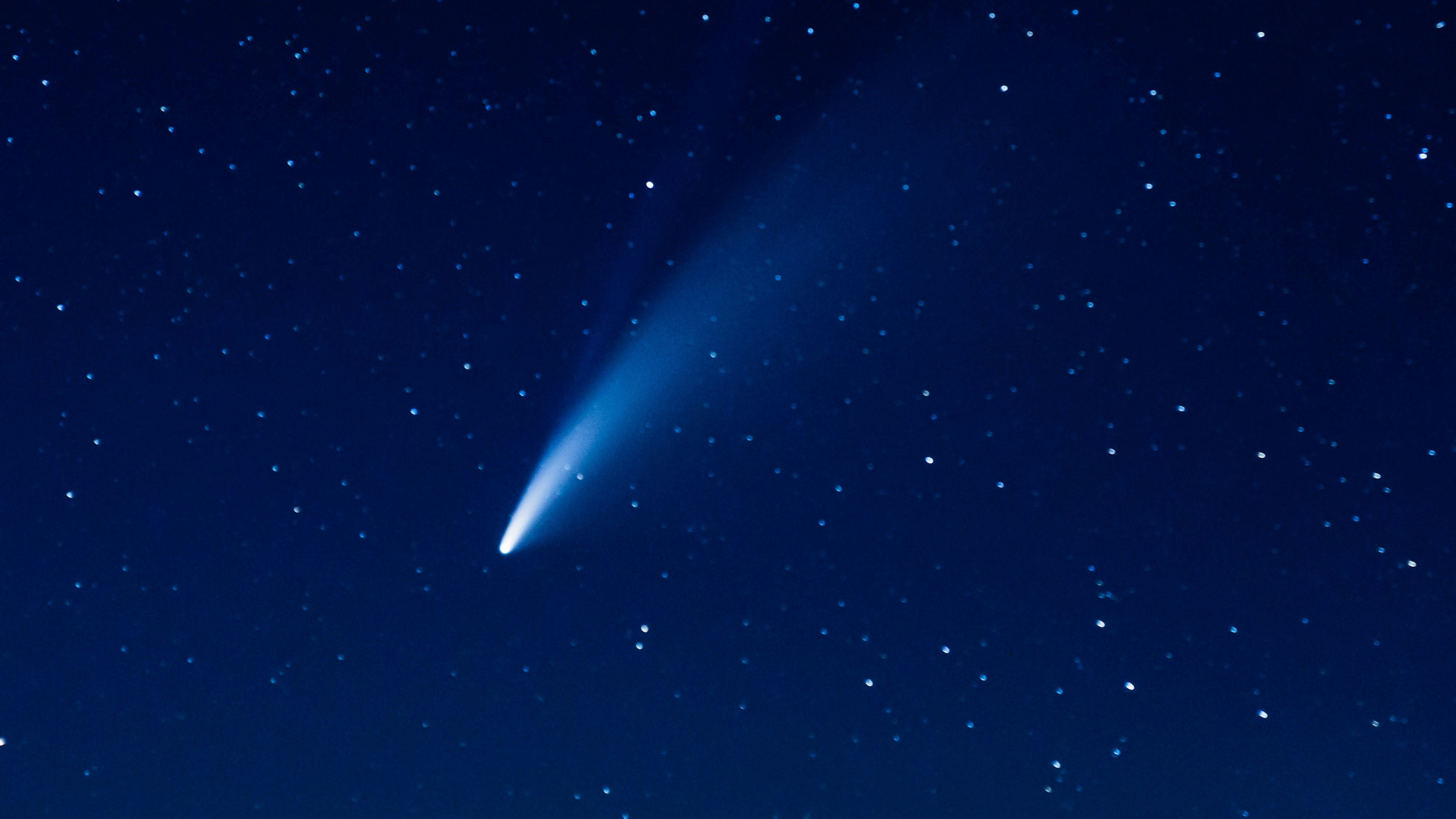
Comet 3I/ATLAS has captured the attention of astronomers due to its atypical behavior as it exits the inner solar system. Unlike most comets, it exhibits a striking sunward-pointing dust feature and dynamic jet-like structures that appear to shift positions in a consistent pattern. The most perplexing characteristic is a pronounced “anti-tail,” which stretches approximately 1,000,000 km towards the Sun, contrary to the expected behavior of comet tails that typically extend away from solar heat.
In standard comet formation, a coma and tail develop when sunlight heats surface ice, causing gas and dust to be released. This material is then pushed outward by radiation pressure and the solar wind, resulting in a tail that points away from the Sun. However, in the case of 3I/ATLAS, observers have noted a robust anti-tail, a phenomenon that occurs when the viewing angle aligns with a thin dust sheet along the comet’s orbit. Although anti-tails are not completely unheard of, the strength and structure of this one are particularly notable.
Astronomers have also identified intermittent jet-like features that do not maintain a fixed position night after night. Instead, the apparent direction of these jets shifts, suggesting a possible rotation of the nucleus alongside periodic material venting. Observations conducted using the Two-metre Twin Telescope at Teide Observatory in Tenerife tracked the comet over 37 nights, revealing a repeating shift described as a precessional pattern with a period of 7 hours 45 minutes. This led researchers to estimate the nucleus’s rotation period at approximately 15 hours 30 minutes.
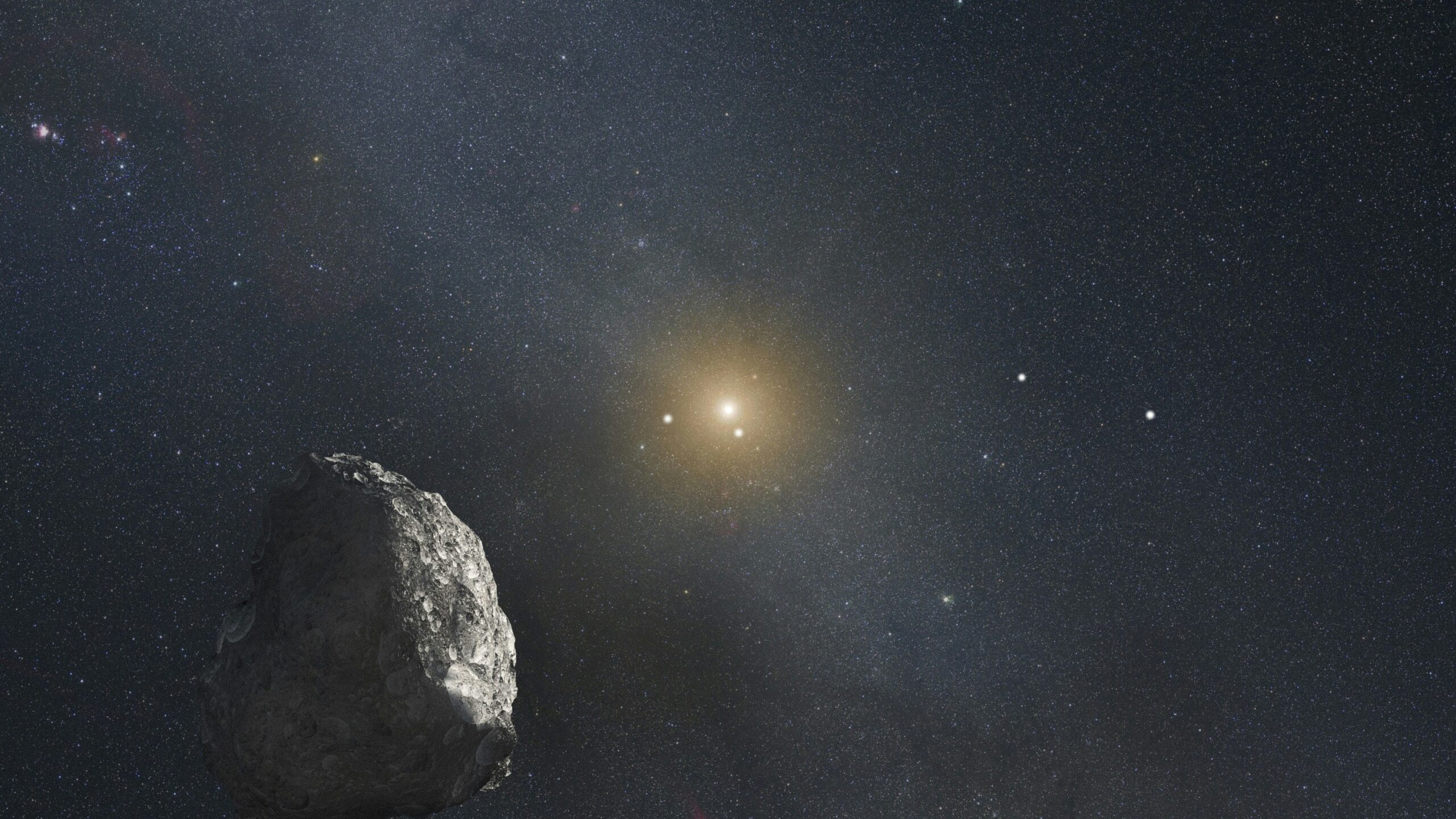
Comet 3I/ATLAS is recognized as only the third confirmed interstellar object to journey through our solar system, following the appearances of 1I/’Oumuamua in 2017 and 2I/Borisov in 2019. Each of these objects has provided unique opportunities for scientists to test hypotheses about small bodies formed outside our solar system. While Borisov appeared relatively typical for a comet, ‘Oumuamua sparked significant discussion due to its unconventional shape and non-gravitational acceleration, which made data interpretation challenging.
The possibility that 3I/ATLAS exhibits a structured anti-tail and measurable jet precession presents a valuable case study for understanding the activity of interstellar visitors. This comet’s behavior, particularly the sunward tail formed by jets erupting towards the Sun rather than away from it, offers insights into the physical processes at play in such celestial bodies.
After its closest approach to the Sun, Comet 3I/ATLAS reached its nearest point to Earth on December 19, 2023, at a distance of approximately 270,000,000 km. As it follows a hyperbolic trajectory, it is now set to leave the solar system permanently. The fleeting nature of each interstellar object underscores the importance of detailed observations. These encounters provide rare chances to compare the physical behaviors of foreign small bodies—such as dust dynamics, volatile release, nucleus rotation, and jet morphology—with the comets and asteroids that have been extensively studied within our own solar system.
Even if the anti-tail is primarily geometric in nature, the variations in the jets and the inferred rotation of 3I/ATLAS still yield significant data for models of surface activity. This research contributes to a broader understanding of the characteristics of celestial bodies that likely originated around other stars, enriching our knowledge of the universe.