
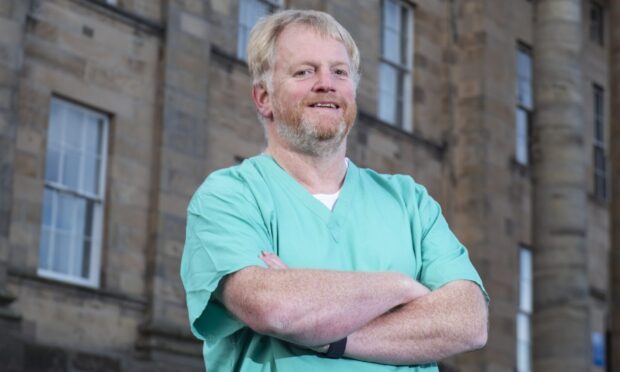
A consultant radiologist from Elgin is pioneering the use of artificial intelligence (AI) to enhance the early detection of lung cancer, a significant health challenge in Scotland. Dr. Struan Wilkie, who works at Dr Gray’s Hospital, aims to improve patient outcomes by integrating technology into routine medical practices.
Reflecting on his early interest in computing, Wilkie recalls how the BBC Micro, an educational computer introduced in the 1980s, ignited his passion for merging technology with medicine. “My first introduction to computing was the BBC,” he explains. This fascination has led him to work on innovative solutions that could transform how lung cancer is diagnosed and treated.
AI Revolutionizes Lung Cancer Screening
In Scotland, lung cancer remains the most common cause of cancer-related deaths. Early detection is crucial, yet the disease is often diagnosed late when symptoms may mimic other illnesses. Wilkie emphasizes, “It’s often a hidden killer.” Many patients receive a chest X-ray for unrelated issues, which can inadvertently reveal lung cancer.
At NHS Grampian, radiology teams review approximately 70,000 chest X-rays annually, equating to about 300 per day. With the introduction of AI, Wilkie and his team are prioritising X-rays that show concerning signs, ultimately aiming to shorten waiting times and alleviate pressure on radiology staff.
The AI system already demonstrates promising results, allowing urgent cases to be reported within 24 hours, significantly reducing delays in diagnosis. This advancement lays the groundwork for similar initiatives across other NHS boards, representing a major step forward in cancer care.
Navigating Challenges and Staff Concerns
Implementing AI in clinical practice was not without its challenges. The transition from research trials to everyday use took over a year, requiring extensive governance checks and collaboration among various stakeholders. “There were IT systems to align and organisations that had never worked together before needing to talk to each other,” Wilkie notes.
Addressing staff concerns about AI replacing human roles was also essential. Wilkie reassures that AI is meant to assist rather than replace: “At no point is the AI running autonomously. It’s a prioritisation tool — a way of making sure the patients who need attention most urgently are seen first.”
This perspective is vital as the healthcare sector grapples with the integration of emerging technologies. Wilkie believes the dialogue around AI is evolving positively, moving away from fears of job loss towards understanding its potential to enhance efficiency and patient care.
Looking to the Future of Radiology
Wilkie draws a parallel between the current shift towards AI and the past transition from traditional X-ray technology to computed tomography (CT). He asserts, “It’s probably analogous to when we went from X-ray to CT,” a change that solidified Aberdeen Royal Infirmary as a leader in advanced imaging in Scotland.
He envisions AI as the next evolution in radiology, capable of addressing future challenges faced by the NHS. The benefits of this technological integration are significant, promising a more efficient healthcare system that ultimately leads to better patient outcomes.
Wilkie’s journey from a schoolchild captivated by video games to a medical innovator highlights the profound impact of technology on healthcare. He reflects on his passion for retro games, a hobby that continues to bring him joy, although his wife recently discovered their considerable value, leading to some light-hearted conversations at home.
The work of Dr. Struan Wilkie exemplifies how integrating AI into healthcare can revolutionise patient diagnostics and treatment, offering hope in the fight against one of the deadliest cancers.


