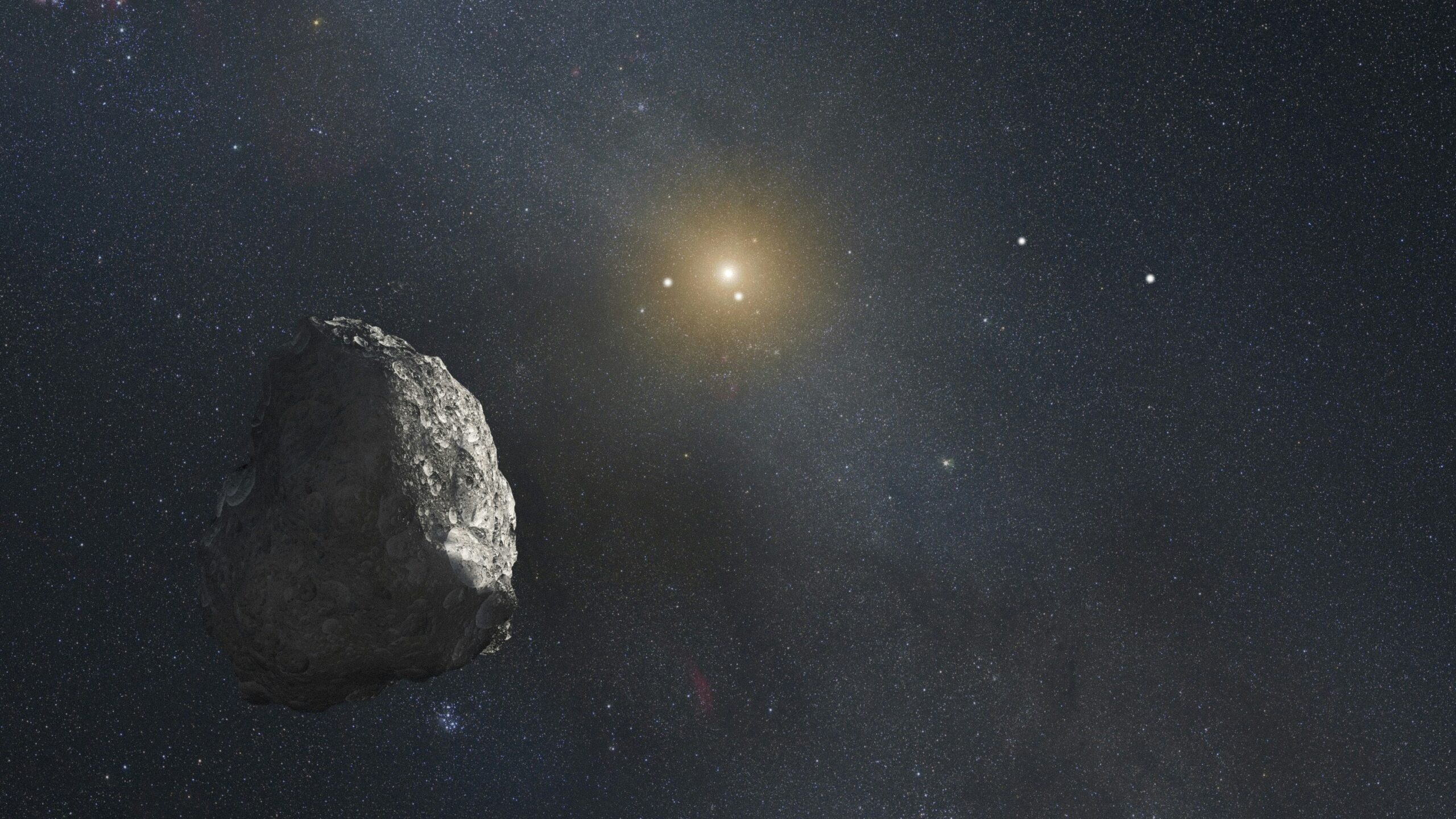
Harvard astrophysicist Avi Loeb has raised alarms regarding humanity’s preparedness for potential contact with extraterrestrial life, following the recent passage of a comet-like object known as 3I/ATLAS. This interstellar object, detected in July 2023, passed Earth in December, igniting discussions about the implications of such an encounter.
While many astronomers regard 3I/ATLAS as a frozen mass of dust and gas, Loeb posits that it could represent something far more significant, possibly even an artificial probe from another civilization. He stated, “In the first case, humanity need not do anything but await the arrival of this interstellar messenger with open arms. It is the second option which is of great concern.”
Unusual Characteristics Spark Speculation
The journey of 3I/ATLAS has captured the attention of both amateur astronomers and public figures, including celebrities like Kim Kardashian. Its unusual trajectory and chemical composition challenge existing scientific models, leading to heightened interest and concern about the nature of interstellar objects.
According to Loeb, the chemical makeup and speed of 3I/ATLAS, which travels at an impressive 42 miles per second, do not align with typical natural phenomena. This has prompted a surge in public interest, as indicated by a nearly 300% increase in Google searches related to “planetary defense.”
Despite the excitement, NASA has reassured the public that 3I/ATLAS poses no threat, as it will pass a safe distance of approximately 170 million miles from Earth. Nevertheless, Loeb argues that humanity must consider the possibility of intelligent life detecting our signals. The Voyager 1 and Voyager 2 missions, launched in 1977, carried golden records containing greetings and music, essentially broadcasting humanity’s existence into the cosmos.
Proposed Solutions and Global Cooperation
Loeb advocates for the establishment of an “alien alert system,” similar to the Richter scale for earthquakes, which would enable scientists and governments to assess potential extraterrestrial threats. He emphasizes the need for a proactive approach, stating, “We’d better be ready for both options and check whether all interstellar objects are rocks.”
Experts in planetary defense, such as science journalist Dr. Robin Andrews, highlight the challenges humanity faces in responding to space threats. While strategies exist to address asteroids—such as deflecting or destroying them—comets like 3I/ATLAS present unique difficulties due to their high velocities.
Andrews elaborates that, should a comet pose a real threat to Earth, the scenario could be catastrophic, noting, “The odds are tiny, but defending against it would be incredibly difficult.” He also underscores that any civilization capable of interstellar travel would likely possess technology far beyond our current military capabilities.
In a lighter vein, filmmaker and UFO researcher Mark Christopher Lee humorously suggested that social media might serve as a distraction for any potential alien visitors, quipping, “Maybe we could distract them with TikTok.”
As discussions surrounding 3I/ATLAS continue, Loeb calls for increased vigilance in monitoring space activities and a humble acknowledgment of the unknown. He urges global cooperation to prepare for any unexpected visitors from beyond our planet.