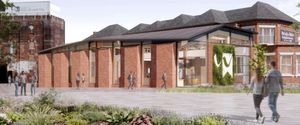
The University of Wolverhampton has announced plans to relocate its engineering faculty to the former administrative headquarters of the Springfield Brewery. This decision comes as part of a significant restructuring effort that includes the closure of the Telford campus in August 2024.
According to documents submitted to the Wolverhampton Council, the transformation will involve renovating the 19th-century building, known as Block A, into a modern engineering centre. The plans also include demolishing an extension built in the 1940s, which has been described as “unsympathetic,” and replacing it with a larger, contemporary workshop space designed to better serve engineering students.
The university’s decision follows the closure of its sports centre at the main Wolverhampton campus in August 2023, paving the way for a new medical school. While this move aimed to enhance the university’s educational offerings, it has met with mixed reactions from stakeholders. Some community members have expressed concern about the impact on local education and facilities as the university undergoes these changes.
In a notable development, plans to demolish the landmark School of Art building have recently been halted. The building, located at the corner of Stafford Street and Ring Road St Peter’s, was granted Grade II Listed status, protecting it from demolition and ensuring its preservation as part of the city’s architectural heritage.
The university’s leadership emphasizes that relocating the engineering faculty to the renovated brewery site will provide a better environment for students and faculty alike. The new centre aims to integrate modern technology and facilities that align with current industry standards, thus preparing students for future challenges in engineering fields.
This ambitious project represents a significant investment in the university’s infrastructure, which is expected to enhance its reputation as a provider of quality education in engineering. As the university continues to adapt to changing educational demands, the transformation of the Springfield site marks a pivotal moment in its efforts to innovate and expand.