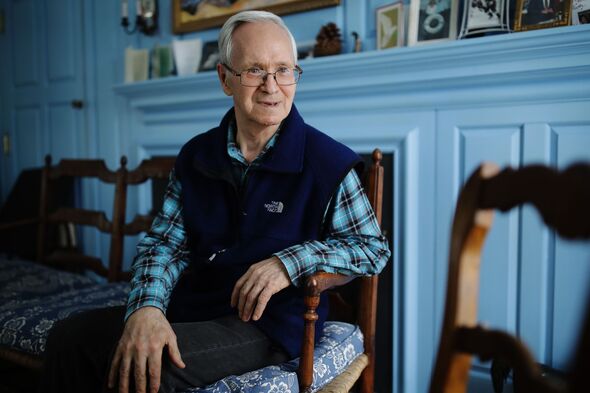
Dr. Vil Mirzayanov, a former scientist who contributed to the development of the nerve agent Novichok, has raised alarms about Russia’s ongoing development of chemical weapons. The 90-year-old scientist claims that under Vladimir Putin, the country is advancing its capabilities in this area, posing a significant threat to global security.
During the 1970s, Mirzayanov worked at the Gosniiokht institute in Moscow, where he was part of a team that created Novichok, a series of nerve agents designed to be more lethal than previous chemical weapons. He later took the courageous step of going public about Novichok in the 1990s, risking imprisonment as he revealed details to a Russian newspaper during the waning days of the Soviet Union.
Although Mirzayanov feared he would be jailed for his disclosures, he found himself protected by the dissolution of relevant legislation after the Soviet collapse. He eventually moved to the United States after attempts to prosecute him failed. Yet, he has remained concerned about the fate of Novichok stockpiles that he believes were not destroyed during the USSR’s dissolution.
In 2008, Mirzayanov published a book detailing Novichok, including its chemical formulas. Just eight days later, the nerve agent was used in the poisoning of former Russian military officer Sergei Skripal and his daughter, Yulia Skripal, in Salisbury, Wiltshire. The then Prime Minister Theresa May confirmed that the weapon used was part of the Novichok group, leading to widespread condemnation of Russia, which denied any involvement.
The Skripal case resulted in the tragic death of 44-year-old British citizen Dawn Sturgess, which prompted an inquiry that indicated that the assassination attempt on Skripal likely received authorization from Putin. The inquiry also criticized the lack of protective measures for Skripal when he relocated to the UK, although experts noted that he preferred to live openly rather than in hiding.
Mirzayanov believes that the agents responsible for the poisoning were rushed, resulting in a less effective application of the agent, which could explain why the Skripals survived the attack. He also speculated that the 2020 poisoning of Russian opposition leader Alexei Navalny did not involve Novichok, suggesting that a different nerve agent was used to avoid further scandal over violations of chemical weapons conventions.
The scientist expressed concern that Putin’s regime is actively developing new chemical weapons that could be even more challenging to detect and counter. His previous work with Foliant, a clandestine program, focused on circumventing international bans on certain chemical agents, which he described as tools of mass destruction against civilians.
Mirzayanov has urged U.S. President Donald Trump to remain vigilant in discussions surrounding peace negotiations related to Ukraine, warning that Russia typically includes loopholes in any agreements signed. He emphasized the need for caution, stating, “They’re creating at least one loophole to circumvent this agreement.”
As the world grapples with the implications of chemical weapons, Mirzayanov’s insights serve as a stark reminder of the ongoing threats posed by state-sponsored research into these deadly agents.