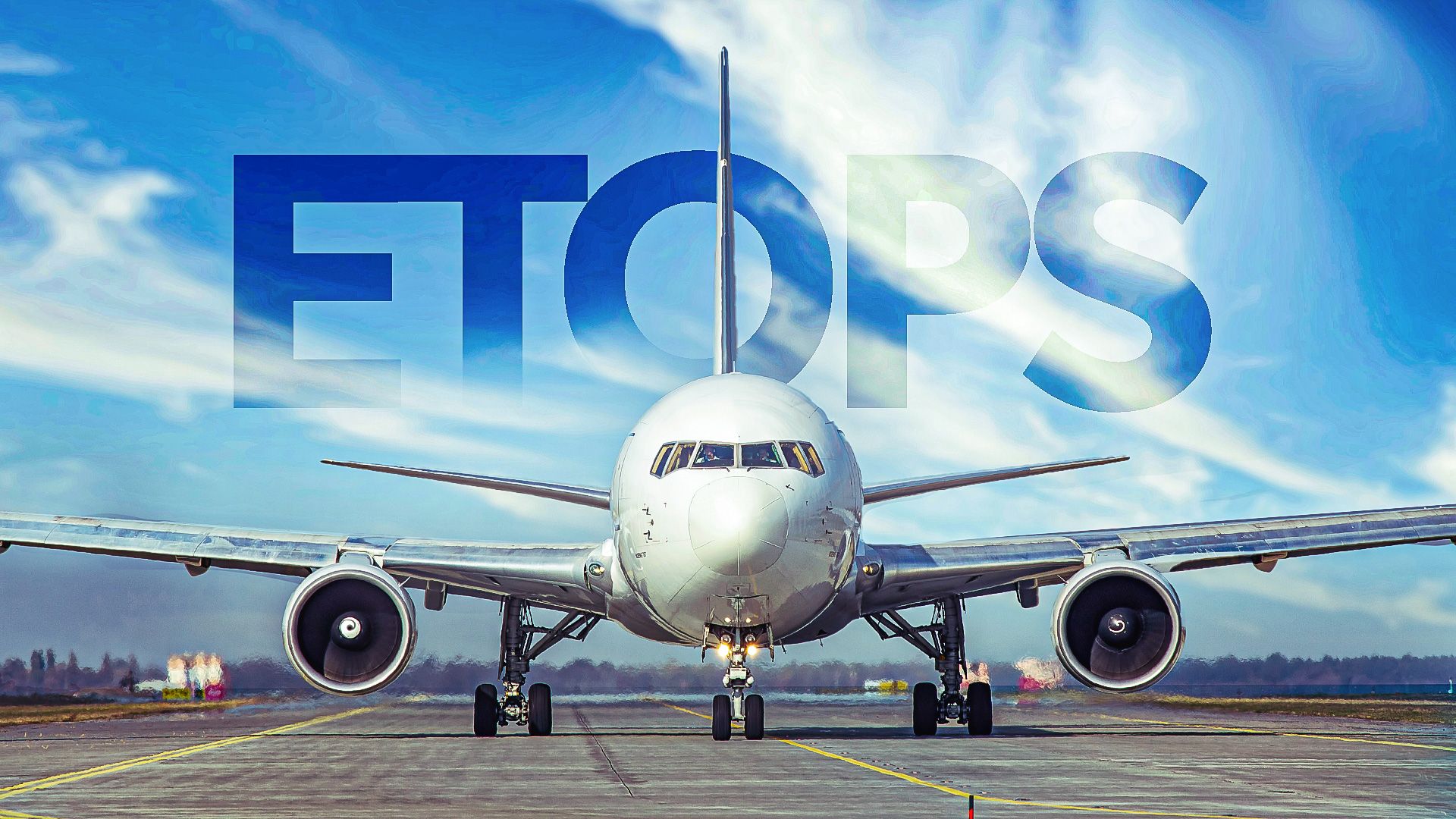
BREAKING: The Boeing 767 has reshaped long-haul aviation by achieving the critical ETOPS certification, paving the way for twin-engine jets to fly routes with minimal emergency landing options. This groundbreaking certification, first granted in 1985, allows aircraft to operate safely over vast stretches of ocean and remote areas, revolutionizing air travel forever.
The ETOPS (Extended-Range Twin-Engine Operational Performance Standards) certification enables twin-engine airliners to journey beyond the traditional 60-minute limit from an airport, a regulation initially enforced due to early engine unreliability. The Boeing 767, particularly the 767-200ER, was the first commercial twin-jet to meet these rigorous standards, thanks to advanced engineering and cooperative efforts between Boeing and the Federal Aviation Administration (FAA).
With its state-of-the-art Pratt & Whitney engines and sophisticated monitoring systems, the 767 could safely fly up to 180 minutes away from the nearest airport, a game changer for airlines. The aircraft’s reliability and efficiency led to a shift away from older, fuel-inefficient four-engine planes like the Boeing 747 and Airbus A380, marking a new era in aviation history.
The journey to ETOPS certification was not without challenges. In the early 1980s, FAA Administrator Lyn Helms was skeptical about allowing twin-engine jets to fly long-haul over water, saying, “It’ll be a cold day in hell before I let twins fly long haul.” However, a shift in leadership under Donald Engen opened the door for the groundbreaking certification, culminating in the FAA’s acceptance of the 120-minute ETOPS rule in 1985.
Airlines quickly recognized the potential of the 767. TWA was the first to fly under the new 120-minute rules, and by 1991, more passengers were traveling across the Atlantic on 767s than on older models. The impact was profound, as the 767’s efficiency allowed airlines to replace aging fleets and cut operational costs.
The expansion of ETOPS capabilities was not limited to transatlantic routes. In 2001, Hawaiian Airlines became the first airline without prior ETOPS approval to obtain a 180-minute certification, allowing it to enhance service to and from the Hawaiian Islands. This milestone marked a significant improvement in the airline’s operational flexibility and efficiency.
As the aviation industry continues to evolve, the legacy of the 767 remains vital. By 2030, major U.S. carriers like Delta Air Lines and United Airlines plan to retire their remaining 767 fleets. However, the aircraft’s freighter variants continue to thrive, with FedEx and UPS Airlines operating a combined total of 200 767 freighters.
Even as the 767 reaches the end of its passenger service life, its influence on modern aircraft design persists. The ongoing development of the Boeing 777X highlights the importance of ETOPS certification in ensuring safety and efficiency in long-haul travel. The 777X is currently undergoing rigorous testing to meet ETOPS standards, with successful certification crucial for its future.
As ETOPS continues to be a priority for aircraft manufacturers, the Boeing 767 stands as a testament to innovation in aviation. Its ability to connect distant locations while maintaining safety and efficiency has transformed the industry and will influence future generations of aircraft design.
Stay tuned for more updates on the latest advancements in aviation technology and how they affect air travel worldwide.