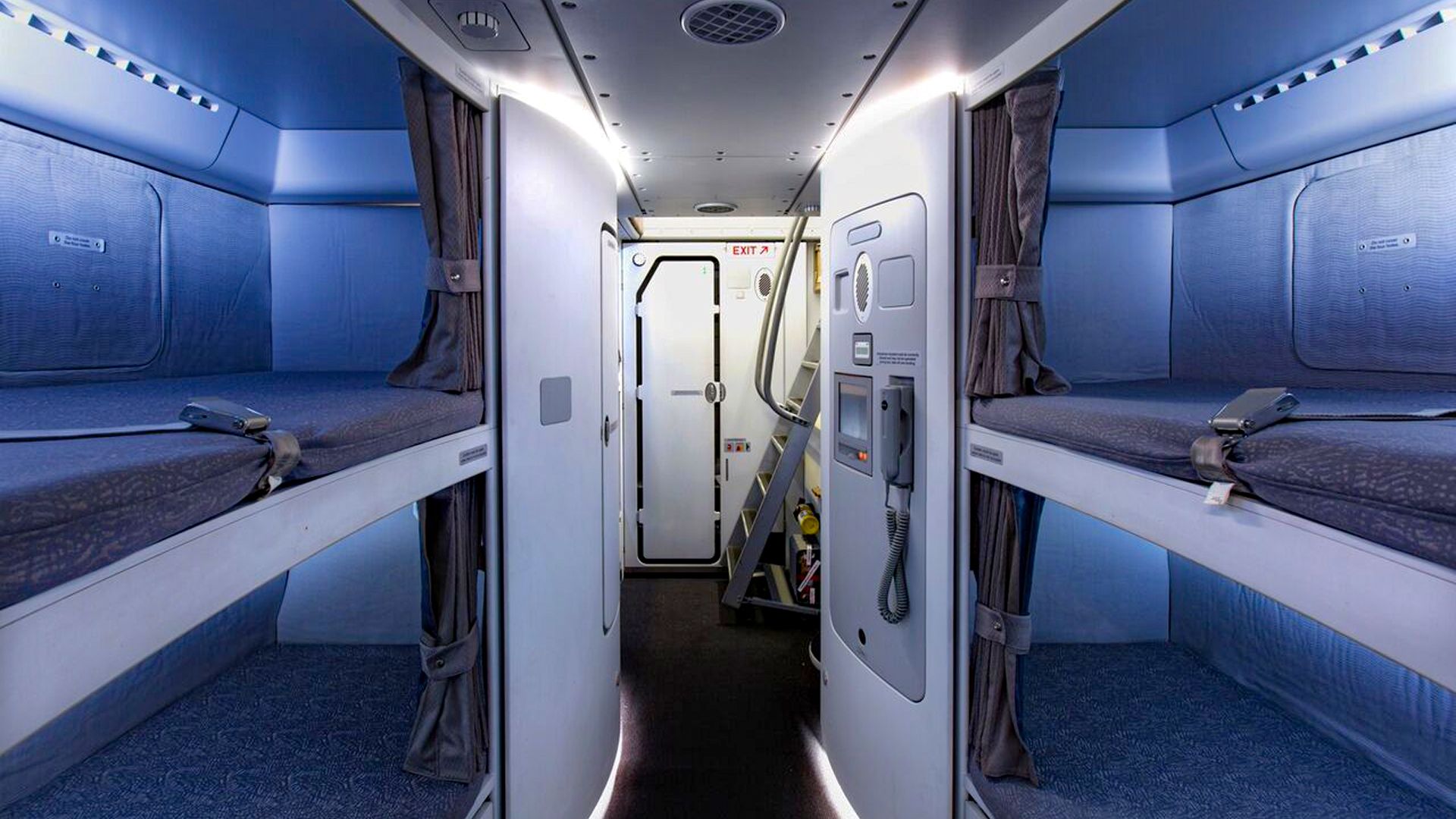
UPDATE: The Airbus A380 is redefining cabin crew rest with dedicated sleeping spaces designed for optimal alertness during long-haul flights. This crucial enhancement is essential for maintaining high service standards and ensuring crew readiness in critical situations, such as turbulence or medical emergencies.
In an urgent announcement, airlines confirm that the A380’s innovative rest areas allow crew to take well-deserved breaks in a private, functional environment. These compartments, located primarily on the aircraft’s lower deck, feature multiple bunks that provide crew members with the chance to lie flat and recuperate rather than attempting to doze upright.
With typical ultra-long-haul operations carrying over 400 passengers alongside a large cabin team of up to 24 members, maintaining crew alertness is paramount. The A380’s design facilitates staggered rest periods, ensuring that every cabin section remains well-staffed throughout the flight. According to Executive Traveller, this system is critical for effective service delivery from takeoff to landing.
The crew rest area is strategically located to reduce noise and distractions from passengers and galley activities. Access is discreet, often hidden behind a service door that passengers may not even notice. This design choice ensures smooth passenger flow while preserving a controlled environment for off-duty crew.
“The presence of crew rest areas is part of the aircraft’s overall safety architecture,” officials state, highlighting its importance in ensuring rested and alert cabin crew.
Inside the crew rest area, the atmosphere contrasts sharply with the bustling passenger decks. The space features padded mattresses in individual compartments, complete with sound-dampening curtains, reading lights, and essential safety equipment like oxygen masks. While some may perceive these areas as cramped, they are designed for efficiency and recovery.
Importantly, the A380 also separates facilities for cabin crew and pilots, recognizing their differing needs. Pilots typically have a designated rest area at the front of the aircraft, which is more spacious and designed for deep rest, essential for their demanding roles.
As airlines prepare for upcoming upgrades—such as those planned for British Airways—the focus remains on enhancing the overall flying experience for both crew and passengers. The A380’s crew rest areas continue to be a favored feature among cabin teams worldwide, reaffirming the aircraft’s commitment to crew welfare and flight safety.
Looking ahead, airlines are closely monitoring the effectiveness of these rest areas. With sectors ranging from 8 to 17 hours, the scheduling of crew rotations is vital. Some crew members can enjoy four to six hours of uninterrupted rest, ensuring they are refreshed for their next service role.
The A380’s versatility and thoughtful design make it a preferred choice for airlines, impacting crew organization and passenger service positively. As the aviation industry evolves, the attention to crew welfare will likely remain a key focal point, enhancing safety and operational efficiency on long-haul flights.
Stay tuned for more updates on the Airbus A380 and other developments in aviation safety and service quality.