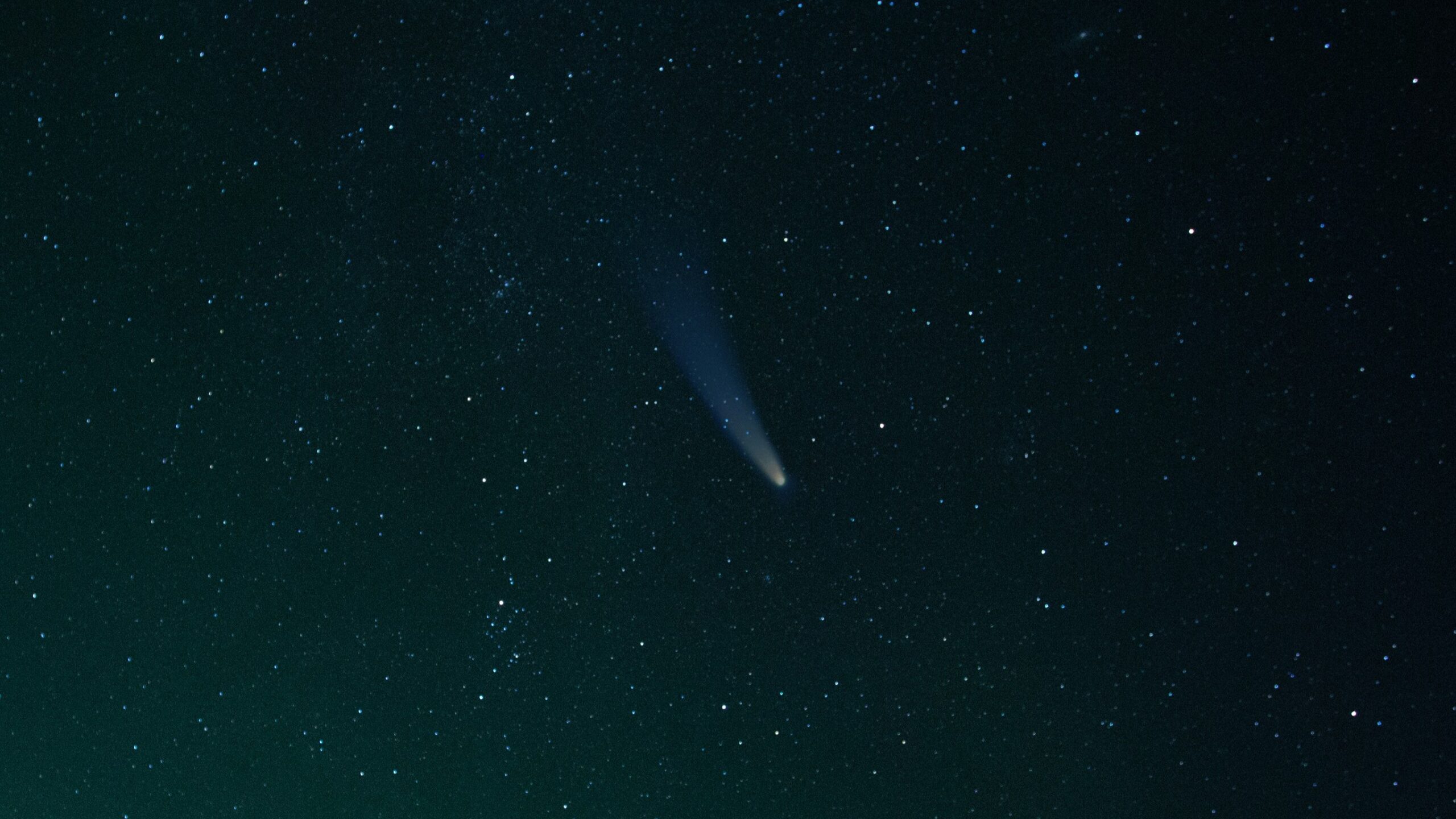
The recent investigation into the interstellar object 3I/ATLAS has concluded, revealing that it does not exhibit signs of artificial origin or alien technology. This object, which entered our solar system in July 2025, garnered substantial global interest, being only the third confirmed interstellar visitor to come from beyond our solar neighborhood. The excitement surrounding 3I/ATLAS stemmed from its unusual features and the public’s curiosity about its potential origins.
3I/ATLAS was discovered by the Asteroid Terrestrial-impact Last Alert System (ATLAS) telescope in Chile. From the outset, it ignited a wave of speculation, with many theorizing that it could be more than just a comet. Online discussions were rife with claims that the object might be an alien probe, particularly after researchers noted its coma of gas and dust, a characteristic typically linked to comets. Despite these observations, the possibilities of extraterrestrial involvement continued to fuel conspiracy theories.
Astrophysicist Avi Loeb notably contributed to the discourse by suggesting that certain attributes of 3I/ATLAS could imply an engineered origin rather than a natural one. Observers pointed to the object’s trajectory, tail alignment, and shifting jets as anomalies indicative of artificial construction. Social media platforms amplified these discussions, with some users claiming that the jets behaved like propulsion systems and that the tail structures defied conventional physics.
In response to the growing theories, astronomers initiated systematic observations of 3I/ATLAS. A critical component of this effort was the search for technosignatures—potential indicators of technology, such as artificial radio transmissions—led by the Breakthrough Listen project. On December 18, 2025, the Robert C. Byrd Green Bank Telescope in the United States focused on 3I/ATLAS as it made its closest approach to Earth. Researchers scanned radio frequencies between 1 and 12 gigahertz, which are considered optimal for detecting interstellar communications.
The results of this comprehensive search were definitive. Although over 471,000 raw candidate signals were initially detected, thorough filtering to eliminate interference from satellites and terrestrial sources resulted in only a few remaining patterns. Further analysis confirmed that all remaining candidates were attributable to known noise or interference, with no strong artificial radio transmissions detected at a strength exceeding approximately 0.1 watts. This threshold suggests that even low-power emitters, like basic walkie-talkies, would have been detected had they been broadcasting from the object’s vicinity.
Beyond the radio search, additional observations from both space and ground-based telescopes provided further insights. Imagery from the Hubble Space Telescope and data from the James Webb Space Telescope depicted 3I/ATLAS with a diffuse coma and tail structures consistent with gas and dust ejected due to solar heating. Infrared studies revealed a composition of carbon dioxide and other volatiles typical of cometary bodies. Moreover, hydroxyl signatures indicative of water activity reinforced the interpretation that 3I/ATLAS behaves like a conventional comet rather than a spacecraft of extraterrestrial origin.
In conclusion, the investigation into 3I/ATLAS has effectively dispelled the notion that it is an alien probe. Researchers have confirmed that the object is consistent with natural cometary behavior, supported by a wide range of observational data. As of now, it appears that 3I/ATLAS is not a harbinger of extraterrestrial life, despite the fervent speculation that surrounded its discovery.