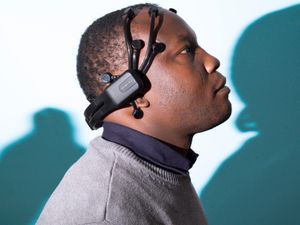
A team of scientists at Glasgow Caledonian University has developed an innovative AI-powered headset capable of predicting epileptic seizures minutes before they occur. This groundbreaking device, designed to enhance the management of epilepsy, could significantly improve the quality of life for many affected individuals. Currently, no consumer device offers reliable advance warning of seizures, leaving patients vulnerable and unprepared.
The wearable headset works by analyzing brainwaves and heart functions to detect patterns indicative of an impending seizure. This early warning system enables users to take necessary precautions, whether that means seeking help or moving to a safer environment. Professor Hadi Larijani, who leads the research team, emphasized the potential impact of the device, stating, “Providing even a few minutes’ warning could be life changing.”
Transforming Epilepsy Management
Currently, hundreds of thousands of individuals in the UK and millions globally live with epilepsy. The new headset aims to empower these patients and their families, enhancing their confidence in managing the condition. “Our goal is to empower patients and families with time to act to stay safe and live more independently,” Professor Larijani remarked.
The headset is designed to be discreet, wireless, and lightweight, aiming to resemble a cap for ease of use. The research team has trained the AI system using thousands of hours of historical data from electroencephalography and electrocardiography recordings. They even utilized a custom-made “phantom head” to attach electrodes, simulating real users to refine the accuracy of the alerts. The system boasts an impressive accuracy rate of up to 95% in predicting seizures.
The AI not only alerts users about potential seizures but also provides a confidence level regarding the prediction, enabling families to gauge the urgency of the situation. Professor Larijani highlighted the emotional aspect of the technology, stating, “For families affected by epilepsy, even a brief warning means they can prevent injuries and reduce fear. That is the true measure of success for us.”
Next Steps for Development
The team is currently refining the headset’s design to ensure it is suitable for children as well. While initial prototypes have utilized third-party hardware, the aim is to develop in-house models that meet the specific needs of users. Due to the stringent regulatory requirements for medical devices, it may take several years before the product becomes widely available.
“The most regulated things are medical devices. It takes time to get through the hurdles,” Professor Larijani explained. He noted that the initial feasibility testing of both software and hardware characteristics has been completed. The team is now focused on creating a commercial-ready product that can navigate the accreditation process for medical devices.
Recent support from UK Research and Innovation through its £9 million Proof of Concept programme will further bolster the development efforts. As research progresses, the team remains optimistic about the potential impact their AI headset could have on the lives of those living with epilepsy.