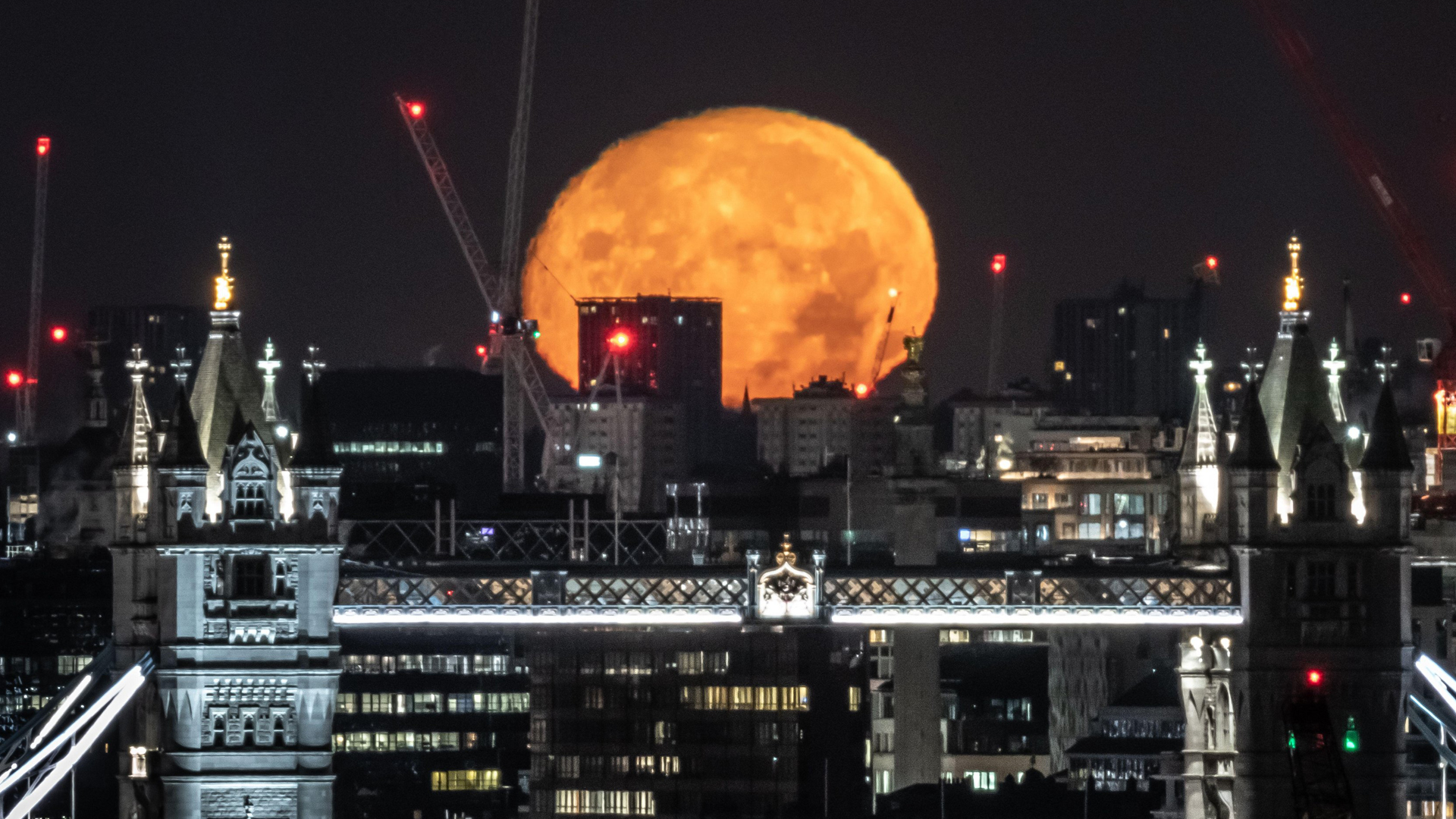
A striking supermoon will illuminate the night sky tonight, marking the first of three such lunar events in 2026. This full Moon appears particularly large and bright as it reaches its closest point to Earth, a phenomenon known as lunar perigee.
Understanding the Supermoon Phenomenon
A supermoon occurs when the Moon is near its perigee, the point at which it is closest to Earth in its elliptical orbit. According to the Royal Greenwich Observatory, the average distance from Earth to the Moon is approximately 238,000 miles. However, during a supermoon, this distance can shrink to around 221,000 miles. This closer position enhances the visual spectacle, making the Moon appear larger and brighter than usual.
The opposite of a supermoon is a micromoon, which occurs when the Moon is at its furthest point from Earth, known as apogee. While less visually impressive, both events are reminders of the dynamic relationship between Earth and its natural satellite.
Upcoming Supermoon Dates in 2026
This year, lunar enthusiasts can look forward to two more supermoons following tonight’s event. The dates for these occurrences are:
– November 24, 2026
– December 24, 2026
The December supermoon will be particularly noteworthy as it will be the closest of the three.
The full Moon in January is often referred to as the “Wolf Moon,” a name that originates from traditional folklore. The Old Farmer’s Almanac has popularized such names based on the characteristics of the season in which each full Moon appears. For 2026, here is the complete list of full Moon names:
– Wolf Moon – January 3
– Snow Moon – February 1
– Worm Moon – March 3
– Pink Moon – April 1
– Flower Moon – May 1
– Strawberry Moon – June 29
– Buck Moon – July 29
– Sturgeon Moon – August 27
– Corn Moon – September 26
– Hunter’s Moon – October 26
– Beaver Moon – November 24
– Cold Moon – December 24
The term “Wolf Moon” is said to reflect the howling of wolves during the cold winter nights.
Viewing and Photographing the Supermoon
Observing a supermoon is relatively straightforward, as it will be the most prominent object in the night sky. To enhance your viewing experience, consider a few practical tips. First, check local weather forecasts for clear skies, as clouds can obstruct the view.
Finding a location with minimal light pollution is crucial. Areas away from city lights, such as rural landscapes or elevated spots, will provide the best viewing conditions. Setting up a tripod for photography can significantly improve the quality of your images. This is especially important when using smartphones, as even slight movements can lead to blurry photos.
If you own an iPhone, placing it on a tripod can activate a “night mode,” which allows the camera to capture more light, producing clearer images of the Moon.
For a truly captivating experience, consider timing your observation to coincide with moonrise shortly after sunset or moonset just before sunrise. During these times, an optical illusion makes the Moon appear larger against the horizon, creating a stunning visual effect.
In preparation for tonight’s viewing, it is advisable to dress warmly, as temperatures can drop significantly during the winter nights.
In summary, tonight’s supermoon offers a remarkable opportunity for stargazers and photographers alike. With the right conditions and preparations, this celestial event promises to be a memorable experience.