Montenegro is grappling with a significant ideological conflict, as historical revisionism emerges as a political project. A recent study indicates that one-third of the population lacks a clear stance on documented war crimes and collaboration during World War II. This uncertainty, coupled with institutional inaction regarding attempts to rehabilitate ideologies linked to the losing side of history, raises concerns about the nation’s future relationship with its past.
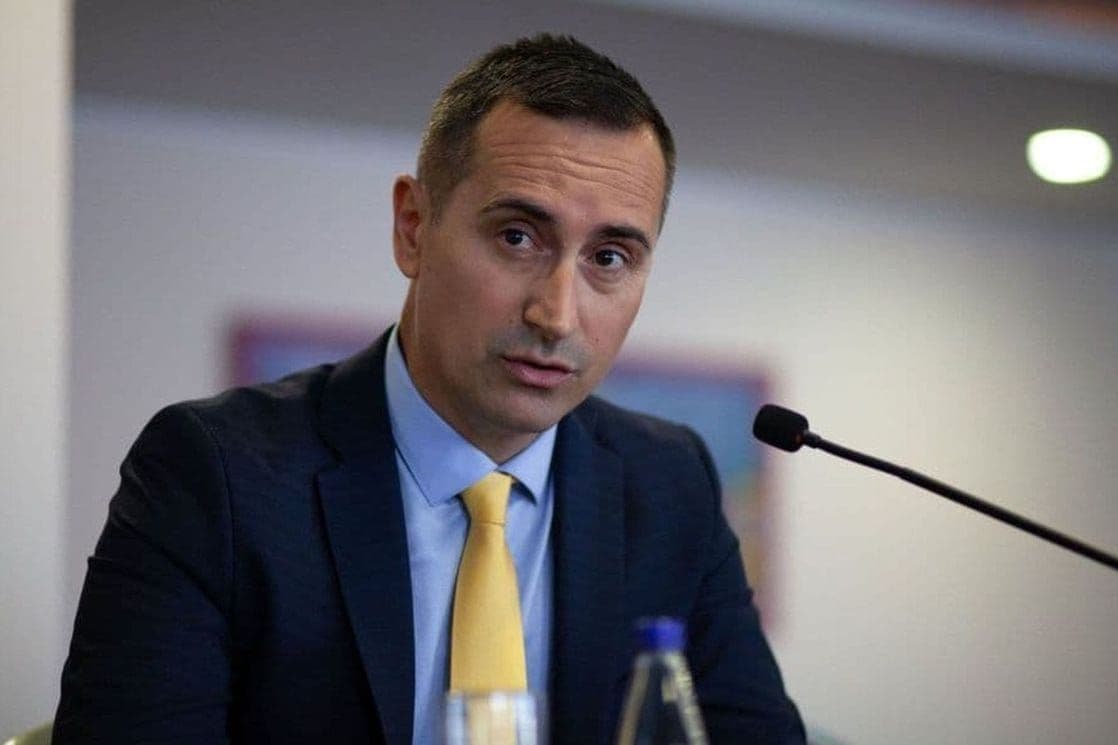
Historian Milan Šćekic highlights that as history becomes increasingly relativized, the value framework of society blurs. Political and media narratives are normalizing revisionism, which creates a silent yet profound conflict between the antifascist legacy and contemporary political attempts to undermine it. This situation is exacerbated by the relationship with the Chetnik movement and declining trust in Montenegro’s European path.
A survey conducted by CG Plus in December 2022 revealed that the percentage of citizens who remain neutral about the historical role of Pavle Đurišić is nearly equal to those who hold a positive view of him. Šćekic questions whether this reflects ignorance or a deliberate effort to undermine historical facts. He suggests that many citizens, fatigued by identity issues and historical debates, feel disillusioned as political elites fail to offer anything beyond historical discourse.
The discourse surrounding historical figures like Đurišić, who is associated with controversial actions during the war, continues to polarize opinions. With nearly 60 percent of citizens opposing the erection of a monument to Đurišić, the fact that over a quarter of the population remains indifferent raises critical questions about societal values. Šćekic argues this indifference indicates a troubling normalization of ideologies that contradict the antifascist foundations of modern Montenegro.
The passive response of institutions regarding historical matters has led to a sense of disorientation within society. Šćekic asserts that the education system has limitations but emphasizes that citizens’ views of history are often shaped more by the ruling regime than by educational content. While the education system is essential, it cannot solely stop political entities from distorting historical narratives.
The ongoing debate regarding the monument to Đurišić illustrates the complexities of this ideological battle. The monument’s presence, despite significant public opposition, is seen as an attempt to impose a narrative that glorifies a historically contentious figure. Šćekic describes this as a forceful effort to reinterpret the Chetnik movement as a legitimate antifascist entity, which historical evidence does not support.
Despite the legal proceedings surrounding the monument, institutional inertia raises concerns about the message sent to society. Šćekic expresses skepticism about the institutions’ ability to act in a timely manner, suggesting that political will is lacking. The ongoing failure to address the monument reflects a broader acceptance of revisionist narratives, with the potential to reshape public perception if left unchallenged.
The phenomenon of approximately 12 percent of the population holding a positive view of Đurišić is not to be underestimated, according to Šćekic. He warns that while this figure may seem insignificant, it points towards a deeper issue rooted in familial and local narratives, bolstered by modern political and media campaigns. He believes that if the media focused less on these divisive historical topics, citizens might shift their attention towards more constructive discussions.
The declining support for European Union membership—down by about 13 percent in four years—signals a shift in public sentiment. Šćekic notes that the initial allure of EU membership has diminished, especially as Montenegro’s accession process has stagnated since its application in December 2008. The delay has fostered skepticism regarding the country’s civilizational and value trajectory, raising questions about its future direction.
As Montenegro navigates these challenges, Šćekic posits that the country finds itself at a critical juncture. He identifies a struggle between an independent, antifascist, democratic Montenegro and one that exhibits a servile mentality towards its past. While it is unclear which side currently holds the advantage, he remains optimistic that the antifascist principles will ultimately prevail.
In conclusion, Montenegro is at a crossroads, as historical narratives clash with political ambitions. The outcome of this ideological struggle may shape the nation’s identity and future, underscoring the importance of addressing historical truths within the context of contemporary society.