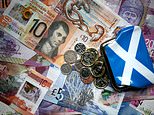
The upcoming Scottish Budget, scheduled for release next week, has sparked debate as it appears to rule out any tax cuts for the near future. Shona Robison, the SNP finance minister, is expected to present a budget that maintains current income tax rates, despite recent policy changes from Westminster that could provide additional funds. The decision not to consider tax reductions has raised questions about the government’s approach to economic growth and taxpayer relief.
Political Context and Financial Implications
The political landscape in Scotland is shifting as campaigning intensifies for the May 2026 elections. With the Scottish Budget being a key focus before the election, many observers are concerned about how the current government is handling fiscal policy. The recent decision by Chancellor Rachel Reeves to eliminate the two-child benefit cap has provided the Scottish Government with increased financial flexibility. Robison’s reluctance to pursue tax cuts, however, suggests a commitment to a fiscal strategy that prioritizes public spending over tax relief.
Critics assert that the Scottish National Party (SNP) is missing an opportunity to stimulate economic growth by not cutting taxes. The absence of a competitive tax environment in Holyrood suggests a prevailing political culture that views tax cuts as politically unpalatable, leading to concerns about a stagnating economy. Many believe that this reluctance to reduce the tax burden hampers both individual financial freedom and broader economic development.
The Case for Tax Cuts and Economic Growth
Proponents of tax cuts argue that reducing the fiscal burden on households can have a positive impact on the economy. They contend that when individuals retain more of their earnings, they are incentivized to spend, leading to increased consumption of goods and services. This, in turn, generates higher revenues through value-added tax (VAT) and stimulates job creation, resulting in a more vibrant economy.
“Tax cuts, properly designed and mindful of the economic circumstances of the day, can increase rather than decrease revenue.”
Despite these arguments, Robison’s position reflects a broader political ideology that equates tax cuts with self-interest and privilege. The prevailing attitude within the SNP and some segments of the Scottish Parliament views tax reductions as contrary to the principles of social equity. This ideological stance poses challenges for any potential shifts in fiscal policy that could benefit taxpayers.
The upcoming Budget represents an opportunity for the SNP to reconsider its approach to taxation. By embracing growth-oriented tax cuts, the government could not only alleviate financial pressure on families but also set the stage for a more dynamic economy. The connection between individual financial well-being and the common good is crucial. When people are allowed to keep more of their hard-earned money, it ultimately benefits all sectors of society.
As technological advancements change the way services are delivered, there is a growing expectation for governments to adapt to these changes. Citizens are increasingly seeking more control over their economic choices, which may challenge the traditional tax-and-spend model that has dominated Scottish politics. The ability to innovate and respond to public demand could hinge on the government’s willingness to reconsider its stance on tax cuts.
In summary, the Scottish Budget is poised to reflect not only fiscal policy but also the ideological underpinnings of the current government. As the political environment evolves, the challenge will be for leaders to recognize the potential benefits of tax cuts in fostering economic growth and improving public services. The decisions made in the upcoming Budget could have lasting implications for the future of Scotland’s economy and its citizens’ financial health.