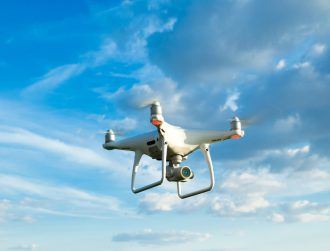
On December 1, 2023, a significant incident occurred involving several drones that reportedly approached the flight path of Ukrainian President Volodymyr Zelensky‘s airplane over the Irish Sea as it neared Dublin. Although Zelensky and his wife landed safely, the event highlighted critical issues regarding the detection and management of coordinated drone threats. Discussions surrounding this incident have largely focused on accountability, with An Taoiseach Micheál Martin firmly rejecting Russian denials of involvement. Beyond these diplomatic aspects, experts are emphasizing the urgent need for advanced technological solutions to enhance national security.
The primary challenge in addressing drone threats lies in their detection. Current technologies such as radar, radio-frequency scanning, and optical imaging each come with limitations. Often, by the time a drone is detected, it is too late for effective countermeasures. In the case of the December incident, had these drones targeted Zelensky’s plane, the outcome could have been dire.
Determining the potential threat posed by a detected drone is another pressing concern. Reports regarding the number and types of drones involved in the incident varied, complicating assessments. For example, if there were 30 drones in the vicinity, identifying which of those posed a genuine risk would be crucial. The incident raises questions about the effectiveness of current monitoring systems and their ability to provide reliable threat assessments in real time.
An equally significant challenge is the timeframe in which security officials can respond. If the drones had aimed to attack, security forces would need to act swiftly enough to prevent any harm. The effectiveness of their response depends on how quickly they can identify and assess the threat, a factor that remains uncertain from the reports of the December incident.
To address these challenges, a multi-tiered approach combining human judgment with AI capabilities may offer a viable solution. A human-AI defense system could leverage AI’s speed in processing data while allowing humans to make nuanced decisions that AI might overlook. Traditional detection methods, including radar and acoustic analysis, could feed into machine learning models that accurately predict drone trajectories and potential threats.
According to analysis of the December incident, the drones violated a no-fly zone and approached a high-value target. Such situations should automatically trigger alerts, enabling a rapid response, including communication jamming or deploying interceptor drones from nearby naval vessels. A coordinated drone swarm could dynamically track and redirect suspicious drones, enhancing overall airspace security.
Should such measures be necessary, security teams equipped with an online dashboard could quickly evaluate potential threats based on predictive models. Trained officials could authorize defensive actions, including deploying interceptor drones to neutralize threats without compromising civilian safety.
At this stage, the specific defenses employed by the Irish military during the incident remain unclear, as does the rationale behind any decisions made. The nature of hybrid activities, such as this drone incident, often seeks to test a nation’s response capabilities. Understanding the timing and decisions made by security officials during the event could provide insights into improving future responses.
As highlighted by Professors Barry O’Sullivan of University College Cork and V S Subrahmanian of Northwestern University, a collaborative approach between AI technology and human oversight is essential for effective national defense. Such a system can provide the speed needed in emergencies while ensuring responsible decision-making.
The December incident serves as a wake-up call for Ireland and other nations to reassess their drone defense strategies. Developing a robust human-AI drone defense system is not merely a technological challenge but a critical necessity for safeguarding national airspace in an increasingly complex security landscape.