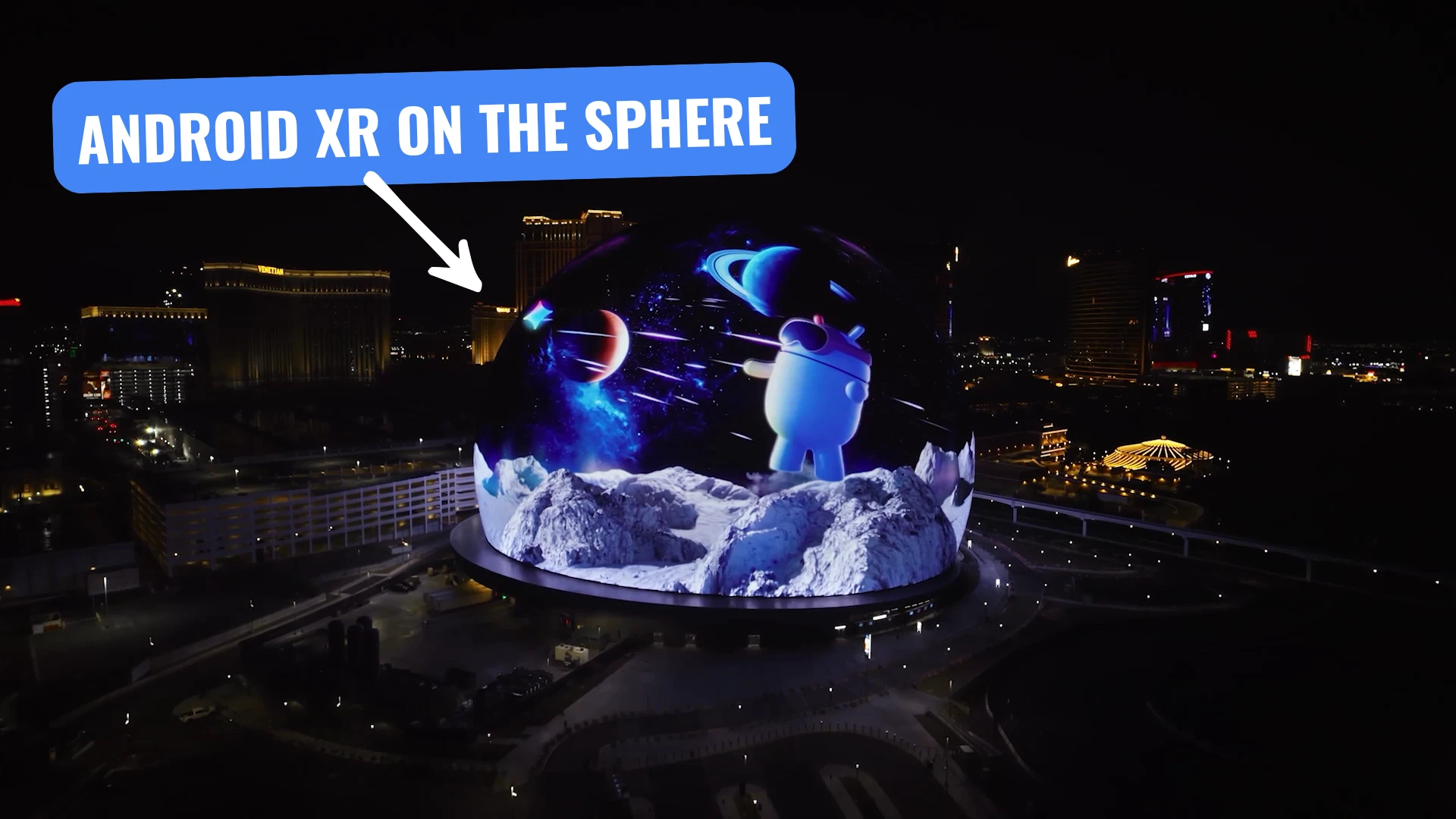
At CES 2026, Google has officially introduced Android XR, showcasing it through an impressive display at the Sphere in Las Vegas. This striking presentation marks a significant transition from software to hardware, capturing the attention of industry experts and attendees alike. With the vibrant Las Vegas skyline serving as a backdrop, Google aims to establish Android XR as a competitive alternative in the high-end headset market.
The launch of Android XR follows months of anticipation, and the demonstration highlights the platform’s capabilities in spatial computing. By transforming the Sphere into an immersive environment, Google showcases how its new operating system integrates advanced technology to enhance user experiences. This ambitious display signals a clear commitment from Google to lead in a market that has been eager for a more open, Android-powered solution.
Spotlight on Gemini’s Integration
Central to the appeal of Android XR is its integration with Gemini, Google’s advanced artificial intelligence framework. Unlike previous mobile adaptations, this operating system offers a situational awareness that elevates it beyond a simple interface. Users can expect a more interactive experience, where Gemini assists in real-time based on the user’s physical surroundings.
In the Sphere demonstration, the iconic Android mascot illustrates these features by navigating through virtual environments and executing tasks such as mid-air painting. This practical application of AI showcases the potential for users to create and explore in new dimensions. Those familiar with Gemini on their phones and Chromebooks will find its transition to a 3D context to be a natural evolution of the technology.
Collaboration with Hardware Partners
As the event unfolds, the collaboration between Google and Samsung is also in focus. The Galaxy XR, a product of this partnership, has set high expectations for the integration of hardware and software. However, the broader narrative for 2026 will revolve around how various original equipment manufacturers (OEMs) adopt Android XR to introduce diverse form factors, ranging from tethered glasses to standalone high-performance headsets.
Google is positioning Android XR as the “Android of the XR world,” aiming to provide a flexible and powerful platform that allows hardware partners to innovate while ensuring a consistent user experience. As more information emerges from CES, it becomes evident that spatial computing is not just a passing trend for Google; it is becoming a fundamental component of its future Android strategy.
The excitement surrounding Android XR at CES 2026 highlights a pivotal moment for Google as it ventures deeper into the realm of spatial computing. As the technology continues to evolve, users can anticipate a richer and more immersive digital landscape driven by AI capabilities.