
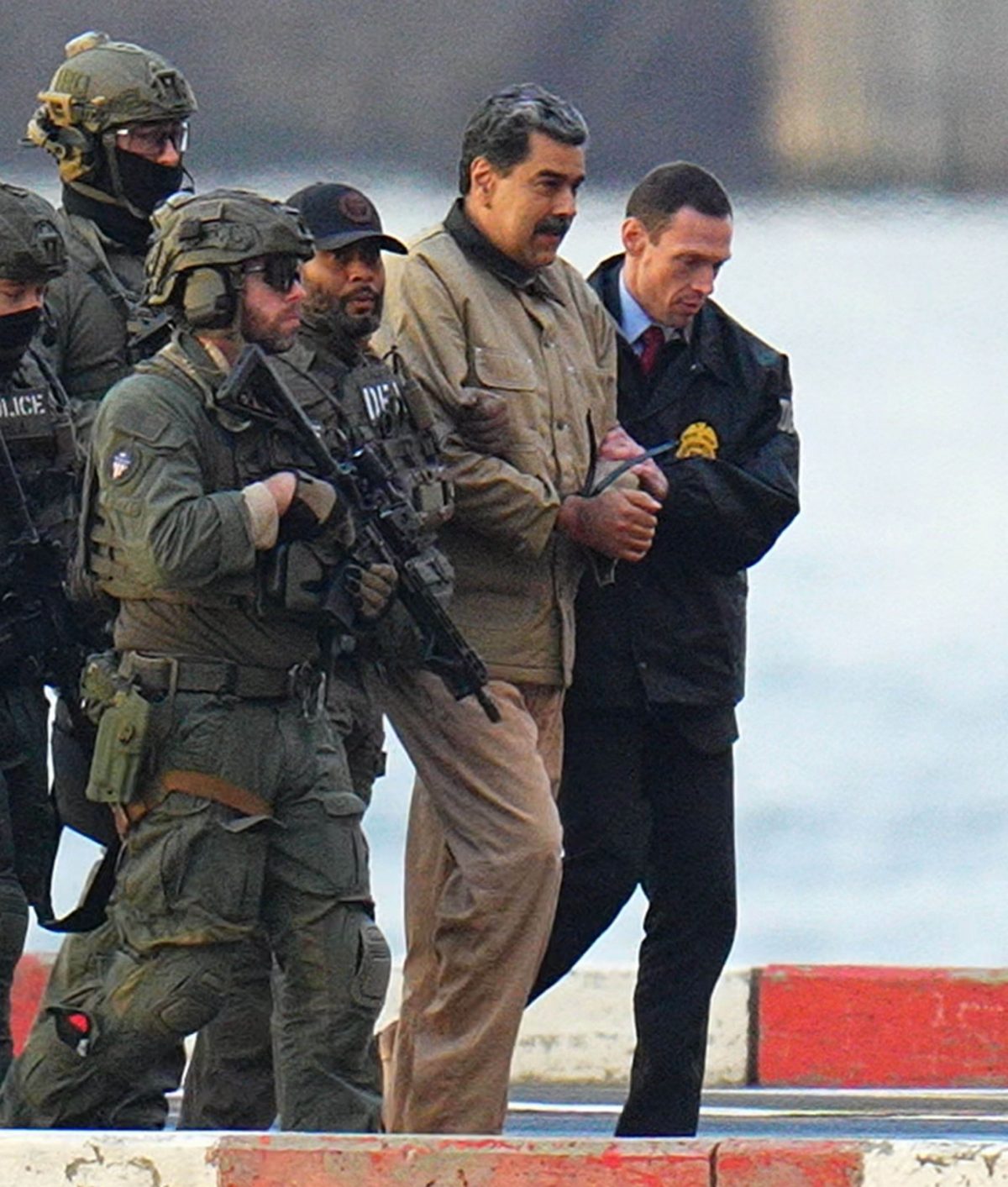
Nicolás Maduro, the former president of Venezuela, was arrested over the weekend by US officials and presented before the cameras at the New York offices of the Drug Enforcement Administration (DEA). His arrest marks a significant moment in international relations as Maduro faces charges related to drug trafficking and narco-terrorism. Despite the serious nature of the allegations, Maduro appeared confident, greeting the media with a smile and wishing them a “good night” and a “happy New Year.”
The encounter evokes memories of Maduro’s earlier days in Venezuelan politics. Eighteen years ago, he was serving as the foreign minister under the late Hugo Chávez. The trajectory of his political career was shaped by a pivotal meeting in 1993 with Chávez, a former coup plotter who had ambitions for a socialist revolution in Venezuela. Maduro recounted that meeting, stating, “That day, I left levitating… I had no doubt.” This self-belief, however, has often been accompanied by miscalculations.
In February 2007, during a visit to Caracas, an interview with Maduro almost did not happen due to delays attributed to his “busy schedule.” While waiting for several hours in the foreign ministry, I observed a sense of urgency from officials to ensure the interview took place. They feared Maduro would question their competence if we left without speaking to him. Eventually, he arrived late, exuding self-assurance but offering no apology for the delays.
In that interview, Maduro expressed grand ambitions for Venezuela, promising economic prosperity and social programs aimed at reducing poverty. At that time, US oil companies were engaged in lucrative partnerships with Venezuela’s state oil company, and the crackdown on opposition leaders had not yet begun. Today, Maduro faces an entirely different landscape, with his government under intense scrutiny and pressure.
Reports indicate that Maduro declined an offer last month from Donald Trump to flee to Turkey and go into exile. Instead, he has displayed a sense of bravado, even conducting a televised interview in Caracas just days before his arrest. His wife, Cilia Flores, accompanied him during the interview, a stark contrast to her current situation as she awaits trial in a New York jail.
Following his arrest, Maduro plans to challenge the legality of the actions taken against him. He argues that his arrest was an “extrajudicial kidnapping” on Venezuelan soil, a claim that could resonate in court. The US Department of Justice faces the difficult task of justifying the operation that resulted in his capture.
Maduro’s legal strategy may involve leveraging his extensive knowledge of US covert operations in Latin America. This could potentially lead to a plea deal, wherein he agrees to provide information on sensitive intelligence in exchange for leniency.
After his arrest, Maduro was photographed handcuffed but seemingly unfazed, giving a thumbs-up to the cameras. This reaction underscores his long-held belief in his political survival. As I learned during our meeting years ago, Maduro is willing to take risks, even when those risks could lead to his downfall.
The outcome of Maduro’s legal battles will have significant implications for Venezuela and its relationship with the United States. As events unfold, the world will be watching closely to see how this saga develops and what it means for the future of Venezuelan politics.


