
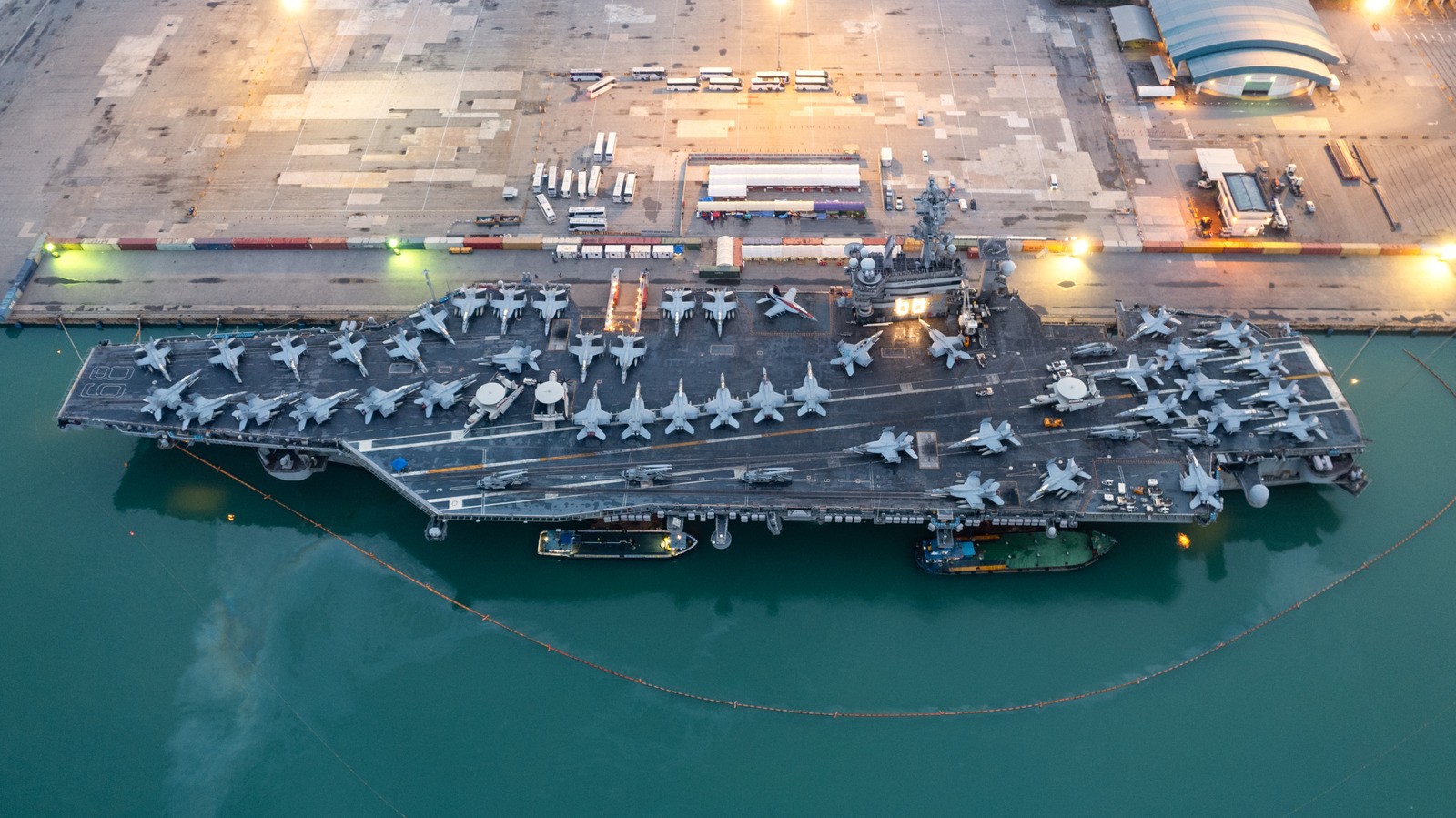
UPDATE: The U.S. Navy is revolutionizing carrier landings with the newly refined Precision Landing Mode, a groundbreaking system that significantly enhances pilot safety and efficiency. This advanced technology, which began as the “Magic Carpet” project in 2015, has now been integrated into training protocols for newly qualified pilots on F/A-18E-F Super Hornets as of 2021.
As of now, the Navy confirms that this critical system reduces the number of necessary pilot adjustments during landings from an overwhelming 300 to fewer than 10. This development comes as military operations demand the utmost precision, especially when landing on the confined deck of an aircraft carrier amidst challenging conditions.
The Precision Landing Mode aids pilots by maintaining optimal aircraft positioning, allowing them to focus on critical landing maneuvers without the burden of constant adjustments. It is designed to ensure that the aircraft’s nose remains level and optimal angles are maintained for tailhook engagement with arresting wires—a vital process for stopping aircraft on the limited space of a carrier deck.
In an urgent statement, Capt. Dan Catlin, commanding officer of the Strike Fighter Squadron, noted the system’s impact during training exercises: “By far the smoothest evolution, best performance we’ve seen from our students ever — and that’s by an awful lot.” With the Navy’s commitment to safety, this technology is expected to become a new standard for naval aviators.
The integration of Precision Landing Mode marks a significant leap forward in military aviation technology. While the system is a powerful tool, experts emphasize the necessity of retaining manual landing skills. Capt. Catlin highlighted that even experienced pilots must practice manual landings to ensure proficiency in case of system failures.
As military engagements continue to evolve, the role of technology in supporting human capabilities has never been more critical. The Navy’s proactive approach in adopting such advancements underlines the importance of safety and efficiency in high-stakes operations.
Moving forward, the Navy will continue to monitor and refine the Precision Landing Mode, ensuring that it remains an indispensable asset for aviators. This ongoing development represents just one of the many ways the military is leveraging technology to enhance operational effectiveness while keeping human expertise at the forefront.
Stay tuned for more updates as the U.S. Navy’s training programs evolve with this state-of-the-art technology, ensuring safer skies and more efficient missions for those who serve.


