
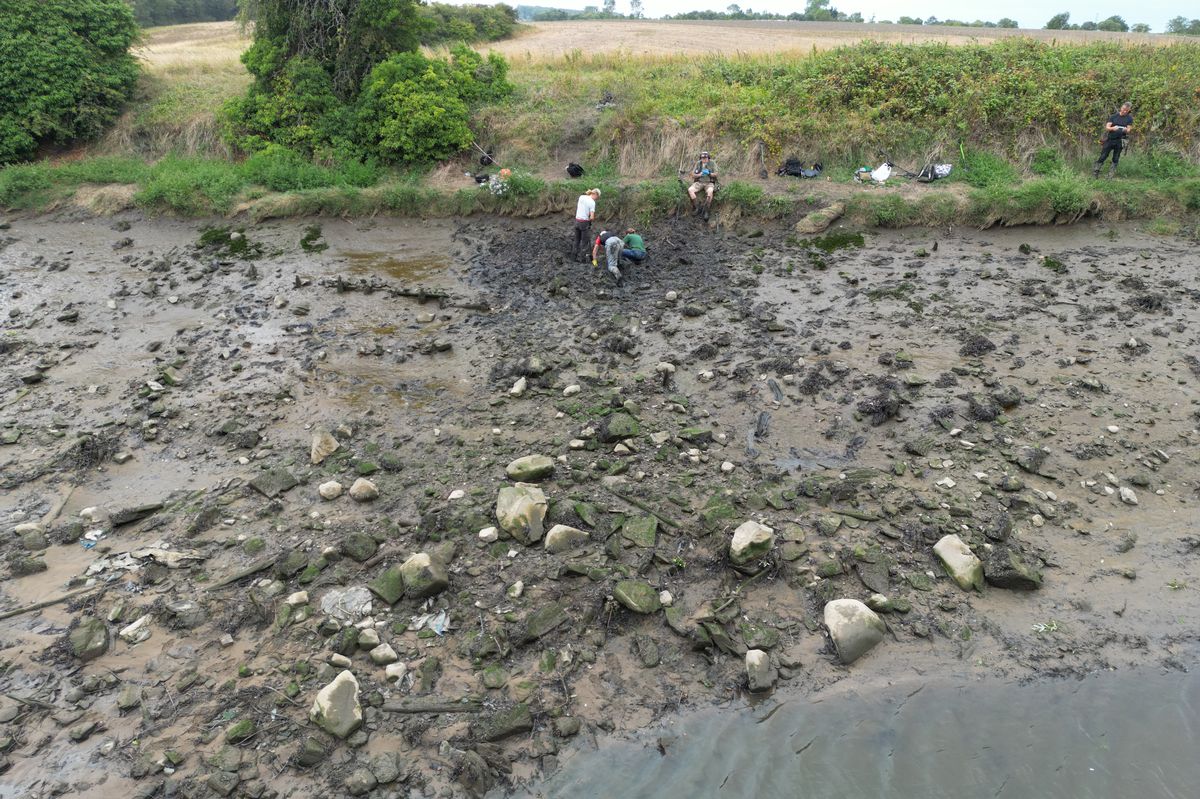
Experts have made a significant archaeological discovery on the banks of the River Wear near Sunderland, revealing a Roman industrial hub in the hamlet of Offerton. The site, excavated by local volunteers from the Vedra Hylton Community Association in collaboration with Durham University, yielded over 800 whetstones and eleven stone anchors, providing new insights into the manufacturing and trade practices of Roman Britain.
The discovery was confirmed through sediment analysis conducted by Durham University’s Department of Archaeology, which established that the site dates back to the Roman period. This find is notable as it represents the largest known collection of whetstones from this era in North West Europe, positioning North East England within the broader context of Roman manufacturing and trade networks.
Significance of the Discovery
The whetstones, which are used to sharpen bladed tools and weapons, indicate that Offerton is the first Roman site in Britain where stone was specifically quarried for whetstone production. Alongside the whetstones, the excavation team uncovered various artifacts, including a post-medieval wooden jetty structure, a stone-built jetty, tools such as chisels and stone splitters, a Tudor-era leather shoe, as well as iron and stone cannonballs dating back to the English Civil Wars.
These findings collectively suggest that human activity along the River Wear may extend the known timeline by over 1,800 years. The team, led by Gary Bankhead, President of the Vedra Hylton Community Association and Honorary Fellow at Durham University, is enthusiastic about the implications of this discovery.
Bankhead remarked, “This isn’t just a Roman site—it’s Sunderland’s story, revealed through the dedication of local volunteers and researchers working side by side. The River Wear has once again offered us a remarkable discovery, and we are only beginning to understand its full legacy.”
Future Research and Community Impact
The excavation findings are set to be featured in the new series of “Digging for Britain” on BBC Two, available on iPlayer from January 7, 2024. The project has garnered support from various experts, including Dr. Eleri Cousins, Assistant Professor in Roman Archaeology, who emphasized the significance of the whetstones in understanding manufacturing in Roman Britain, particularly in the north of the province.
Local government officials, including Cllr Michael Mordey, leader of Sunderland City Council, highlighted the discovery as a vital addition to the city’s industrial narrative. Mordey stated, “This shines a whole new light on the role Sunderland may have played in the Roman Empire, presenting an exciting opportunity to learn new things from our rich historical past.”
Additionally, Emily Swift, Senior Asset Manager for Coastal at The Crown Estate, expressed excitement about the discovery and the collaborative efforts involved in bringing it to light. She noted the importance of mapping the historical significance of the River Wear to ensure its preservation for future generations.
As the excavation team prepares for further survey work to assess the full extent of the site, the community and researchers alike are eager to uncover more about this pivotal chapter in Sunderland’s history.


