Nigel Farage, the Member of Parliament for Clacton-on-Sea, has drawn criticism for opting to skip a crucial session of Prime Minister’s Questions (PMQs) in favor of a guest appearance on Times Radio. This decision, announced on January 6, 2026, has sparked a wave of public backlash, with many questioning his commitment to his constituents and his responsibilities as an MP.
Despite having made eight attempts to secure a seat in the House of Commons, Farage has frequently been absent from parliamentary sessions, including PMQs. He is known for one of the lowest attendance records in the Commons, leading to concerns about his priorities, which appear to lean more towards lucrative media engagements than his duties as an elected representative.
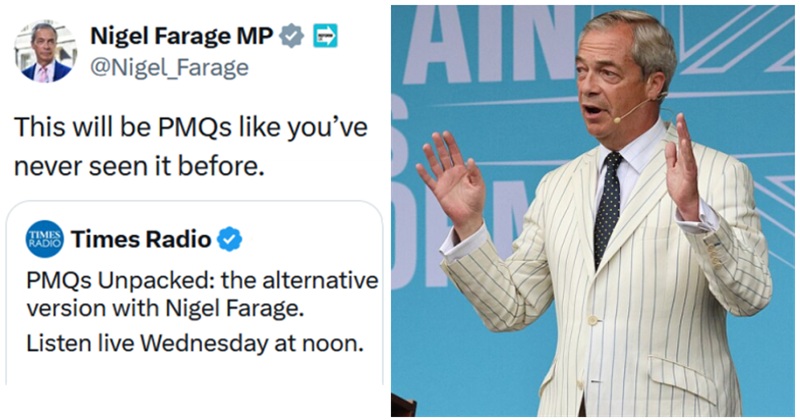
On social media, Farage promoted his upcoming appearance on PMQs Unpacked, describing it as “PMQs like you’ve never seen it before.” This claim received significant derision. Critics have pointed out that he is paid by taxpayers to attend Parliament. As one Twitter user remarked, “Farage is paid — by us — to attend Parliament. Now the Times are paying him to stay away.”
Public responses ranged from incredulity to anger. One user commented, “This should not be allowed – or if it does, Farage should be removed from Parliament.” Another individual noted the irony of Farage complaining about the PMQs format while rarely attending, stating, “Nigel Farage. Man who moans that PMQs is rigged, but hardly ever turns up to see rigged PMQs, will now hold his alternative PMQs.”
The backlash highlights a growing frustration among constituents and the public regarding Farage’s commitment to his role. Many are questioning his decision to prioritize media appearances over direct engagement with the people he represents.
This situation raises concerns about the responsibilities of elected officials and the expectations voters have for their representatives. Farage’s critics argue that his actions reflect a broader trend of politicians prioritizing personal branding and media presence over legislative duties.
As the MP for Clacton-on-Sea, Farage’s absence from face-to-face surgeries with constituents adds to the scrutiny of his effectiveness in office. Given that he has not held an in-person surgery since taking office, questions about his engagement with local issues remain pertinent.
In summary, Farage’s choice to forgo attending PMQs in favor of a radio appearance has not only attracted criticism but has also reignited discussions about the accountability of elected officials. His actions will likely continue to be a focal point for public discourse as constituents await tangible engagement from their representative.