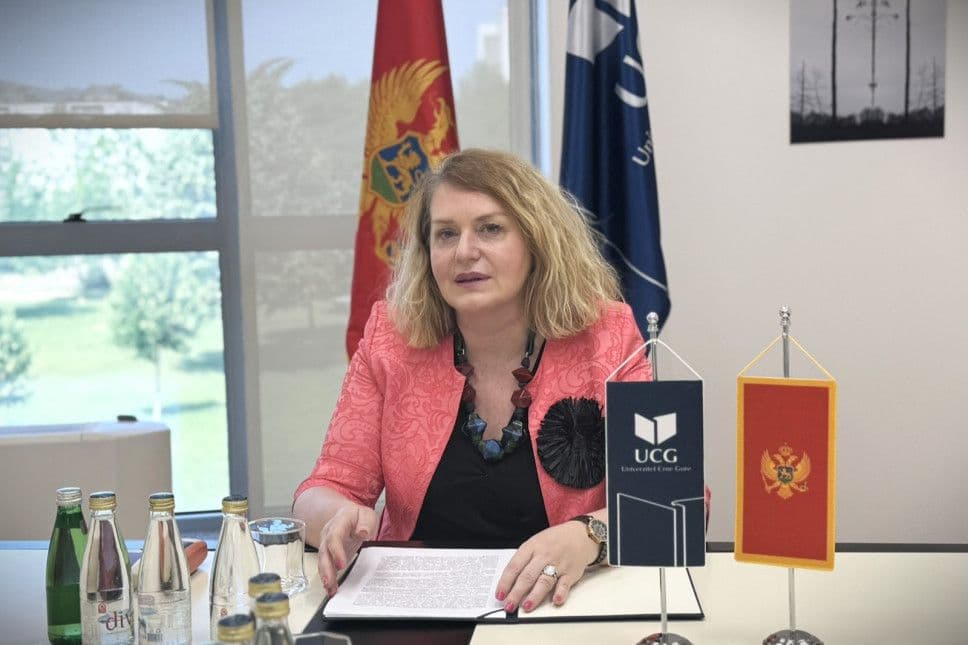
Prof. Dr. Branka Bošnjak, the advisor to the rector for strategic policies and sustainable development at the University of Montenegro, has voiced strong concerns regarding the academic community’s silence on pressing societal issues. In a recent interview with Pobjeda, she emphasized that knowledge serves as the most potent tool for societal advancement. Bošnjak believes that the truth will always find a way to surface and insists that academics must demonstrate a socially engaged and responsible attitude toward reality.
Bošnjak, who has previously served as a member of the Montenegrin Parliament and as the first vice president of the Assembly, has long been vocal about the shortcomings within the country’s educational system. She has notably advocated for a significant increase in professors’ salaries, which were historically low, successfully lobbying for a rise of over 60 percent in their wages.
In the interview, she explored her current role and the steps she is taking to enhance higher education in Montenegro, as well as the challenges she faces, including potential political interference in university appointments.
Challenges Facing the Academic Community
Reflecting on her transition from politics back to academia, Bošnjak stated that her engagement with the current rector, Vladimir Božović, is characterized by professionalism and openness. She highlighted that the current leadership supports freedom of thought, marking a shift from previous administrations that stifled dissenting voices.
Despite the university’s positive initiatives, Bošnjak lamented a lack of public awareness regarding significant events, such as visits from Nobel laureates and prominent professors from esteemed institutions like Harvard. She noted that the media often prioritizes negative news over constructive contributions from the university.
Bošnjak continues to advocate for the depoliticization of rector elections, insisting that the academic community should elect its leaders rather than leaving the decision to the governing board, which includes political appointees. She argues that this would prevent political influence over academic matters, ensuring a more democratic process.
Addressing Political Interference and Academic Integrity
While Bošnjak acknowledged that political influence in hiring practices at the University of Montenegro is difficult to eliminate completely, she observed that the leadership positions in the rectorate are largely held by experienced professionals rather than politically appointed individuals. She expressed concern that the previous political climate had created a culture of self-censorship among academics, preventing them from addressing critical issues affecting society.
Bošnjak has initiated efforts to create a scientific database at the university to connect experts with government bodies for the development of laws and strategies. This project aims to enhance collaboration between academia and the state, a relationship she feels has been undervalued by current authorities. Despite the positive response from university leadership, she noted a lack of engagement from the government, indicating that her proposals have often gone unanswered for extended periods.
The professor believes that silence from the academic community is as detrimental as ignorance. She stressed the importance of intellectuals speaking out on social and political issues, asserting that failure to do so constitutes complicity in the country’s decline.
Bošnjak’s insights reflect a broader issue within Montenegro’s academic and political landscapes, where a culture of conformity often stifles critical discourse. She urges her peers to recognize their responsibility to engage with pressing societal challenges, regardless of the potential repercussions.
As the University of Montenegro continues to navigate these complexities, Bošnjak remains committed to fostering a more open and accountable educational environment that prioritizes knowledge and integrity over political machinations.