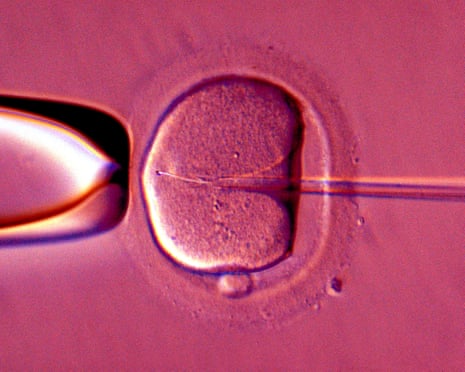
Researchers have achieved a significant breakthrough by successfully “rejuvenating” human eggs, a development that has the potential to enhance the success rates of in vitro fertilization (IVF) for older women. This innovative research indicates that an age-related defect in eggs, which leads to genetic errors in embryos, can be mitigated by introducing a specific protein into the eggs.
When eggs donated by fertility patients were treated with microinjections of the protein known as Shugoshin 1, they exhibited nearly half the likelihood of containing chromosomal defects compared to untreated eggs. This discovery could be pivotal in improving egg quality, a primary factor contributing to IVF failures and miscarriages, particularly among older women.
Breakthrough Research and Its Implications
The findings from this study were presented on March 15, 2024, during the British Fertility Conference in Edinburgh and have been made available as a preprint on the Biorxiv website. According to Prof Melina Schuh, a director at the Max Planck Institute for Multidisciplinary Sciences in Göttingen and co-founder of Ovo Labs, “Overall we can nearly halve the number of eggs with [abnormal] chromosomes. That’s a very prominent improvement.”
Prof Schuh emphasized that while most women in their early 40s still produce eggs, nearly all of these eggs possess incorrect chromosome numbers. This issue has been a long-standing challenge, motivating researchers to find solutions to improve egg quality and, consequently, IVF outcomes.
The decline in egg quality correlates directly with a decrease in IVF success rates as women age. For instance, data from the UK indicates that patients under 35 have an average birth rate of 35% per embryo transferred, while women aged 43-44 see this figure plummet to just 5%. Notably, the average age of women beginning fertility treatment in the UK is now over 35.
Dr Agata Zielinska, co-founder and co-CEO of Ovo Labs, stated, “Currently, when it comes to female factor infertility, the only solution that’s available to most patients is trying IVF multiple times.” She envisions a future where many more women could achieve conception in a single IVF cycle through this new approach.
Understanding the Mechanism of Egg Rejuvenation
The research targets a vulnerability related to meiosis, the process through which sex cells, such as eggs and sperm, reduce their genetic material to allow for fertilization. In healthy eggs, 23 pairs of X-shaped chromosomes align correctly, ensuring that when the egg is fertilized, the resulting cell contains the proper number of chromosomes.
However, with aging, the chromosome pairs in eggs often fail to align properly, leading to a chaotic distribution of chromosomes during cell division. This misalignment can result in embryos with too many or too few chromosomes, which is a common cause of genetic disorders like Down’s syndrome.
Schuh and her colleagues discovered that the protein Shugoshin 1, which helps maintain the integrity of chromosome pairs, diminishes with age. In their recent experiments involving human and mouse eggs, microinjections of Shugoshin 1 successfully reversed the early separation of chromosome pairs. At the Bourn Hall fertility clinic in Cambridge, treated eggs showed a significant decrease in chromosomal defects, from 53% in control eggs to 29% in those treated with Shugoshin 1.
For eggs from women over 35, the results showed a trend toward improvement, decreasing from 65% defects in untreated eggs to 44% in treated eggs. Though this finding did not reach statistical significance due to the small sample size, it still points to promising avenues for future research.
“This is really beautiful because we identified a single protein that, with age, goes down, returned it to young levels and it has a big effect,” Schuh remarked. While this technique would not extend fertility beyond menopause, it represents a significant step forward in reproductive medicine.
Currently, microinjection techniques related to eggs are limited, aside from intra-cytoplasmic sperm injection (ICSI). The research team is optimistic about the safety of this method and is in discussions with regulatory bodies regarding clinical trials.
Dr Güneş Taylor from the University of Edinburgh, who was not directly involved in the study, described the findings as “really promising.” She noted the importance of developing strategies that effectively address the challenges faced by older eggs, highlighting that a single injection could substantially increase the number of eggs with properly organized chromosomes, thereby improving the starting point for IVF.
As this research progresses towards larger trials, the scientific community remains hopeful about its potential to transform IVF treatments and significantly enhance reproductive options for older women.