United States President Donald Trump has openly dismissed the relevance of international law, asserting that only his “own morality” can guide the aggressive foreign policies he is implementing, particularly following the abduction of Venezuelan President Nicolas Maduro. In an interview with The New York Times, Trump stated, “I don’t need international law. I’m not looking to hurt people.” When pressed on whether he needs to comply with international law, he acknowledged the need but added that it “depends what your definition of international law is.”
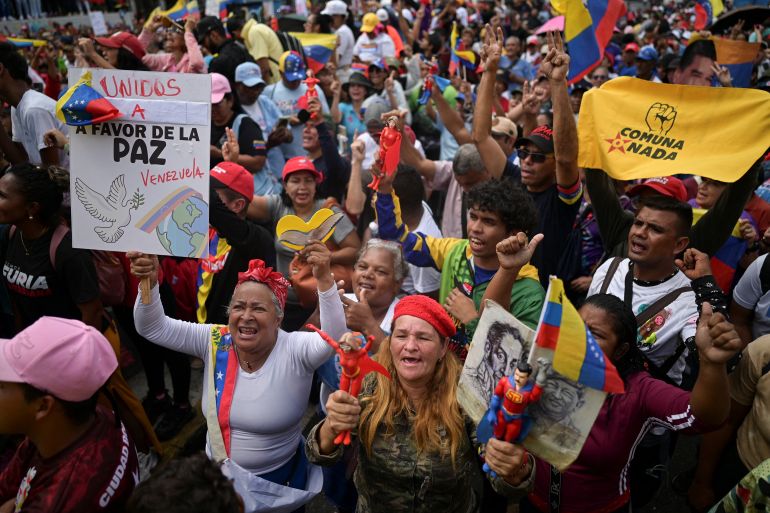
The U.S. military’s recent actions in Venezuela have raised significant concerns. Early on a Saturday morning, the U.S. launched an attack on Venezuelan military sites, resulting in explosions across the capital, Caracas. This operation culminated in the abduction of Maduro, which critics argue constitutes a violation of the United Nations Charter, specifically the prohibition against using force against the territorial integrity or political independence of any state.
The attack appears to have intensified Trump’s aggressive stance, despite him having received the inaugural FIFA Peace Prize just last month. Following the military action, Trump indicated that the U.S. intends to “run” Venezuela and exploit its extensive oil reserves. His administration has stated that it will cooperate with interim President Delcy Rodriguez, but has also claimed it would “dictate” policy to her government, threatening further military action if U.S. demands are not met. “If she doesn’t do what’s right, she is going to pay a very big price, probably bigger than Maduro,” Trump remarked in a Sunday interview with The Atlantic.
Additionally, Trump has hinted at potential military strikes against Colombia’s left-wing President Gustavo Petro and has escalated his campaign for the acquisition of Greenland, a territory of Denmark. In June, he joined Israel in aggressive actions against Iran by ordering strikes on the country’s key nuclear facilities.
Trump’s aide, Stephen Miller, has criticized the post-World War II international order, declaring that the U.S. would “unapologetically” use its military might to safeguard its interests in the Western Hemisphere. “We’re a superpower, and under President Trump, we are going to conduct ourselves as a superpower,” Miller told CNN.
Experts have voiced significant concerns regarding the implications of the U.S. administration’s disregard for international law. Margaret Satterthwaite, the UN Special Rapporteur on the Independence of Judges and Lawyers, emphasized the danger of such rhetoric, warning that it could lead to a resurgence of imperialistic behavior. “International law cannot stop states from doing terrible things if they’re committed to doing them,” she stated. Satterthwaite added that the recent atrocities witnessed in Gaza highlight the urgency of upholding existing international laws, stating, “We’ll simply be going down a much worse kind of slippery slope.”
In a further analysis, Yusra Suedi, an assistant professor of international law at the University of Manchester, cautioned against endorsing a “might is right” philosophy. This trend, she argues, could embolden other nations, such as China with regard to Taiwan and Russia concerning Ukraine, to adopt similar aggressive stances.
Historical context underscores the risks associated with U.S. interventions in Latin America. Ian Hurd, a political science professor at Northwestern University, noted that the region has a long history of U.S. invasions and supported coups that have led to instability and human rights violations. “You can see that in every one of those cases, the U.S. came to regret its choice to intervene,” he remarked.
As the world watches the unfolding situation in Venezuela, the implications of Trump’s policies could resonate far beyond the region, potentially shaping international relations and responses for years to come.