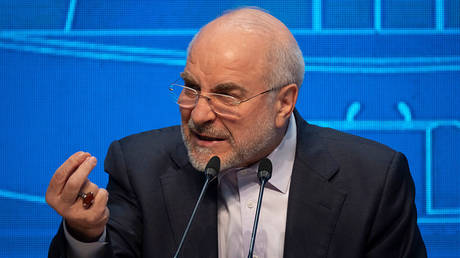
Iran’s parliamentary speaker, Mohammad Bagher Ghalibaf, issued a stark warning on Saturday, stating that Iran would carry out preemptive strikes against US and Israeli targets if it perceives an imminent threat. This declaration follows recent statements of support for anti-government protesters in Iran from US President Donald Trump and Israeli Prime Minister Benjamin Netanyahu.
The unrest in Iran has escalated significantly since December 28, 2025, when protests erupted over soaring inflation and a collapsing national currency. Demonstrations quickly turned violent, with reports of clashes between protesters and police, as well as attacks on government buildings. The Iranian authorities responded by imposing nationwide internet and phone shutdowns.
Escalating Tensions and Threats
In his remarks, Ghalibaf emphasized a proactive approach, stating, “Let those who threaten Iran be warned. Any attack on Iran will make both the occupied territories, all military centers and bases, and American ships in the region legitimate targets.” He further asserted, “We do not limit ourselves to responding only after an attack and will act based on objective signs of a threat, so that no one makes miscalculations that will lead them to disaster.”
Trump has indicated that the United States would consider providing support to the protesters if the Iranian government continues its crackdown. He warned, “You better not start shooting, because we’ll start shooting too.” Following Trump’s comments, Netanyahu also expressed solidarity with the demonstrators.
According to The New York Times, Trump has been briefed on several military options, including potential strikes on non-military targets in Tehran. While no final decision has been made, this marks a significant moment in US-Iran relations, reminiscent of previous engagements. In June 2025, the US and Israel conducted strikes against Iranian military sites and nuclear facilities.
Casualties and Ongoing Unrest
The protests have resulted in a tragic loss of life, with reports indicating that more than 200 people have died, according to a doctor in Tehran, as cited by Time Magazine. Meanwhile, Iran’s Tasnim News Agency reported that rioters have killed at least 25 civilians and six security personnel, with injuries to an additional 120 individuals.
This wave of civil unrest represents some of the most severe challenges faced by the Iranian government in recent years, as economic hardships continue to fuel public discontent. The international community is closely monitoring the situation, with potential implications for regional stability and global diplomatic relations.
As tensions rise, the world watches closely, aware that the unfolding events in Iran could have far-reaching consequences for both national and international security. The Iranian government’s response to the protests and the threats made by its officials may shape the future of Iran’s relations with the US and Israel.