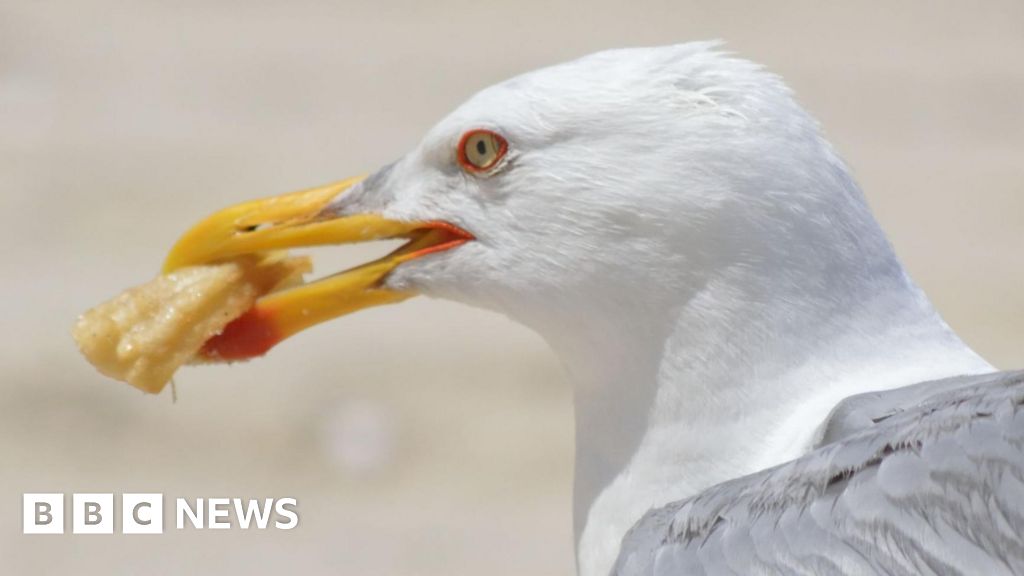
URGENT UPDATE: Scotland is poised to introduce its first council by-law banning the feeding of gulls in response to a troubling surge in attacks on residents, particularly children, in Eyemouth and surrounding coastal villages. Community leaders are moving swiftly to address this escalating issue following alarming incidents, including seven separate attacks in one month during the summer of 2024.
The campaign, spearheaded by Berwickshire councillor James Anderson, seeks to implement tougher controls on gull populations. Anderson stated, “This is a proportionate, lawful, and evidence-based step, and the public will have full opportunity to comment through a formal consultation.” The proposed legislation is a direct response to the increased presence of gulls in urban areas, attributed to diminishing natural food sources and safer nesting locations amidst human habitation.
Recent data indicates that while herring gull populations across Scotland have declined by more than 40% over the past two decades, the frequency of attacks has paradoxically increased. Eyemouth, along with nearby tourist hotspots like Coldingham and St Abbs, has become ground zero for this conflict between humans and wildlife.
Authorities are now recognizing that deliberate feeding of gulls exacerbates the issue. Anderson emphasized, “NatureScot has been clear that the most effective action we can take is to remove food at source.” However, the council currently lacks the enforcement power to penalize those who continue to feed the birds. The targeted by-law aims to equip local authorities with the necessary tools to tackle this long-standing problem, encouraging gulls to return to their natural habitats.
This push for change mirrors similar measures implemented in parts of East Devon, North Yorkshire, and Suffolk, where feeding gulls has been criminalized. Although no legislation has yet been passed in Scotland, communities are actively seeking solutions. For instance, St Andrew’s Community Council in Fife has initiated an action plan to minimize food availability for gulls.
In a NatureScot summit held in Inverness, officials and community representatives discussed the pressing issues related to gull populations. Despite a previous attempt to introduce a similar by-law in Dumfries and Galloway being rejected over a decade ago, the current community sentiment strongly advocates for immediate action.
NatureScot has pledged support for local initiatives to combat gull feeding. A spokesperson stated, “Feeding gulls is a significant issue in Eyemouth, and anything that can be done to tackle that is helpful.” They are set to launch a public awareness campaign aimed at discouraging the practice, highlighting the importance of effective waste management to keep food sources away from urban areas.
The Scottish Borders Council previously practiced oiling gull eggs as a pest-control measure but halted the initiative before the Covid pandemic. Discussions about reintroducing this measure were dismissed last year, prompting the council to focus on the new by-law proposals alongside additional recommendations from NatureScot.
As Eyemouth residents and local authorities push for swift action, the community’s urgent call for change reflects a growing awareness of the dangers presented by gulls in populated areas. The proposed by-law is expected to be a significant step toward restoring safety and balance between wildlife and the community.
Stay tuned for further updates as this situation develops, and community consultations are announced.