Last week, U.S. President Donald Trump met with oil executives to encourage investment in Venezuela’s struggling oil sector. Despite his efforts, the response was lukewarm, highlighting the significant challenges facing the South American country’s energy industry. **Darren Woods**, CEO of **ExxonMobil**, described Venezuela as “uninvestable” under its current commercial frameworks, while **Ryan Lance**, CEO of **ConocoPhillips**, reminded Trump of the substantial losses his company incurred when it withdrew from the country during the **Hugo Chávez** administration.
The decline of Venezuela’s energy sector began in **2007** when Chávez’s government nationalized the oil assets of ExxonMobil and ConocoPhillips. This move followed the companies’ refusal to accept new terms that would grant **Petróleos de Venezuela, S.A. (PDVSA)** a majority stake in their operations. The nationalization process was solidified through a presidential decree and a new Hydrocarbons Law, marking a significant shift in the country’s oil landscape.
Despite the grim outlook, some executives expressed a willingness to invest. **Jeff Hildebrand**, CEO of **Hilcorp**, indicated that his company is prepared to help rebuild Venezuela’s energy infrastructure. Additionally, **Chevron** announced it could immediately increase its production in Venezuela to **240,000 barrels per day**.
Currently, Venezuela produces approximately **1 million barrels per day**, a stark contrast to its peak production of **3.5 million barrels per day** in the 1970s. Chevron alone contributes about a quarter of this output. U.S. refiners have a vested interest in Venezuelan crude, as it provides a competitive edge for those with extensive coking capacity that can transform heavy oil into higher-value products.
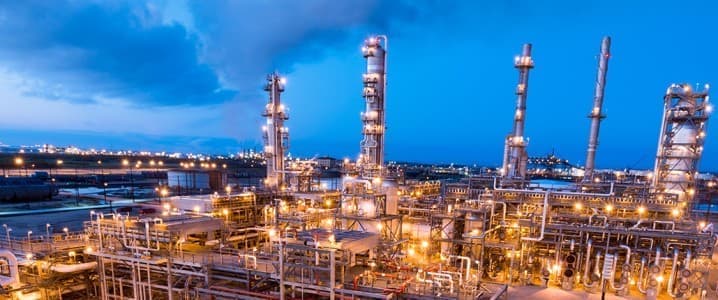
Venezuelan crude, particularly from the Orinoco belt, has one of the lowest API gravities and highest sulfur contents globally, necessitating specialized refinery units for processing. Unfortunately, less than half of U.S. refineries are equipped with coking facilities, primarily benefiting refiners located along the Gulf and East Coasts. Major players in this space include **Valero**, **Marathon Petroleum**, **Phillips 66**, and **PBF Energy**.
Coking and hydrocracking are essential processes in refining heavy crude oil into lighter, more valuable products such as gasoline and diesel. Coking is a thermal process that leaves behind solid petroleum coke, while hydrocracking uses high-pressure hydrogen to break down larger molecules into cleaner fuels. Highly complex refiners can achieve distillate yields of **33%**, compared to **30%** for those with medium complexity.
As the market adjusts, the increased availability of Venezuelan crude may impact the demand for heavy oil from Canada, Mexico, and the Middle East. Although the U.S. continues to purchase **80%** of Canada’s crude output, recent expansions have improved access to Asian markets. This dynamic keeps **Western Canadian Select (WCS)** prices closely tied to U.S. refinery demand.
While Venezuelan flows may benefit refiners in the **Mid-continent** and **West Coast**, analysts caution that Venezuela’s low-hanging fruit is limited. According to **Rystad Energy**, only **300,000 to 350,000 barrels per day** can be quickly restored with minimal investment, and achieving production beyond **1.4 million barrels per day** will require significant capital.
To maintain current production levels at **1.1 million barrels per day**, Venezuela needs approximately **$53 billion** over the next 15 years, with a potential requirement of up to **$183 billion** to elevate production to over **3 million barrels per day**. This figure roughly matches the total capital expenditure for North American land operations in a single year.
Experts from **Kayrros**, a satellite intelligence firm, have characterized Venezuela’s energy infrastructure as being in a “catastrophic state,” resulting from decades of under-investment and neglect. Many oil storage tanks at critical terminals are reported to be out of order, with approximately one-third of Venezuela’s storage capacity currently inactive.
Additionally, operations at the interconnected **Amuay** and **Cardón** refineries are functioning at less than **20%** of capacity, effectively turning them into “de facto storage centres.” The pipeline network, essential for oil transport, is similarly dilapidated. A leaked document from PDVSA revealed that many pipelines have not been updated in **50 years**, with estimates suggesting that restoration efforts could cost over **$100 billion**.
Venezuela’s operational oil pipeline network spans approximately **3,442 kilometers**. For context, the **United Arab Emirates**, which produces around **3.2 million barrels per day**, has a pipeline network of nearly **9,000 kilometers**. The stark comparison underscores the challenges Venezuela faces in revitalizing its oil sector.
As discussions continue, the outlook for Venezuela’s energy industry remains uncertain, but the need for substantial investment and infrastructure development is clear.