The United States and the United Kingdom have initiated the evacuation of thousands of personnel from key military bases in the Middle East. This decision comes amid heightened tensions and fears of an impending conflict with Iran, particularly following President Donald Trump’s warning of “very strong” action if Tehran executes protesters.
At the al-Udeid base in Qatar, which plays a crucial role for both British and American forces, air raid sirens were tested as essential personnel were moved to “hard protection sites.” The base is home to approximately 10,000 US troops, indicating the scale of military preparations underway.
The UK’s actions have intensified following the evacuation of its diplomats from Iran, with the British Embassy in Tehran now operating remotely. A spokesperson for the UK government stated, “We have temporarily closed the British Embassy in Tehran; this will now operate remotely.” The Foreign Office has subsequently updated its travel advice to reflect these developments.
Israeli forces are also on high alert, anticipating potential retaliation from Iran, as they believe their country could be a target should the US engage in military action. A source indicated to the Daily Mirror that “Israel has adjusted its defensive posture” in response to the likelihood of American strikes.
Non-essential US personnel are being relocated from bases in Iraq as a precaution against potential attacks from pro-Iranian militia groups. Military assets, including a possible US Carrier strike force, are reportedly being moved into the region in preparation for any necessary response.
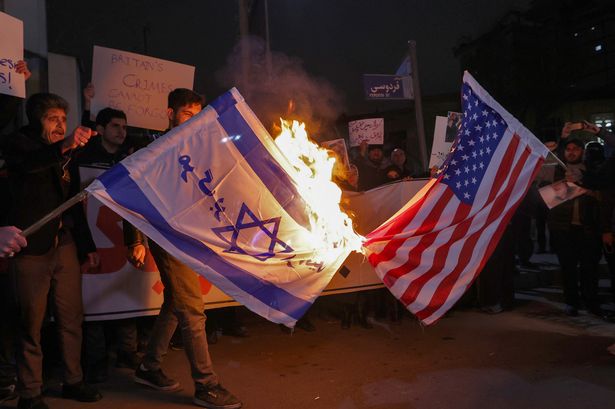
Concerns have escalated following reports of mass protests in Iran, where the government has cracked down on dissent, allegedly leading to a death toll exceeding 2,586 in the past fortnight alone, according to the US-based Human Rights Activists News Agency. The protests are a reaction to the Iranian regime’s treatment of demonstrators, many of whom have been unarmed.
In a statement on the situation, Trump noted that he had received assurances that executions in Iran would not occur. He expressed his intent to monitor developments closely, saying, “If it happens, we’ll all be very upset.” Despite this, the Iranian judiciary has indicated that rapid trials and executions for protest-related detainees are forthcoming, which could exacerbate the situation further.
The crisis has drawn particular attention to the case of Efran Soltani, a 26-year-old protester reportedly facing execution. His plight highlights the urgent fears surrounding the potential for escalating violence.
Iran has countered the US and Israeli actions by suggesting it could undertake preemptive strikes, claiming without evidence that both nations orchestrated the protests. This statement underscores the volatility of the situation, as tensions between the nations continue to rise.
As the situation develops, the US remains focused on avoiding civilian casualties should military action become necessary. Reports suggest that any targeted strikes would likely focus on the Islamic Revolutionary Guard Corps and military facilities associated with the Iranian government, while striving to minimize harm to civilians.
The events in Iran have led to mass gatherings for funerals of security personnel killed during the protests, further illustrating the widespread unrest within the country. Mourners have expressed their grief through public displays, with many holding Iranian flags and images of Ayatollah Khamenei.
Amid this turmoil, Iranian citizens remain cautious, with reports of ongoing gunfire and the presence of plainclothes security forces in various neighborhoods, contributing to an atmosphere of fear and uncertainty.
The international community is closely monitoring the escalating crisis in the Middle East, as diplomatic and military responses are weighed against the backdrop of a rapidly changing situation.