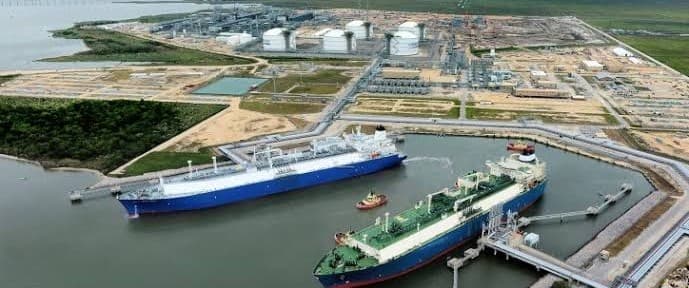
Following a record year for liquefied natural gas (LNG) trade in 2025, the industry now faces significant political risks as 2026 unfolds. A geopolitical dispute between one of the largest markets for LNG and its principal supplier has led to the suspension of a major energy trade deal. This situation has raised concerns about potential oversupply in the market.
Geopolitical Dispute Impacts Trade Deals
In the early weeks of 2026, the European Union announced it would put its trade agreement with the Trump administration on hold. This decision came in response to President Trump’s recent declaration of 10% tariffs on eight countries, which he claims are impeding his efforts to purchase Greenland. These countries, including Denmark, Norway, Sweden, France, Germany, the United Kingdom, the Netherlands, and Finland, dispatched military personnel to Greenland, demonstrating their commitment to the island’s security.
The potential for tariffs to escalate to 25% later in the year has heightened tensions. As a result, the EU has paused the ambitious trade deal negotiated with President Trump in 2025, which involved a commitment to purchase $750 billion worth of U.S. energy commodities over three years. Analysts had already expressed skepticism about the feasibility of this agreement, noting that the EU could not absorb the volume of oil and LNG involved.
Record LNG Imports Amid Economic Concerns
Despite these geopolitical hurdles, Europe emerged as the largest market for American LNG in 2025, accounting for over 50% of all U.S. LNG exports. European countries increased their LNG imports from the U.S. by 60% last year, according to data from Kpler cited by Reuters. This surge contributed to a 25% rise in global LNG sales, a record for the industry.
Nevertheless, analysts caution that weak industrial activity and economic growth in Europe could temper LNG demand. The ongoing geopolitical situation further complicates the future landscape, raising doubts about whether European demand will meet optimistic projections.
Asia continues to represent a robust market for LNG. In 2025, Asian buyers accounted for 64% of global LNG exports, although this marked a 5% decline from the previous year. Particularly notable was a 15% drop in LNG imports by China, attributed to increased domestic natural gas production and higher pipeline imports, primarily from Russia.
Looking ahead, Kpler forecasts that LNG capacity could increase by 37 million tons annually, building on 51 million tons of new capacity added last year. This growth may pressure prices, potentially stimulating demand from Asian markets, especially if prices remain lower. Kpler anticipates that Chinese LNG import demand could rise to 73 million tons in 2026, up from 68.43 million tons in 2025.
In Europe, LNG imports exceeded 100 million tons last year, with forecasts suggesting a further increase to approximately 145 million tons for 2026. However, the geopolitical landscape may hinder these projections, particularly as relations between the U.S. and EU sour.
Another challenge for the global LNG market includes Japan’s decision to restart several nuclear reactors, prioritizing energy security over concerns related to past disasters. Additionally, China aims to boost its domestic natural gas output, with projections indicating total gas production could rise from 263 billion cubic meters in 2025 to 278.5 billion cubic meters in 2026.
India has also experienced a decline in LNG imports, underscoring the price sensitivity of major buyers in the global market. As the year progresses, the LNG industry will need to navigate these evolving dynamics while considering the substantial political risks at play.