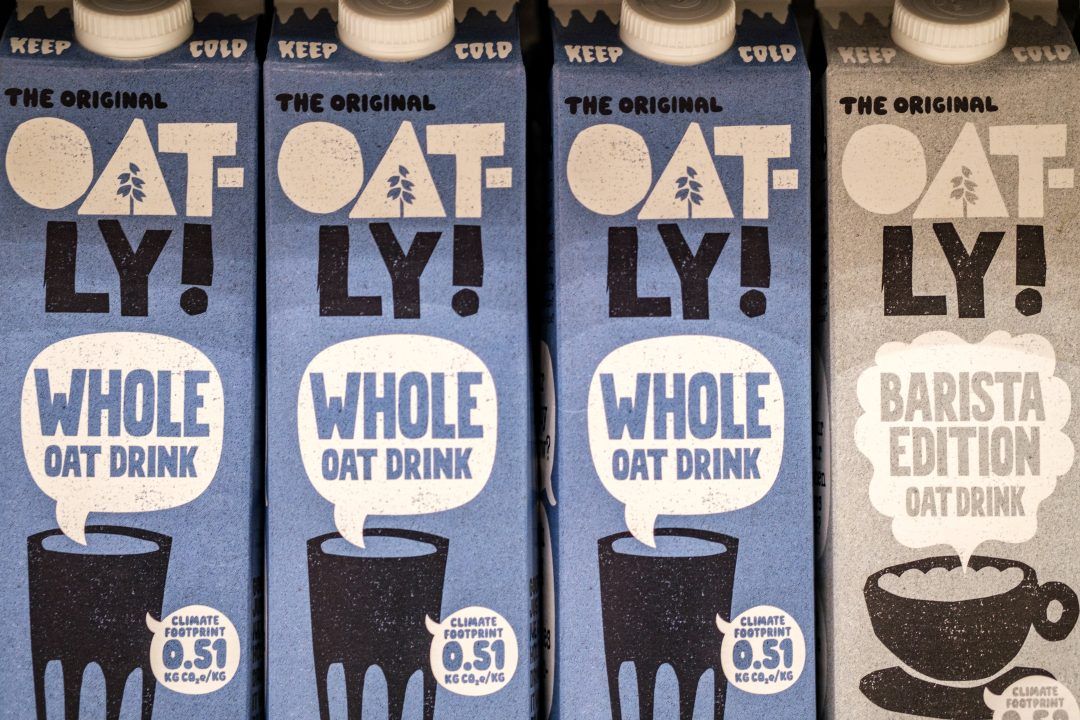
Oatly, the Swedish company known for its oat-based products, has suffered a setback as the Supreme Court ruled against its use of the term “milk” to describe its offerings. The ruling stems from a long-standing legal dispute between Oatly and Dairy UK, a trade association for the UK dairy sector, regarding the validity of Oatly’s trademark for the phrase “Post Milk Generation.”
The controversy began when Oatly sought to trademark this phrase in connection with various oat-based products, including milk alternatives, yogurt, and custard. The Intellectual Property Office (IPO) initially invalidated the trademark in January 2023, prompting Oatly to challenge the decision in the High Court. In December 2023, the High Court sided with Oatly, determining that the phrase did not falsely suggest that its products contained milk. However, this victory was short-lived, as the Court of Appeal overturned the decision in November 2024, stating that oat-based products do not qualify as “milk” under current regulations.
The Supreme Court, in its unanimous decision on March 15, 2024, reinforced the Court of Appeal’s findings, asserting that the trademark did not clearly describe any characteristics of Oatly’s products. In their ruling, Lords Hamblen and Burrows emphasized that the phrase seemed more focused on marketing to a specific demographic, particularly younger consumers concerned about traditional milk consumption, rather than accurately defining the product itself.
The law specifies that terms such as “milk” and “milk products” are reserved for certain dairy products, which further complicated Oatly’s case. The company applied for trademark registration in 2019, and though it was granted in April 2021, Dairy UK swiftly contested its validity.
In their ruling, the justices noted that even if “Post Milk Generation” were interpreted as referring to the absence of milk, it still did not convey that characteristic clearly. Lord Justice Arnold, who presided over the Court of Appeal, pointed out that while the trademark might hint at being non-dairy, it failed to explicitly communicate that essential quality to consumers.
Following the Supreme Court ruling, Bryan Carroll, general manager for Oatly UK & Ireland, expressed disappointment, stating that the decision creates confusion in the marketplace and places plant-based products at a disadvantage. Carroll argued that prohibiting Oatly from trademarking “Post Milk Generation” undermines competition and does not serve the interests of consumers in the UK.
Oatly’s battle highlights ongoing tensions between the dairy and plant-based food industries, as demand for alternative products continues to rise. The outcome of this case may set a precedent for how plant-based companies can market and label their products in the future, impacting not only Oatly but also other brands navigating similar regulatory challenges.
With the landscape of food labeling evolving, the implications of this ruling will be closely monitored by both consumers and producers in the plant-based sector.