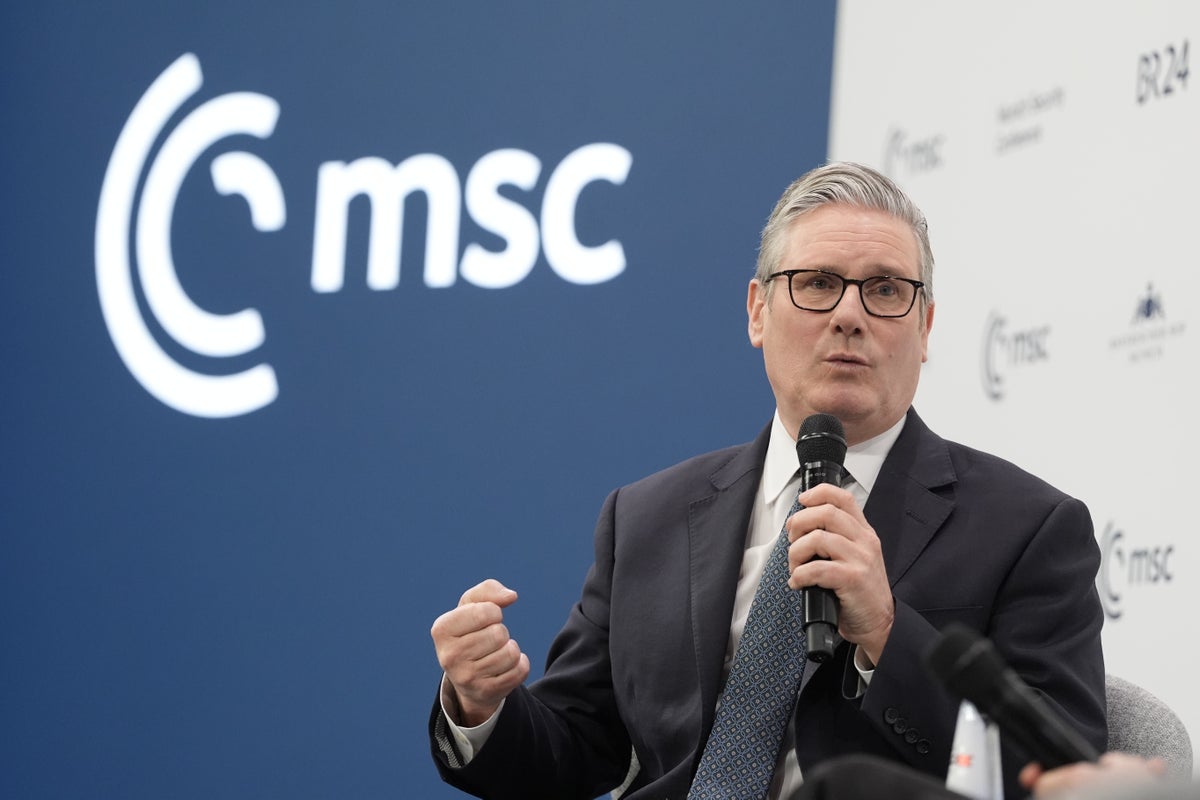
During the recent Munich Security Conference, Prime Minister Sir Keir Starmer delivered a compelling speech advocating for greater cooperation with European partners. In his unscripted remarks, he addressed challenges to his leadership at home, asserting that he had “ended the week much stronger than I started it.” If true, this newfound strength must translate into action on the vital need for closer ties with Europe.
Strengthening European Defence
Starmer’s speech effectively balanced a critique of the combative rhetoric from figures like Donald Trump with a call for enhanced European defence capabilities. He underscored that NATO members have historically supported one another’s sovereignty, referencing their collective response to threats, including the situation regarding Greenland. He also highlighted that NATO allies had come to the aid of the United States in Afghanistan, a commitment that has cost many lives in the UK.
While he articulated the necessity for “greater European autonomy” in defence, Starmer emphasized that this should not be misconstrued as a withdrawal of American support. Instead, he framed it as a call for more equitable burden-sharing among allies. His warning regarding the threat posed by Russian President Vladimir Putin was a focal point of his address, although some critics felt his comparison to the 1930s was excessive. The historical parallels drawn may dilute the urgency required in today’s context.
Starmer stated, “In the 1930s, leaders were too slow to level with the public about the fundamental shift in mindset that was required,” a sentiment that resonates in today’s geopolitical climate. However, equating Putin’s actions with those of Adolf Hitler risks undermining the argument for increased defence spending, which he correctly advocated.
The Case for Action
Starmer’s critique of the Green Party and the Reform Party for their perceived softness towards Russia and NATO was seen by some as a diversion from a more robust call for defence cooperation. Instead of targeting political opponents, a stronger case for European defence could resonate more effectively with the public.
Throughout the speech, Starmer effectively steered clear of cliché rhetoric. He stated, “To break the convention of a thousand speeches, we are not at a crossroads today – the road ahead is straight and it is clear.” He advocated for a “generational shift in defence industrial cooperation,” suggesting that the UK should reassess its economic alignment with the European Union, particularly regarding the defence sector.
Starmer concluded that the goal of such cooperation would be “greater security, stronger growth for the UK and the EU,” which would in turn bolster defence budgets. He recognized the implications for domestic politics, asserting that the UK has moved past the isolationist stance characterized by the Brexit years. “In a dangerous world, we would not take control by turning inward – we would surrender it,” he said.
While the Prime Minister’s focus on fostering closer ties with Europe is commendable, reopening debates from the EU referendum of a decade ago would not be productive. Instead, his emphasis on the benefits of collaboration provides a pathway for the public to consider the merits of a united European approach to security.