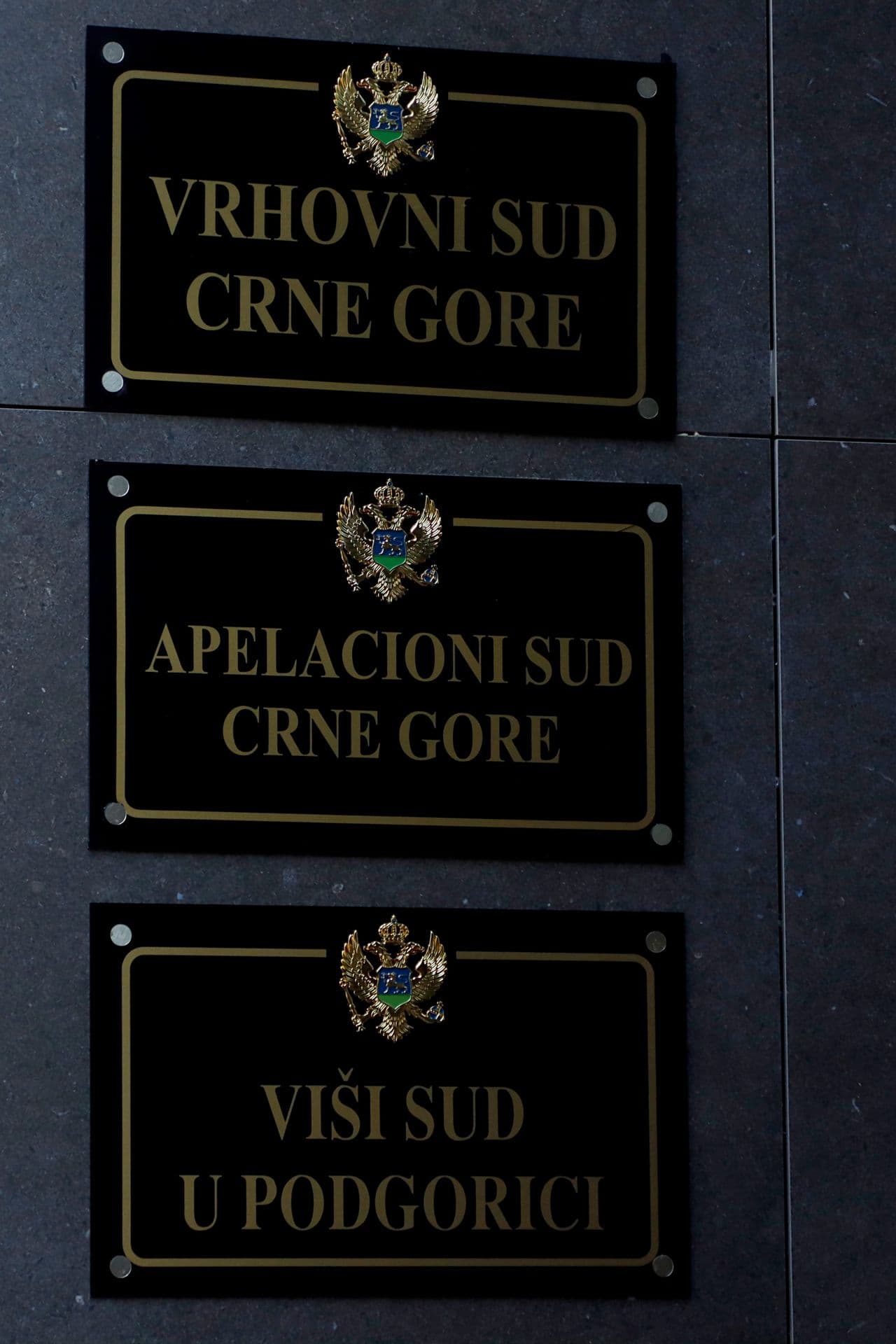
The Appeals Court of Montenegro upheld a lower court’s decision to acquit all defendants in a high-profile case known as the attempted coup. On December 30, 2025, the court dismissed an appeal by the Special State Prosecutor’s Office (SDT), affirming the earlier ruling of the Higher Court in Podgorica. This ruling confirms the acquittal of individuals previously charged in the case, marking a significant legal outcome.
The Higher Court in Podgorica had previously cleared the accused, which included notable figures such as Eduard Shishmakov Vadimović, Vladimir Popov Nikolajević, and Bratislav Dikić, among others. They were charged with serious offenses including the creation of a criminal organization and attempted terrorism. However, the court found insufficient evidence to support these allegations, leading to their release.
In total, the defendants comprised Eduard Shishmakov Vadimović, Vladimir Popov Nikolajević, Bratislav Dikić, Predrag Bogićević, Nemanja Ristić, Srboljub Đorđević, Kristina Hristić, Branka Milić, Milan Dušić, Dragan Maksić, Mihailo Čađenović, Andrija Mandić, and Milan Knežević. The court established that there was no substantial evidence proving their involvement in the crimes as charged.
The SDT had filed their appeal on the grounds of serious violations of criminal procedure and incorrect factual determinations made by the initial court. They requested the Appeals Court to reconsider the case, suggesting that the defendants should be found guilty. Nevertheless, the Appeals Court concluded that the original proceedings adhered to legal standards, and all evidence presented was properly evaluated.
The court articulated that the initial trial had adequately addressed the pertinent issues surrounding the alleged criminal activities. It noted that the evidence collected during the original proceedings was sufficient to support the conclusion that the defendants did not commit the alleged crimes. As a result, the Appeals Court determined that the previous ruling should stand, emphasizing that no substantial violations occurred during the trial.
This ruling marks an important moment in Montenegro’s judicial landscape, reinforcing the principle that the burden of proof lies with the prosecution. The acquittal of individuals involved in such a serious case reflects the complexities of the legal system and the challenges faced by the prosecution in securing convictions in cases of this nature.
The decision concludes a contentious chapter in Montenegro’s legal history, raising questions about the efficacy of the prosecution’s approach and the implications for future cases involving similar charges.