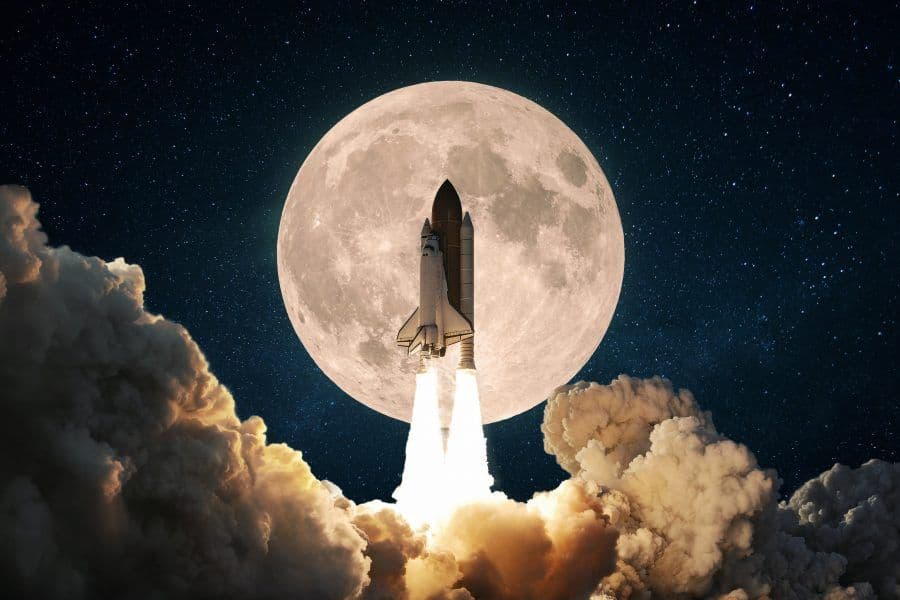
URGENT UPDATE: NASA has officially confirmed the launch date for the historic Artemis II mission, set to blast off on March 6, 2024. This mission marks the first time in over 50 years that humans will orbit the Moon, making it one of the most ambitious space endeavors in recent history.
The mission will see a crew of four astronauts embark on a ten-day journey around the far side of the Moon, paving the way for future lunar landings. This mission is not only a monumental step for NASA but also a significant leap for humanity’s exploration of space.
Earlier today, NASA successfully conducted a “wet dress rehearsal,” a crucial pre-launch test where the Space Launch System (SLS) rocket is fueled and prepared for countdown. This followed a previous attempt in early February that was aborted due to a hydrogen fuel leak at the launch pad. NASA’s Lori Glaze confirmed that all issues, including those with seals and filters, have now been resolved.
The Artemis II crew includes three Americans—Reid Wiseman, Victor Glover, and Christina Koch—alongside Canadian astronaut Jeremy Hansen. They will launch aboard NASA’s towering 98-meter SLS rocket, which previously flew uncrewed during the Artemis I mission in November 2022.
The crew will be housed in the Orion capsule, comparable in size to a minibus, where they will live, work, and rest during their journey. The first day of the mission will be spent in Earth’s orbit, before the spacecraft heads towards the Moon. The transit to the Moon will take approximately four days, allowing the crew to explore and photograph the lunar surface from altitudes between 6,500 and 9,500 kilometers.
After orbiting the Moon, the astronauts will begin their four-day return to Earth, culminating in a splashdown in the Pacific Ocean. This mission signifies a renewed commitment to lunar exploration and a future where humans may once again walk on the Moon’s surface.
As the launch date approaches, anticipation builds for this groundbreaking journey. Stay tuned for further updates as NASA prepares for this pivotal moment in space exploration history.