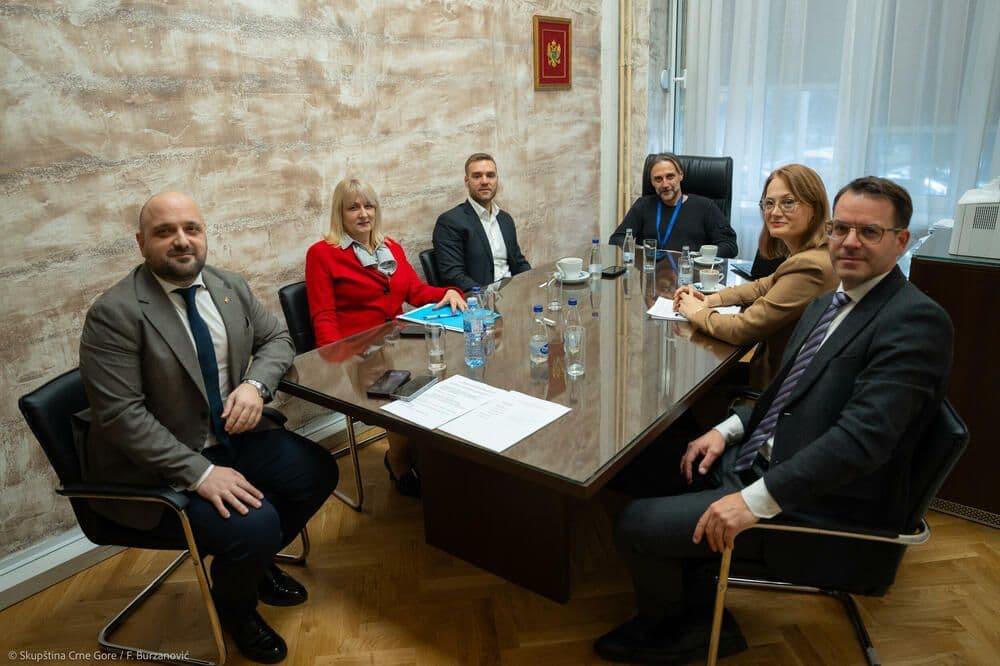
The Central Election Commission (CIK) of Montenegro is facing a significant setback after a second public competition for the selection of its president and members was declared invalid. This decision arose because none of the candidates for the presidency met the established criteria, causing further delays in the long-anticipated electoral reform process.
The CIK, which is tasked with overseeing elections in Montenegro, announced that while some candidates met the qualifications to serve as members, the procedure could not progress without a proposed president. Consequently, the commission has opted to issue a new public call for candidates.
Bojan Bozovic, the Minister of Justice, leads the CIK, with members including Nikola Rakocevic, Srđan Vujovic, Rajka Đokovic, and Dragan Koprivica. Following the announcement, Nikoleta Djukanovic, a professor at the University of Donja Gorica, commented on the implications of this outcome. She noted that the failure of the competition cannot be solely attributed to formal legal requirements, although these criteria cannot be overlooked.
Djukanovic emphasized the limited pool of legal professionals specializing in electoral and party systems in Montenegro, which constrains the number of potential candidates who can fulfill stringent formal criteria while also possessing substantial knowledge of electoral processes.
While expressing no doubts about the integrity of the commission members, Djukanovic acknowledged the political dimensions surrounding the selection of CIK members. She pointed out that attempts by political entities to influence the process to select “preferred” candidates persist, despite legal restrictions. This underlying politicization may discourage qualified and independent candidates from applying.
In her analysis, Djukanovic suggested that the broader political context should not be ignored. She highlighted that some political actors may not favor entering an electoral cycle at this time, raising concerns that legal conditions, while intended to depoliticize the process, might inadvertently prolong it and create blockages.
According to Djukanovic, the issue lies both in the normative framework and its selective implementation. She stated, “Any amendments to the law would only be meaningful if accompanied by a clear political will to treat the CIK as an independent institution rather than another arena for political competition. Otherwise, even the best solutions will remain mere words on paper.”
In response to the failure of the competition, Rakocevic, who serves as a co-chair of the Comprehensive Electoral Reform Committee and is a member of the Democratic Party of Socialists (DPS), expressed his views on the situation. He acknowledged that while the law sets high standards for candidates, he does not advocate for changes to these criteria.
Rakocevic clarified that the lack of a suitable candidate for the presidency did not imply that other candidates did not meet the requirements for membership in the CIK. “However, the commission cannot consider candidates for membership without a proposed president,” he stated.
Looking ahead, Rakocevic confirmed that a third public call would be issued, adhering strictly to professional and legal standards. He expressed optimism that this approach would lead to the selection of a depoliticized and qualified CIK. He noted, “Montenegro has sufficient human potential to build independent and professional institutions. The strict criteria from previous calls demonstrate the commission’s commitment to not compromise on expertise and neutrality.”
The commission’s decision to repeat the public competition follows a session held on February 10, 2024, where it was determined that no candidates had adequately met the required criteria for the presidency. In a statement released on the parliamentary website, the CIK explained that candidate evaluations for membership were futile without a presidential proposal, leading to the unanimous decision to issue a new public call.
The CIK has urged all qualified individuals to apply in order to create a more competitive selection process. They expressed confidence that their commitment to transparency and adherence to legal procedures would encourage those who have previously hesitated to participate in similar elections.
As Montenegro navigates these challenges, the future of its electoral reform will depend on the ability to attract qualified candidates and ensure a genuinely independent electoral commission.