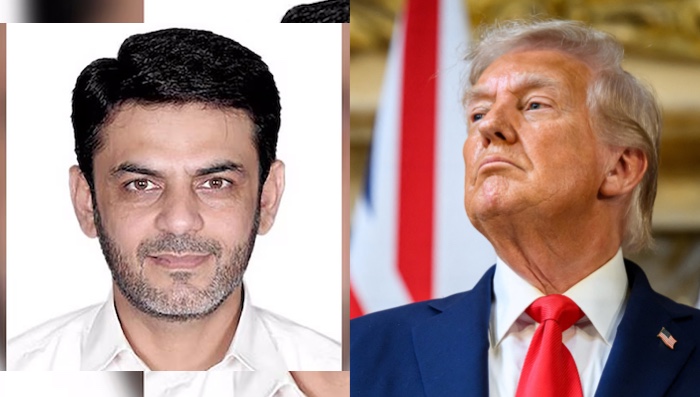
A Pakistani man, Asif Merchant, faces serious charges in the United States, accused of plotting to assassinate former President Donald Trump. Merchant testified on Wednesday that he did not willingly collaborate with Iran’s Islamic Revolutionary Guards Corps (IRGC) in the alleged scheme. The case, which has garnered significant media attention, underscores the complex dynamics between Washington and Tehran.
The U.S. Justice Department has charged Merchant with terrorism and murder-for-hire offenses, alleging that he sought to recruit individuals within the United States to target Trump and other American political figures. Prosecutors contend that the plot was a response to the U.S. killing of Qassem Soleimani, the former commander of the IRGC, in January 2020. This incident marked a pivotal moment in U.S.-Iran relations, heightening tensions between the two nations.
During his trial, which commenced last week, Merchant claimed to have acted under duress. He stated that he became involved in the alleged plot to ensure the safety of his family residing in Tehran. “I was not wanting to do this so willingly,” he told the court, asserting that he felt pressured to cooperate with the IRGC.
Prosecutors have dismissed Merchant’s allegations of coercion, arguing that there is insufficient evidence to substantiate his claims. In a letter presented to the judge in 2024, they highlighted the lack of proof indicating that Merchant was compelled to participate in the plot. They maintain that his actions were voluntary and not coerced.
Merchant’s testimony included the claim that he was never explicitly instructed to assassinate a specific individual. However, he noted that during conversations with his Iranian handler, three names were mentioned: Trump, former President Joe Biden, and former U.S. ambassador Nikki Haley, who is also a Republican presidential candidate.
The case unfolds against a backdrop of escalating tensions between the United States and Iran. Just prior to the trial, Trump ordered joint U.S.-Israeli strikes on Iran, which reportedly resulted in the deaths of Supreme Leader Ali Khamenei and other high-ranking officials. Speaking to ABC News, Trump referenced the alleged Iranian plot, asserting, “I got him before he got me,” emphasizing the high stakes involved.
The Iranian government has categorically denied the accusations regarding any plans to target Trump or other U.S. officials. This ongoing legal battle highlights the intricate geopolitical landscape and the potential ramifications of individual actions on international relations.
As the trial moves forward, both legal experts and political analysts are closely monitoring developments, given the implications for U.S.-Iran relations and the broader context of global security. The outcome of this case may set important precedents regarding the interplay of national security and individual rights under international law.
Merchant’s legal team has yet to respond to requests for comment, and the White House has also declined to provide statements on the case. The proceedings are expected to continue, shedding light on the complexities of international plots and the legal frameworks that govern them.