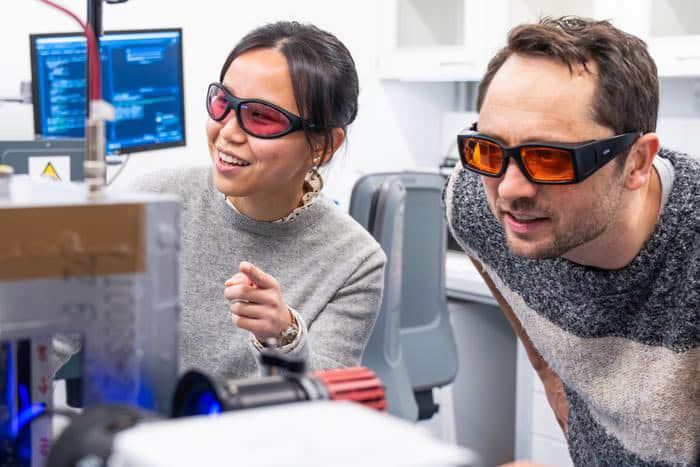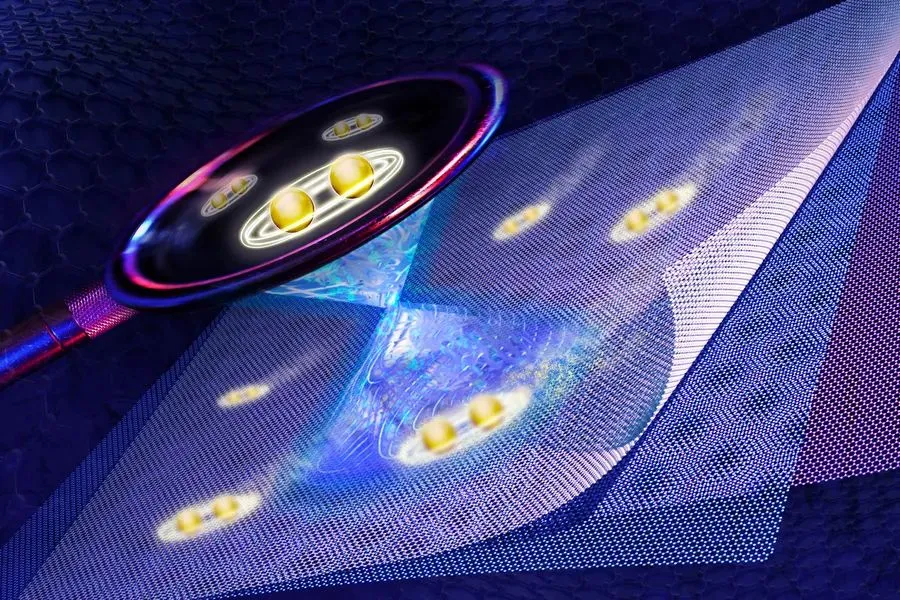
Researchers at the Massachusetts Institute of Technology (MIT) have made a significant breakthrough in the study of superconductivity within a unique form of graphene known as magic-angle twisted bilayer graphene (MATTG). Their findings provide the most direct evidence to date that this material exhibits unconventional superconductivity, a phenomenon that could pave the way for advancements in future technologies.
Understanding the Superconducting Gap
The MIT team succeeded in measuring MATTG’s superconducting gap, a crucial property that indicates how stable a material’s superconducting state is at various temperatures. Their analysis revealed that the superconducting gap of MATTG differs markedly from that of traditional superconductors. This distinction suggests that the underlying mechanisms enabling superconductivity in MATTG are also unique.
“There are many different mechanisms that can lead to superconductivity in materials,” stated Shuwen Sun, a graduate student in MIT’s Department of Physics and co-lead author of the study. “The superconducting gap gives us a clue to what kind of mechanism can lead to things like room-temperature superconductors that will eventually benefit human society.”
The researchers utilized a pioneering experimental platform that allows them to observe the emergence of superconductivity in real-time within two-dimensional materials. This innovative approach could enable further investigation of MATTG and facilitate the mapping of superconducting gaps in other two-dimensional materials, potentially identifying new candidates for advanced technological applications.
Implications for Future Research
Pablo Jarillo-Herrero, the Cecil and Ida Green Professor of Physics at MIT and a member of the Research Laboratory of Electronics, emphasized the importance of this research. “Understanding one unconventional superconductor very well may trigger our understanding of the rest,” he explained. “This understanding may guide the design of superconductors that work at room temperature.”
The groundwork for this research was laid in 2018 when Jarillo-Herrero and his team first created magic-angle graphene and observed its remarkable properties. This discovery gave rise to a new field of study called “twistronics,” focusing on atomically thin materials that are precisely twisted. Since then, Jarillo-Herrero’s group has explored various configurations of magic-angle graphene, including structures with two, three, and multiple layers, as well as combinations of other two-dimensional materials.
Through their ongoing research, the team has uncovered signatures of unconventional superconductivity in various structures, indicating a rich area for further exploration. As they continue to investigate the complexities of MATTG and other materials, the implications of their findings could have far-reaching effects on the development of superconducting technologies.