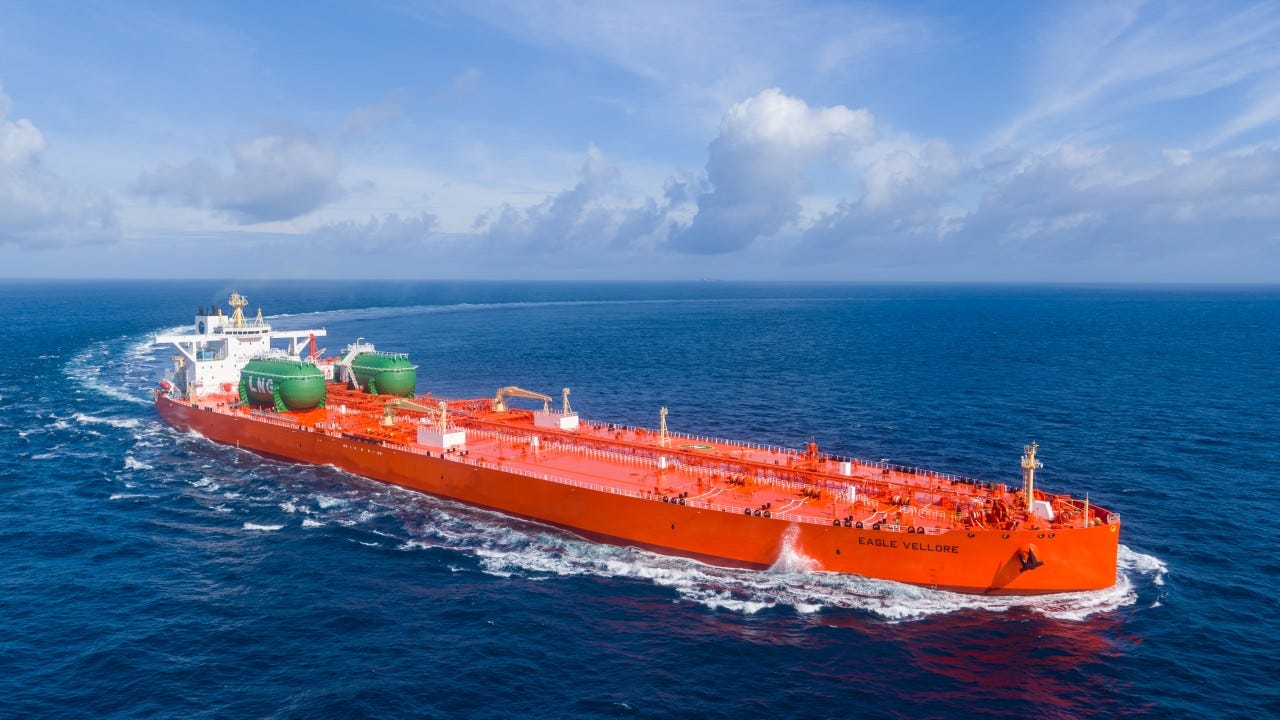
UPDATE: Samsung Heavy Industries has just announced a significant contract to construct a pair of dual-fuel suezmax tankers for American Ethane Transport (AET). This deal marks a critical step forward in the maritime industry’s transition towards more sustainable fuels, including liquefied natural gas (LNG) and ammonia, as the sector increasingly embraces environmental responsibility.
The contract, revealed earlier today, underscores AET’s commitment to diversifying its fleet with future-oriented fuel options. With global shipping facing mounting pressure to reduce carbon emissions, these new tankers are expected to play a pivotal role in AET’s strategy moving forward.
These dual-fuel tankers are expected to enhance operational efficiency while adhering to emerging environmental regulations. The decision to incorporate LNG and ammonia reflects a broader trend within the shipping industry, as companies seek to meet the International Maritime Organization’s 2030 emissions targets.
Why This Matters NOW: The announcement comes at a crucial time as the maritime sector grapples with the urgent need for sustainable solutions. As global shipping accounts for a significant portion of greenhouse gas emissions, the shift towards LNG and ammonia is seen as essential for achieving climate goals. AET’s move could inspire other companies to follow suit, accelerating the adoption of cleaner technologies across the industry.
What’s Next: As construction begins, industry experts are closely monitoring advancements in LNG and ammonia technologies. The delivery schedule for the tankers has yet to be released, but it is anticipated that AET will provide updates in the coming months. Stakeholders will be looking for further commitments from both Samsung Heavy Industries and AET regarding their long-term sustainability plans.
In summary, this contract not only highlights Samsung Heavy Industries’ role in leading the charge towards greener maritime solutions but also reinforces AET’s position as a forward-thinking player in the shipping industry. The implications of this development extend beyond the immediate contract, potentially shaping the future of maritime fuel consumption.
Stay tuned for more updates as this story develops.