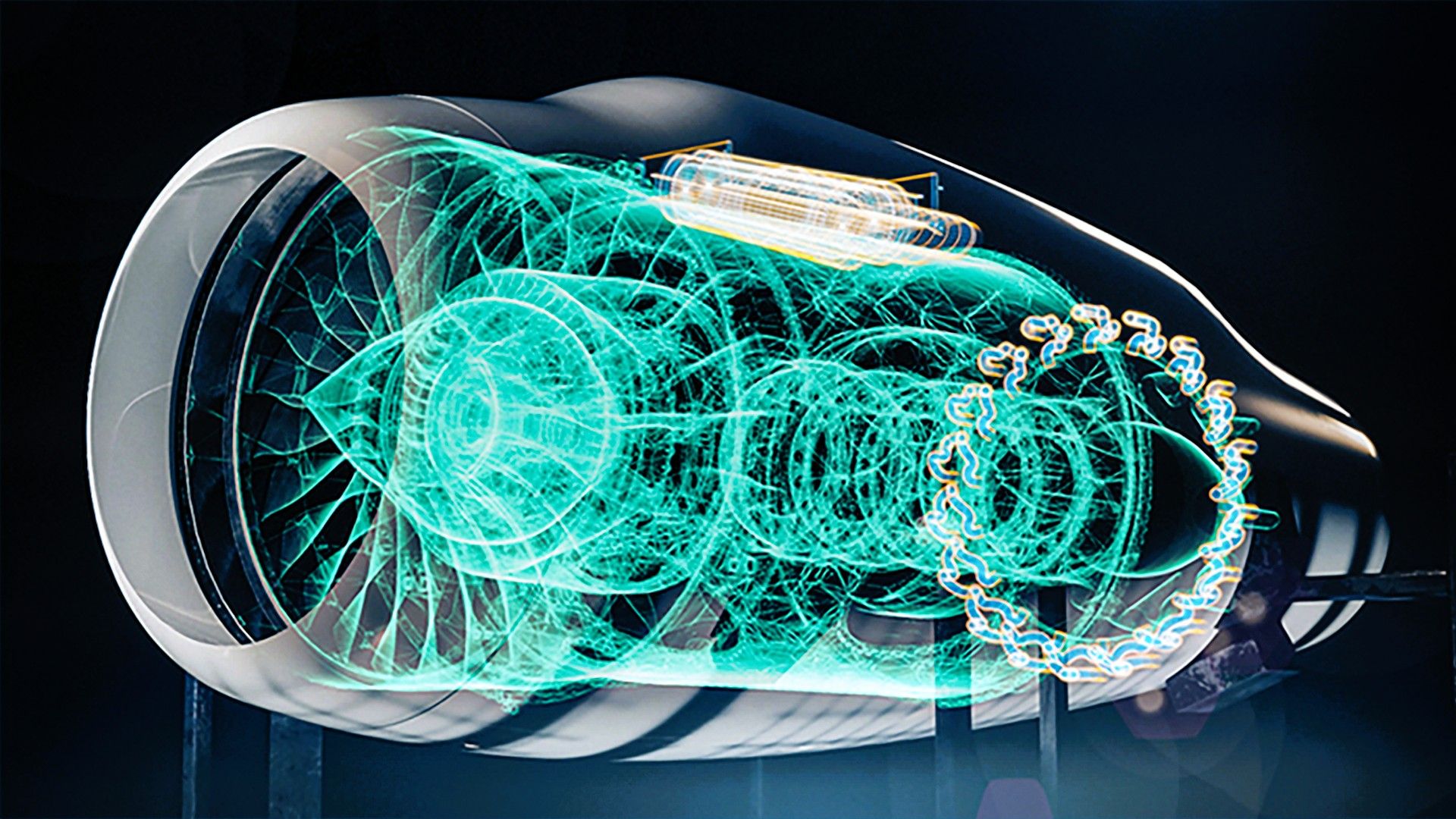
UPDATE: Rolls-Royce has achieved a significant milestone in aviation with the successful test of a hydrogen-powered engine, marking a potential turning point for the aviation industry in its quest for zero-carbon emissions. On November 28, 2022, at the Boscombe Down facility in the UK, engineers ran a modified Rolls-Royce AE 2100-A engine on 100% green hydrogen, produced using renewable wind and tidal energy.
The aviation sector faces unprecedented pressure to decarbonize by 2050, and while Sustainable Aviation Fuel (SAF) offers a temporary solution, its long-term effectiveness remains under scrutiny. Hydrogen, however, emerges as a viable alternative, promising true zero-carbon emissions during flight.
This breakthrough comes as Rolls-Royce, in collaboration with easyJet and various research institutions, aims to redefine jet propulsion. The initial test at Boscombe Down was a proof of concept, demonstrating that a modern turboprop engine can combust hydrogen without significant issues. The success of this test injects a wave of optimism into the aviation sector, showing that hydrogen’s zero-carbon potential is not merely theoretical.
Grazia Vittadini, Chief Technology Officer at Rolls-Royce, remarked,
“Controlling the combustion process is one of the key technology challenges the industry faces in making hydrogen a real aviation fuel of the future. We have achieved that, and it makes us eager to keep moving forward.”
The journey does not end here. Following the initial tests, engineers are now addressing the challenge of achieving maximum takeoff thrust. Hydrogen burns at much higher temperatures compared to kerosene, complicating the combustion process. Collaborating with the German aerospace research agency DLR, the team has developed a novel fuel system that effectively manages hydrogen’s reactivity and flame control.
However, major infrastructure hurdles remain. The current global supply chain for hydrogen production, storage, and distribution is virtually non-existent. A massive overhaul of airport logistics is essential, requiring significant investments that could reach billions of dollars. Rolls-Royce is actively lobbying for government support and cross-industry collaboration to scale up hydrogen production and reduce costs.
In addition to infrastructure, aircraft design will need to adapt significantly. Hydrogen’s low energy density means that aircraft will require larger fuel tanks, potentially sacrificing passenger capacity or range. This transition could begin with smaller regional aircraft, targeting the 30-40 seat market by the mid-2030s.
As the aviation industry grapples with its environmental impact, the rise of hydrogen technology represents a beacon of hope. While there is still much to be done, the pioneering work of Rolls-Royce and its partners opens new avenues for a sustainable future in aviation. The path to hydrogen-powered flights will be complex, but the recent tests make it clear that a zero-carbon aviation future is within reach.
Stay tuned for more updates as this developing story unfolds, and consider the implications of a hydrogen-powered aviation industry on global carbon emissions and environmental health.