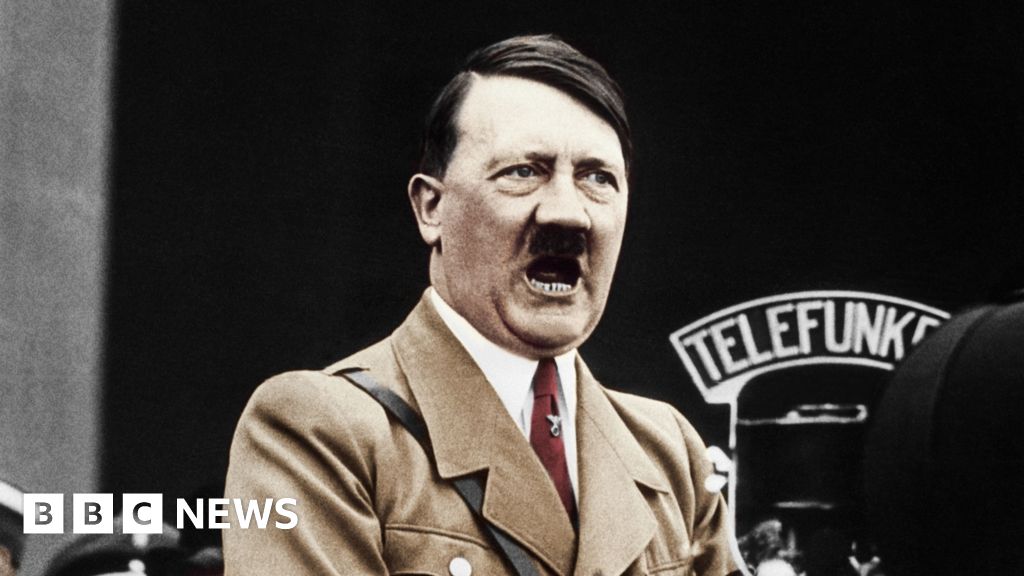
Recent DNA analysis of a blood sample believed to be from Adolf Hitler has revealed significant insights into the dictator’s ancestry and potential health conditions. Conducted by an international team of experts, the research debunks long-standing rumors regarding Hitler’s Jewish heritage, confirming that he had none. The analysis, which utilized an old blood-stained swatch of fabric from Hitler’s bunker, also indicates that he suffered from a genetic disorder known as Kallmann syndrome, which affects sexual organ development.
The fabric, cut from a sofa in Hitler’s underground bunker, has a unique history. It was taken by Colonel Roswell P. Rosengren of the US Army during the final days of World War II and is now displayed at the Gettysburg Museum of History. Scientists are confident in the authenticity of the blood sample, having matched its Y-chromosome with DNA from a male relative collected in 2012. This groundbreaking work marks the first successful identification of Hitler’s DNA, providing a deeper look into the genetic makeup of one of history’s most notorious figures.
Health Implications and Ethical Considerations
Among the more controversial findings, the analysis indicates that Hitler had a predisposition to several neurological conditions, including autism, schizophrenia, and bipolar disorder. While the results suggest high polygenic scores for these conditions, researchers emphasize that this does not equate to a diagnosis. Prof Turi King, a leading genetics expert involved in the study, expressed her initial concerns about the implications of analyzing Hitler’s DNA. She stated, “I agonised over it,” highlighting the potential for sensationalism surrounding the subject.
Critics have voiced ethical concerns about the research. The National Autistic Society in the UK called the findings a “cheap stunt,” criticizing the documentary produced by Channel 4 for its insensitivity towards autistic individuals. Tim Nicholls, the assistant director of research at the society, emphasized that “autistic people deserve better than this.” Prof Denise Syndercombe Court from King’s College London expressed reservations about the conclusions drawn from the analysis, cautioning against oversimplification of complex behaviors based on genetic predispositions.
Despite these concerns, the research team remains focused on its scientific contributions. Dr Alex Kay, a historian featured in the documentary, noted that the findings offer insights into Hitler’s lack of a private life and his intense political devotion, suggesting that his health issues may have played a role in his singular focus on power.
Public Reaction and Future Implications
The documentary, titled “Hitler’s DNA: Blueprint of a Dictator,” has sparked debate over its provocative name and the implications of its findings. Some historians, such as Prof Thomas Weber, expressed excitement about the research but also concern regarding public misinterpretation. He noted, “I had concerns on whether people would read too much into genetics,” particularly in light of the stigma associated with certain conditions.
The ethical ramifications of studying Hitler’s DNA remain a contentious topic. While some historians argue that understanding the genetic background of historical figures can provide valuable context, others caution against attributing complex behaviors to genetic factors alone. Dr Iva Vukusic, an assistant professor of international history, warned that the focus on Hitler’s potential health issues might detract from the broader lessons of history regarding mass violence and genocide.
As the research undergoes peer review, experts maintain that its findings should be approached with caution. Prof Weber believes the results might contribute to a better understanding of extremism, stating, “We should do whatever we can to understand past extremism.” The ongoing discussion underscores the responsibility of researchers and media alike to frame such findings accurately, considering their potential impact on public perception and historical understanding.
In conclusion, the analysis of Hitler’s DNA offers a fascinating glimpse into the intersection of genetics and history, but it also raises critical questions about ethics, representation, and the risks of reductionism in understanding complex human behaviors. As the scientific community continues to explore these findings, the need for careful discourse remains paramount.