
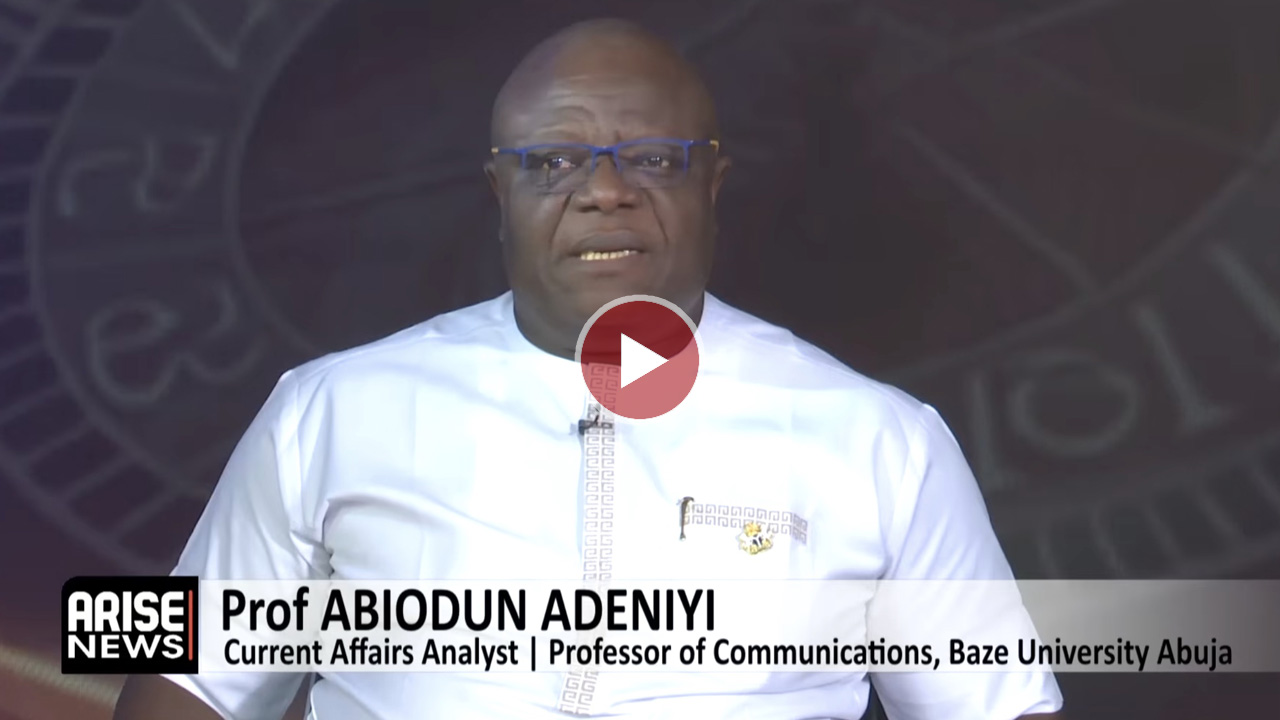
The Peoples Democratic Party (PDP) is grappling with a severe internal crisis that threatens its upcoming national convention scheduled for October 7, 2023, in Ibadan. According to Professor Abiodun Adeniyi, a current affairs analyst and Professor of Communications at Baze University, the turmoil within the party is deep-rooted and not likely to resolve soon.
In an interview with ARISE News, Adeniyi described the ongoing factional disputes, court injunctions, and failed reconciliation efforts as indicators of a party in distress. He emphasized that the problems plaguing the PDP are neither recent nor superficial, stating, “The problem of the PDP didn’t just start; it’s not a short-term matter. It is something that started perhaps three years ago.”
This lengthy period of instability has led to a series of missed opportunities for internal reconciliation. Adeniyi noted that the party’s inability to address its internal fractures has paved the way for judicial intervention, which he described as ineffective in resolving party conflicts. “If the party hierarchy had been able to resolve their crisis through consensus and appropriate reconciliation, there wouldn’t have been any need to resort to the judiciary,” he explained.
Looking ahead, Adeniyi expressed concern that the PDP’s instability might persist for a significant time. He warned, “If they have to resolve their crisis, I do not see their path to peace coming up in the next few months or even years.” He stressed the need for the party to return to the negotiation table, highlighting that significant sacrifices from all leaders involved would be essential for any meaningful reconciliation.
Adeniyi elaborated that the resolution process would require a willingness to compromise, stating, “There has to be sacrifice at the level of pride and prestige — a process of give and take so that there can be complete reconciliation.” He expressed skepticism about the PDP’s potential to reemerge as a formidable opposition party in the near future, given the current state of affairs.
In addition to the internal party crisis, Adeniyi addressed the recent altercation involving Nyesom Wike, the Federal Capital Territory Minister, and a naval officer in Abuja. He criticized both parties for their errors in judgment, noting that the incident reflected a breach of civility and process. “There should have been some temperance on the part of the minister,” he remarked, suggesting that a direct confrontation with someone of lower rank was inappropriate.
He also pointed out that while the naval officer was likely acting on orders, the situation called for police intervention rather than military involvement. “On both sides, there were wrongs,” he acknowledged, although he noted that tensions were ultimately diffused, with Wike showing some contrition and the military providing explanations.
In a broader context, Adeniyi downplayed concerns regarding a factual slip by British broadcaster Piers Morgan, who mistakenly referred to the “Chibok boys” instead of girls during an interview. He stated, “The Minister of Foreign Affairs should not be bothered. It is simply an exchange between the two of them, and the audience should be the ultimate judge.” He underscored the importance of trust in the interview process and encouraged a measured response to such incidents.
As the PDP navigates its current challenges, the call for introspection and compromise remains critical. Without significant changes in leadership dynamics and a commitment to unity, the party’s future as a viable opposition force appears uncertain.


