
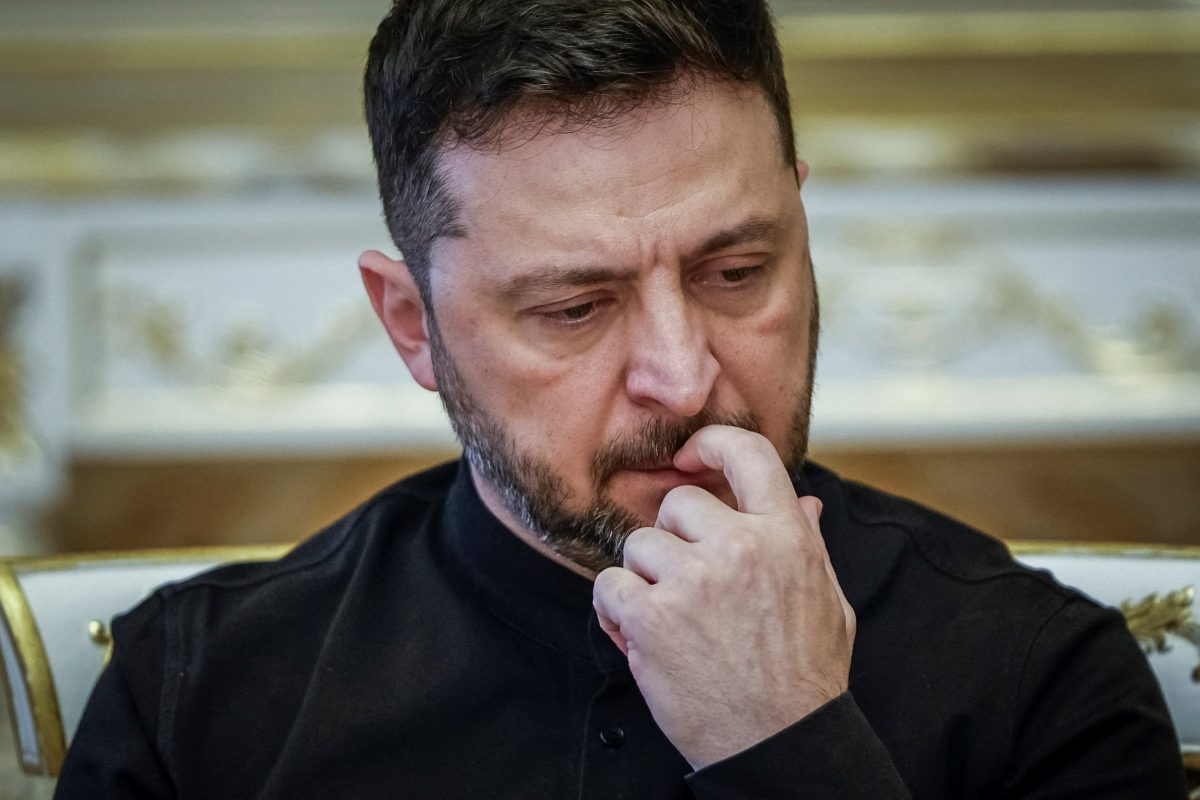
Ukraine is grappling with serious corruption allegations that threaten to undermine its government at a crucial moment in the ongoing war with Russia. A joint investigation by the National Anti-Corruption Bureau of Ukraine (NABU) and the Special Anti-Corruption Prosecutor’s Office (SAPO) revealed a scheme involving approximately $100 million (£76 million) in kickbacks linked to the national nuclear energy company, Energoatom. The scandal implicates individuals closely associated with President Volodymyr Zelensky, including his former business partner, Timur Mindich, raising significant concerns about the integrity of Zelensky’s leadership.
The investigation comes at a time when Ukraine is under immense pressure, with Russia intensifying its offensive in the eastern city of Pokrovsk. As winter approaches, civilians in Ukraine are facing ongoing blackouts due to persistent attacks on energy infrastructure. This situation complicates an already precarious political landscape as the European Union debates whether to utilize frozen Russian assets to support Ukraine’s defense effort, a discussion that Kyiv can ill afford to lose.
Zelensky, who campaigned on an anti-corruption platform, has publicly supported the investigation and imposed sanctions on Mindich and another businessman, Oleksandr Tsukerman, both of whom have reportedly fled the country. Among the twelve individuals named in connection with the investigation, Mindich is particularly controversial due to his longstanding ties to the President. Dr. Stephen Hall, an expert in post-Soviet politics at the University of Bath, noted that the proximity of Mindich and others to Zelensky makes this scandal especially damaging.
Although Zelensky himself has not been implicated in any wrongdoing, questions are likely to arise regarding his knowledge of the alleged corruption. Hall emphasized the importance of Zelensky’s next steps, suggesting that while the sanctions against Mindich may be a positive move, there are calls for more decisive action, including the issuance of an international arrest warrant. Failure to take further action could lead to perceptions that Zelensky prioritizes personal relationships over national interests.
The implications of wartime corruption extend beyond individual reputations. Professor Elizabeth David-Barrett, director of the Centre for the Study of Corruption at the University of Sussex, explained that corruption can erode public trust in government, particularly when the government is asking citizens to make significant sacrifices. As Russia continues its nightly bombardment of Ukraine’s power grid, the potential for internal strife due to corruption adds another layer of complexity to the ongoing conflict.
While this scandal may pose risks to Zelensky’s political standing, it does not necessarily diminish the resolve of the Ukrainian people to defend their country. Ann Marie Dailey, a geopolitical strategist at the Rand Corporation, remarked that the exposure of corruption is central to Ukraine’s historical struggle for independence and resistance against Russian influence. The fact that such issues are being revealed signals progress in Ukraine’s institutional integrity.
The timing of these allegations could not be worse for Ukraine’s diplomatic efforts. Even strong allies are expressing concern. European foreign policy chief Kaja Kallas described the situation as “extremely unfortunate,” while German Chancellor Friedrich Merz emphasized the need for Ukraine to combat corruption vigorously.
On March 14, 2024, the EU approved a €6 billion (£5.3 billion) loan to support Ukraine, but the ongoing scandal may overshadow discussions about Ukraine’s potential membership in the bloc. Critics, including Hungarian Prime Minister Viktor Orbán, have cited this incident as evidence that Ukraine’s aspirations for EU membership are illusory and do not justify continued support from European taxpayers.
Experts believe that this moment is a critical test for Zelensky, who traditionally does not respond well to attacks on his close associates. Dailey warned that while the risks are significant, this situation also presents an opportunity for Zelensky to demonstrate Ukraine’s commitment to reform and differentiate itself from Russia.
In conclusion, Ukraine faces a pivotal challenge as it navigates these serious allegations of corruption amidst a brutal war. The outcomes of this situation will likely have lasting implications on both domestic and international fronts, affecting Kyiv’s ability to sustain the support it needs to continue its fight against Russian aggression.


