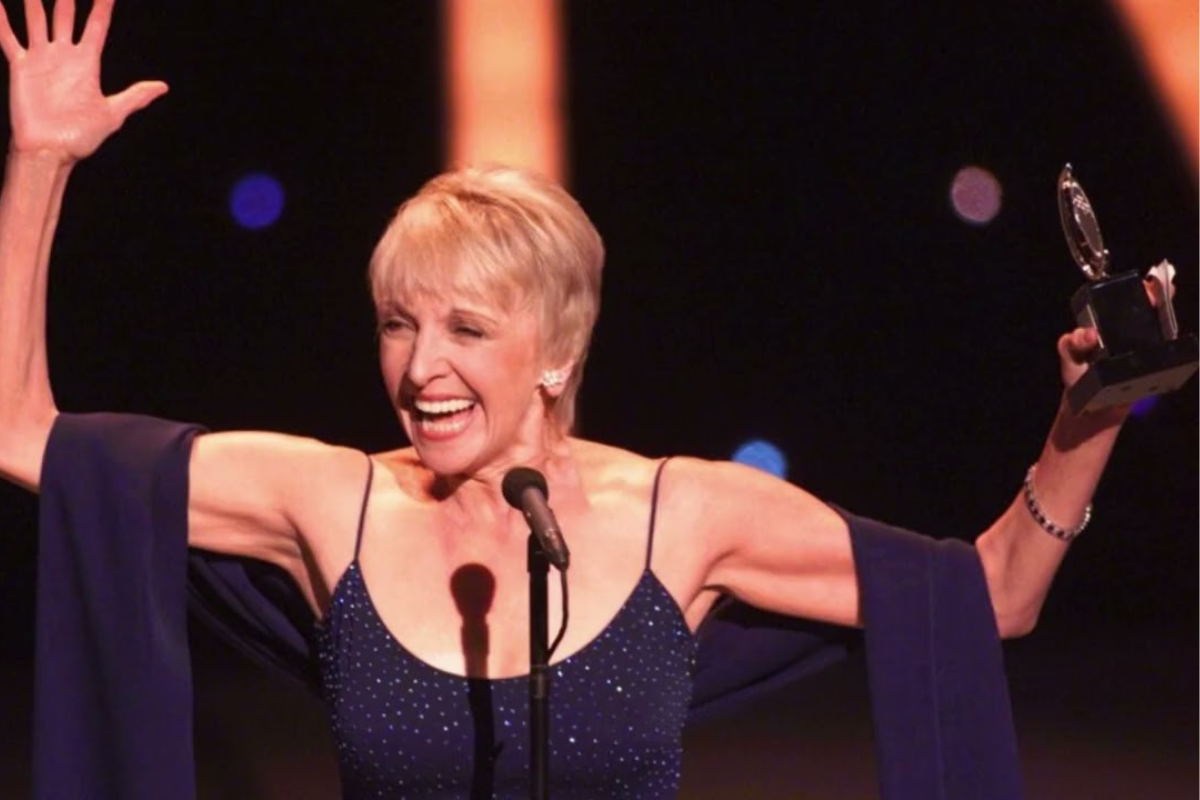
Elizabeth Franz, the celebrated Tony Award-winning actress renowned for her portrayal of Linda Loman in Death of a Salesman, has died at the age of 84. Her husband, Christopher Pelham, confirmed her passing, marking the end of a distinguished career that spanned decades across stage, television, and film. Franz’s death highlights a significant concern within the Broadway community: the challenge of preserving its legends beyond the theatre.
A Remarkable Journey in Theatre
Born Elizabeth Jean Frankovitch in 1941 in Akron, Ohio, Franz discovered her passion for acting as a means to cope with a tumultuous childhood. To fund her studies, she worked as a secretary before enrolling at the American Academy of Dramatic Arts. Her Broadway debut came in 1967 with Tom Stoppard‘s Rosencrantz and Guildenstern Are Dead, launching a remarkable career that included performances in productions such as The Glass Menagerie and Buried Child.
Franz’s defining moment arrived in 1999 when she starred as Linda Loman in the 50th anniversary production of Arthur Miller‘s Death of a Salesman. This performance earned her a Tony Award for Best Featured Actress in a Play. Miller himself praised her portrayal for capturing the character’s fierce protectiveness. She later reprised this role in a Showtime adaptation, earning an Emmy nomination.
The Challenge of Lasting Recognition
Despite her accolades, Franz’s name is less recognized outside theatre circles compared to her Hollywood contemporaries. She received additional Tony nominations in 1983 and 2002 and appeared in popular television series including Another World, As the World Turns, Gilmore Girls, and Law & Order. Her film roles included appearances in Sabrina and Christmas with the Kranks. Yet, her legacy is most firmly tied to her stage performances, where her artistry was celebrated, but mainstream fame eluded her.
This disparity emphasizes a broader issue facing Broadway. While film and television preserve performances through recordings and streaming, theatre remains an ephemeral art form. Even award-winning portrayals risk fading from public memory once the curtain falls. The passing of Franz serves as a poignant reminder of how easily stage legends can be overlooked in the cultural narrative.
Franz’s death arrives at a time when Broadway grapples with increased competition from digital entertainment. Streaming platforms and blockbuster films dominate public attention, while theatres rely on live audiences and limited runs. The industry has long sought ways to preserve and promote its icons, ensuring that their contributions are not lost to history. Franz’s career exemplifies both the triumphs and limitations of stage recognition.
While winning a Tony Award placed her among theatre’s elite, her name did not achieve the household familiarity of many screen actors. This imbalance raises important questions about how Broadway can better honor and sustain the legacies of performers who shape its history.
Elizabeth Franz’s journey from Akron to Broadway is a testament to resilience and dedication. She leaves behind a rich body of work that has significantly enriched American theatre, even if her fame did not extend as widely as her talent warranted. Her passing serves as a reminder of the importance of preserving the stories of stage legends, ensuring their artistry continues to inspire future generations.