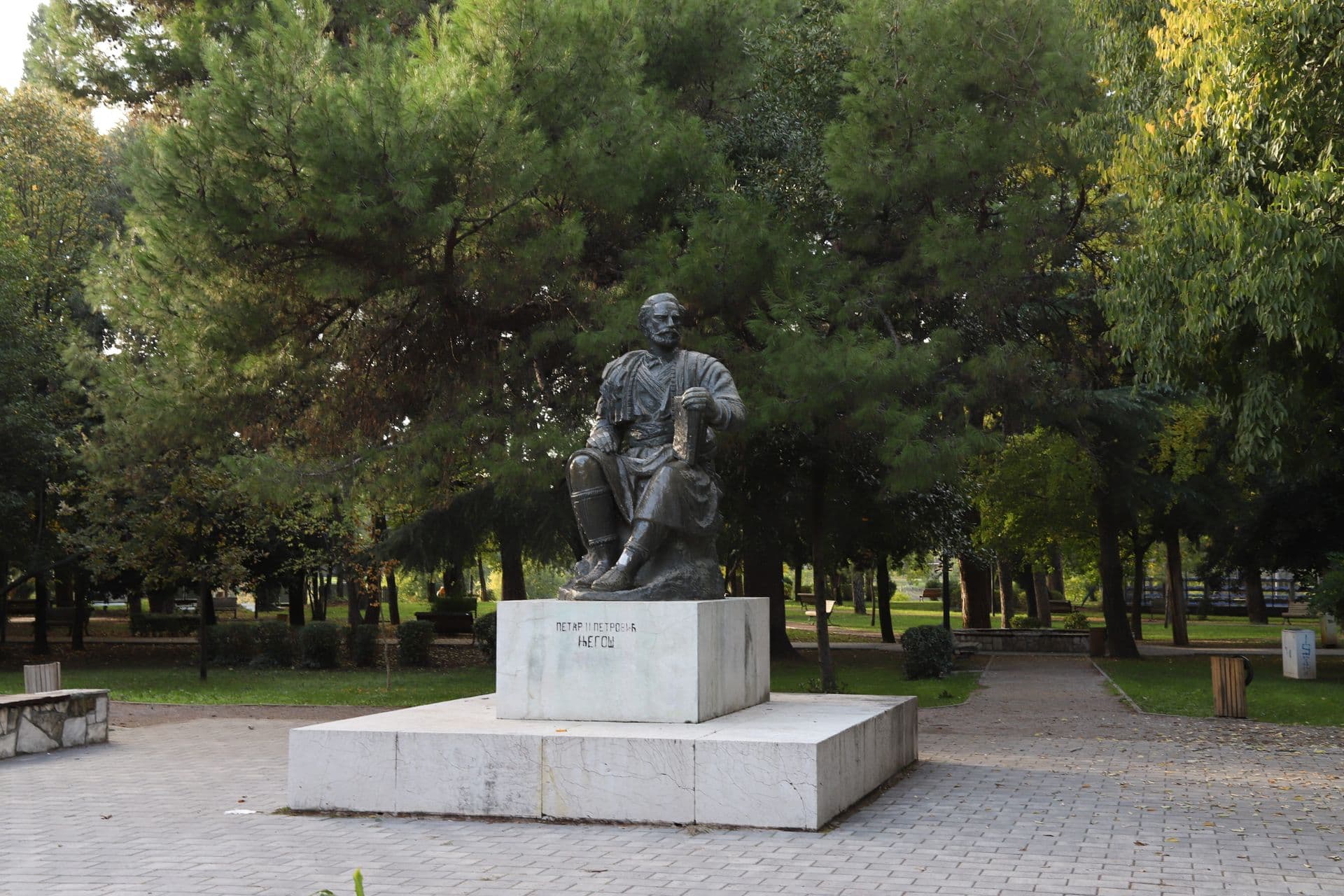
Petar II Petrović Njegoš, an influential figure in Montenegrin history, served as both a national leader and the head of the Montenegrin Orthodox Church. He is celebrated for his devotion to the ideals of freedom and national identity, advocating for the liberation of South Slavs from foreign rule. His legacy extends beyond politics, encompassing poetry and literature, making him a central figure in Montenegrin cultural history.
Njegoš was not only a political leader but also a vital symbol of Montenegrin identity. Official documents from his reign (1830–1851) show that he signed passports identifying individuals as “rodom Crnogorac,” which translates to “of Montenegrin descent.” This designation established a clear ethnic and national identity for the people of Montenegro during his rule.
The significance of the Montenegrin passport system is highlighted by academic research from historians such as Jevto Milović. He published numerous facsimiles of these passports, exhibiting how Njegoš used them to affirm the ethnic identity of Montenegrins. For example, one notable passport issued on February 20, 1838, under Njegoš’s own hand, identifies the holder, Mihailo Vuković, explicitly as “rodom iz Čuca, Crnogorac,” or “of Čuca, a Montenegrin.”
Preserved documents from this era reveal the broader context of Montenegrin nationality. In academic works, Branko Pavićević noted that early passports first referred to as “Montenegrin travel documents” later transitioned to simply “Montenegrin passports.” These official documents consistently recorded “Crnogorac” as the nationality of their holders, further solidifying the national identity during Njegoš’s governance.
The historical narrative surrounding Njegoš is complex, with many scholars advocating for a nuanced understanding of his contributions. Sreten Zeković, a prominent philosopher and historian, emphasizes the importance of original records in establishing the truth about historical figures. He argues that while Njegoš’s literary works are significant, they should not be misconstrued as definitive historical accounts. Instead, they should be analyzed within the broader context of their time, particularly the early 19th century, when Montenegro was a predominantly homogenous and free nation.
The manipulation of Njegoš’s legacy by various ideologues has been a point of contention. Some have sought to reinterpret his identity through a Serbian lens, often disregarding the Montenegrin context of his life and work. This has led to accusations of historical falsification, with scholars like Milisav D. Protić and others facing criticism for promoting narratives that lack credible evidence.
One such contentious claim involves a supposed dedication Njegoš made in a calendar to the Bishop Nikifor Vukosavljević, where he allegedly identifies himself as Serbian. However, scholars have challenged the authenticity of this claim, citing the absence of verifiable documents. The lack of original sources raises questions about the credibility of such assertions, and historians stress the importance of relying on primary historical evidence to understand Njegoš’s true identity and intentions.
As discussions around Njegoš’s legacy continue, it is crucial to approach his contributions with an objective lens, recognizing his role as a poet, leader, and cultural icon. His works, particularly “Gorski vijenac,” remain a testament to the struggles and aspirations of the Montenegrin people.
In conclusion, Petar II Petrović Njegoš stands as a pivotal figure in the formation of Montenegrin national identity. While his literary achievements are celebrated, they should be contextualized within the historical realities of his time. As Montenegro navigates its place in the modern world, understanding Njegoš’s contributions free from ideological manipulation remains vital for fostering a cohesive national narrative.